






But some eyes, too, have turned to Moscow.
Danish intelligence warned last week Russia could in the coming months launch a limited military attack on a Nato country.
Germany has already formally accused Russia of using a drone carrying explosives in an attempted attack on Leipzig in August.
Over the summer, the Russian embassy in London warned the UK against allowing Ukraine to use British drones deep inside Russian territory: “The deeper [the UK’s] involvement in the conflict and the greater its support for Kyiv’s terrorist machinery, the higher price it will pay.”
That, too, was seen as a direct threat.
There are also possibilities of some kind of Islamist attack, or even an incident of direct action by a group opposed to both the US-Israeli war on Iran or the use of UK bases to launch strikes.
One central question is whether the authorities were prepared for such an attack.
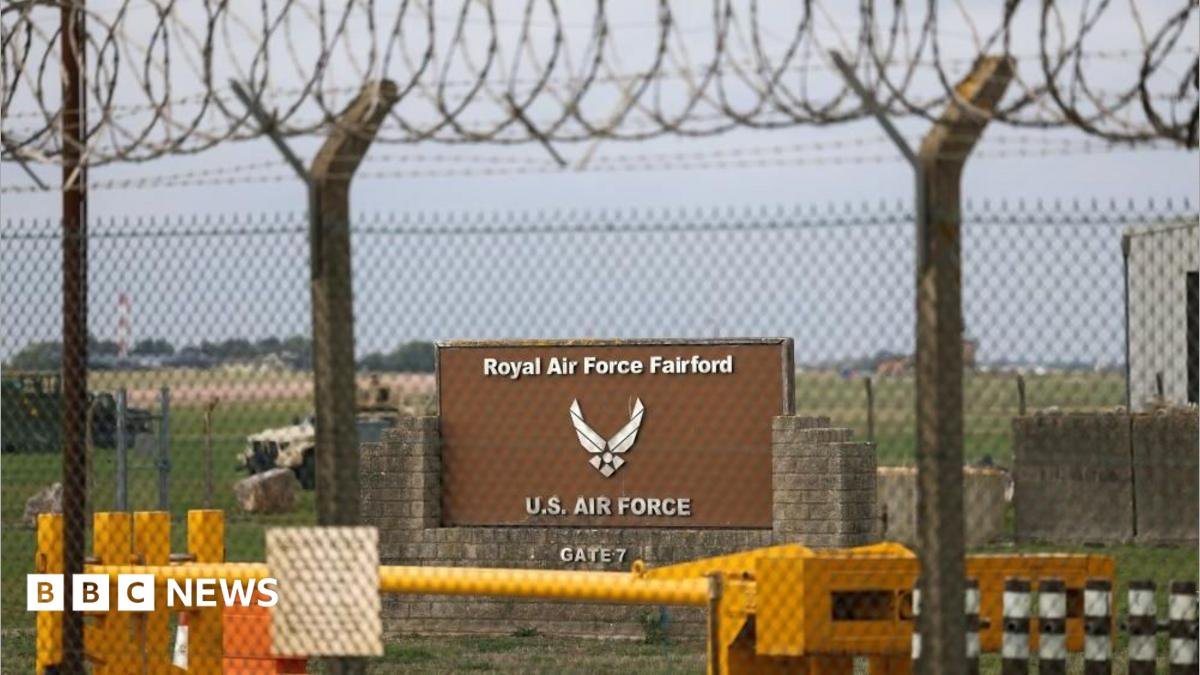
The US handles security within the base; the UK is responsible all threats outside the perimeter. What did the authorities know?
President Trump said the suspects had been under investigation “for a long time”.
But there are also suggestions the incident was foiled only because a passing driver reported strange vans to the police.
At the time of the explicit Iranian threat against the UK, a spokesman for the Ministry of Defence said: “Our armed forces are ready to keep the United Kingdom safe from any kind of attacks, whether it’s on our soil or from abroad. The UK stands ready 24/7 to defend itself.”
So for now, there remain more questions that facts.
Was a hostile foreign state involved, or were proxies acting on its behalf? What was intended and what was the potential risk to local people?
One thing is clear: the threat from conflicts involving the UK will not always stay overseas.


