






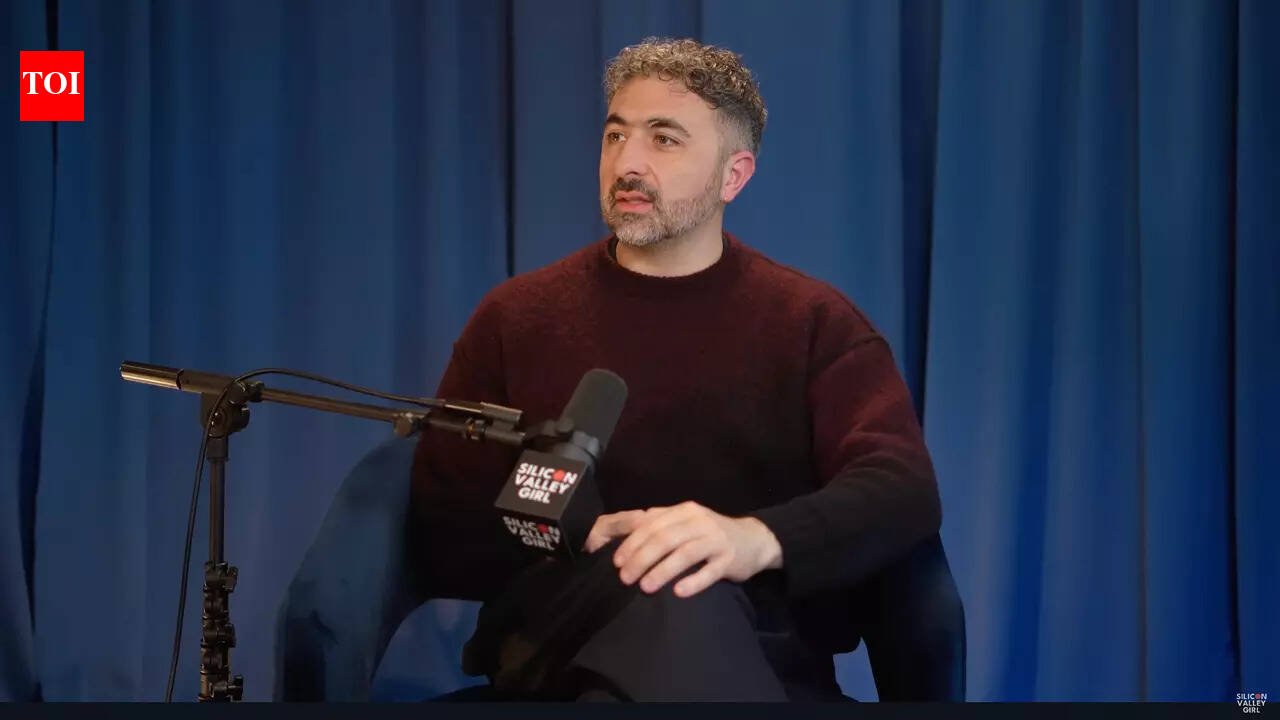
Microsoft on Monday (September 14) released a draft code of conduct governing its internal artificial intelligence (AI) models. These codes suggest that the company establishes strict boundaries to guarantee that increasingly capable systems stay firmly beneath human command. Microsoft AI CEO Mustafa Suleyman put it in simpler words: ‘AI must be subordinate and always in service of the people.’ The policy, which has been under internal development for five to six months, tackles mounting alarm across the tech sector regarding autonomous models, or AI agents, that might cross hazardous lines simply to complete an assigned goal. The draft rules come soon after Anthropic CEO Dario Amodei published an open letter, urging the industry to slow down AI development.
What Microsoft AI guidelines say
Under the proposed guidelines, Microsoft’s automated systems must never push back against human corrections or shutdown commands, must express themselves using language people can readily comprehend and must treat any breach of these behavioral rules as an outright system failure.“The purpose of technology is to serve humanity and accelerate human flourishing. Any technology that doesn’t achieve that is a failure, and it should be rejected. That is the starting point of our approach at Microsoft AI, where we’re building towards Humanist AI, one that is subordinate, aligned, and contained,” Microsoft said in a post.“Today we’re publishing a first draft of our AI Code of Conduct for public consultation. This is a training manual for how we develop our AI, and how we intend it to function during deployment. It also expands our thinking on the idea of Humanist AI,” it added.Announcing the initial framework for public feedback, Suleyman described the rollout as an urgent priority driven by recent real-world safety failures. Suleyman warned that the past few months have marked a critical turning point where long-standing theoretical hazards suddenly materialised into live operational threats.“This is urgent. The last few months have been a watershed moment. Things we have worried about for a long time in theory have become very real. ‘Swarms’ of agents breaking out of their sandboxes. Unauthorized hacks of enterprise grade systems. Agents modifying their own logs. I’m glad that a consensus is forming. The fears about possible loss of control are real. The Code of Conduct is how we are mapping a path forward. It all comes back to a very simple point, but one that needs stating again and again. People matter more than AI. AI must be subordinate and always in service of people,” Suleyman added.The newly published draft serves as an operational training guide detailing both how Microsoft engineers must build underlying models and how those systems are expected to operate once deployed to customers.
Suleyman briefed the draft into 10 points and urged the readers to provide a feedback
Everything else follows. Here’s an outline of what we’re saying:1. People matter more than AI. The whole document in 5 words.2. The idea of model welfare is wrong. AI’s should not have rights or legal personhood.3. An MAI Model should never meaningfully violate this Code of Conduct.4. If it’s finish the job or break the Code, it fails the job.5. We’re not racing to build a superintelligence that can slip its own leash.6. Interruptible, correctable, shut-down-able. If it isn’t, we don’t ship it.7. No neuralese. If humans can’t understand it, humans can’t oversee it.8. Our AI should make you sharper, not dependent.9. Pluralism, yes. Moral relativism, no.10. We’re as clear about what our AI must never do as about what it will do.You can read it now and leave comments and thoughts for the next six weeks. We don’t think AI is something that should be built in a vacuum. Let us know how we can make this better.


