



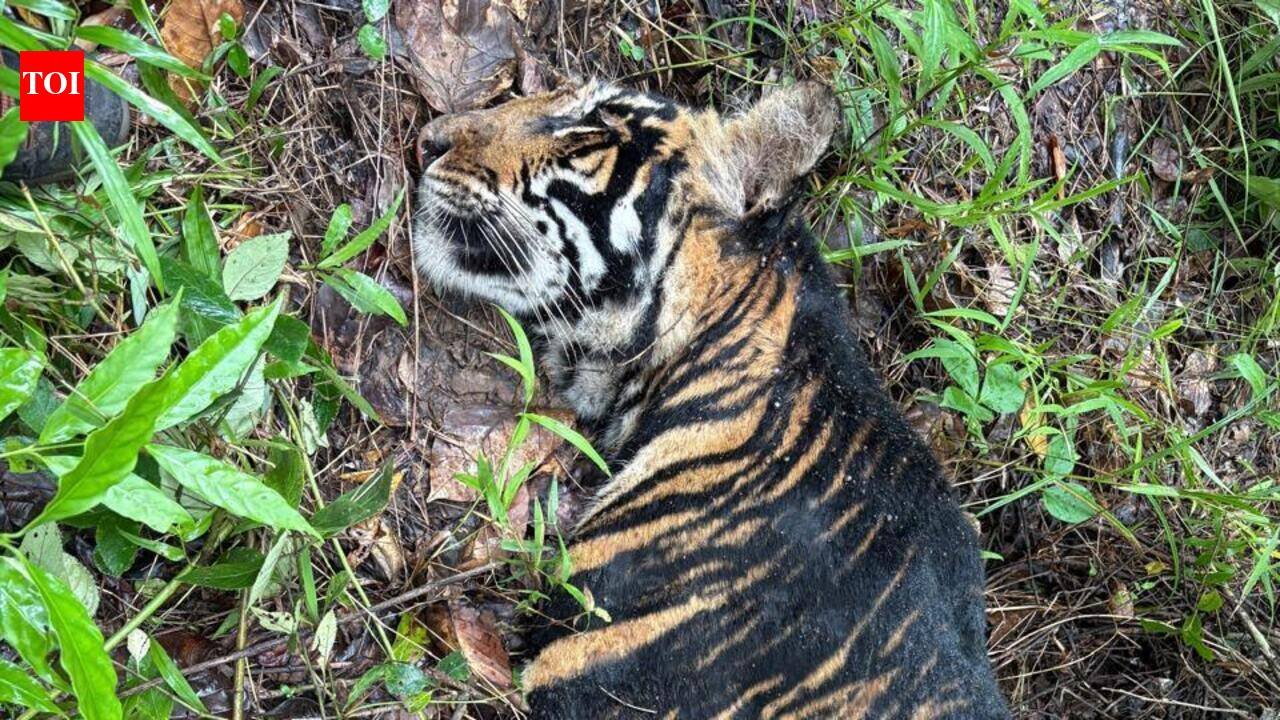
Bhubaneswar: A 5-year-old melanistic tigress was found dead at Upper Barakamada or UBK region in the deep core area of Similipal Tiger Reserve two days ago, forest officials said on Saturday. With it, 12 melanistic tigers remain in Similipal, the world’s largest habitat of melanistic tigers that once had 15.In May, a melanistic tiger skin had been seized from poachers from the fringe areas of Similipal. A male melanistic tiger died in the reserve in 2023 while a normal colour big cat died in 2024 due to infighting. Altogether, four tigers have died since 2023. Similipal authorities have been claiming that there are 35 tigers in the habitat.In the latest case, the post-mortem revealed that the tigress died of babesiosis, a tick-borne disease caused by parasites as its coat was severely infested by ticks. However, authorities don’t rule out snake bite. “From the recumbent posture of the carcass, it seemed that the animal struggled during death. Blood mixed mucus discharge was seen on the ground near the nostril and inside it. Oral mucosa was pale in appearance, and haemorrhagic spots were noticed over its gum. Semisolid mucoid substance was found in lumen of trachea and oesophagus seemed to be stomach content. Tracheal endothelium was haemorrhagic,” the autopsy report revealed.“The carcass was detected by patrolling staff of Jatiani camp. The spot was inspected by the field director. The post-mortem examination of the tiger carcass has been conducted following standard operating procedure of National Tiger Conservation Authority (NTCA),” said Similipal field director Prakash Gogineni. Wildlife authorities said they will find out what led to the infection. “To have a clarity on the cause of death all the tests, including canine distemper will be conducted at OUAT,” said PCCF (wildlife) Prem Kumar Jha.Similipal authorities said all prescribed biological samples were collected for toxicological, pathological and other laboratory examinations in accordance with the NTCA. “The samples were forwarded to the Centre for Wildlife Health (CWH), Odisha University of Agriculture and Technology (OUAT), Bhubaneswar, for detailed laboratory examination,” a note from Similipal reserve authorities read. The carcass was disposed of by incineration in the presence of the field director of Similipal.


