






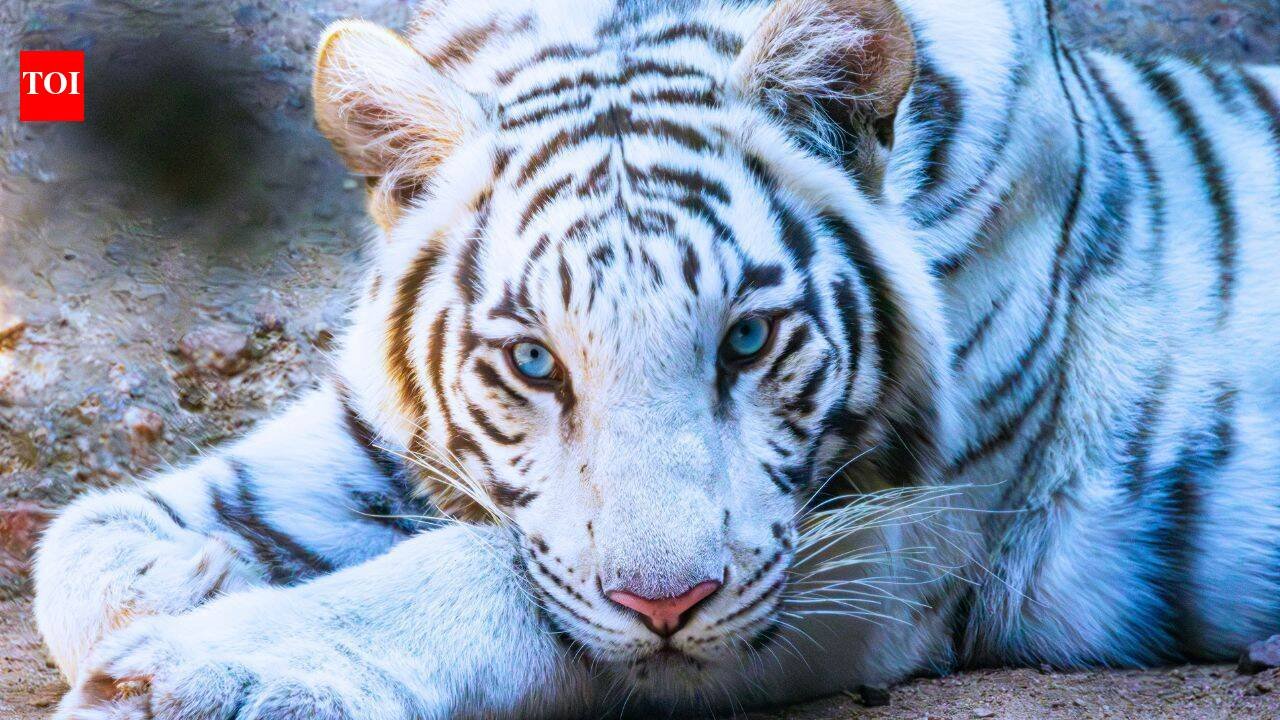
Dehradun Zoo just added a new attraction in the form of Tejas, a two-and-a-half-year-old white tiger. It gives wildlife enthusiasts another reason to visit the capital city. The little cub travelled nearly 550 km from Gwalior. He comes following an animal-exchange programme that saw the zoo’s approximately five-year-old Royal Bengal tiger, Bhola, move to Gwalior Zoological Park.For travellers planning a Dehradun visit, however, there is an important catch: Tejas will not be immediately visible to the public. After his journey of more than 14 hours, the young tiger has entered a period of quarantine and observation for about 20 days. So visitors will likely have to wait a month before he is put on display. During this period, his health, behaviour, feeding and adjustment to the new enclosure will be monitored.The blue-eyed Tejas
As per reports, Tejas is particularly striking because of his white coat and dark stripes. He has beautiful blue eyes. But despite the unusual appearance, a white tiger is not a separate species or breed of tiger. The white coat results from an inherited colour variation; unlike an albino.As per TOI reports, Tejas was translocated under the administrative supervision of Neena Grewal, principal chief conservator of forests and chief wildlife warden. The transfer was overseen by Vaibhav Singh, divisional forest officer, Dehradun, with a 13-member specialised veterinary team accompanying the tiger. The team was led by Pradeep Mishra, senior veterinarian at Doon Zoo, along with SDO Abhishek Maithani.Sharing his observations on Tejas on the second day after his arrival, Mishra said, “With its white coat, crisp dark stripes and vivid blue eyes, he scanned everything in sight. He didn’t hesitate for a second; the energetic young tiger immediately started exploring, confidently strutting along the fence, sniffing the air and checking out every inch of his new home with bold curiosity.”Dehradun Zoo, a new stop for wildlife loversDehradun Zoo, formerly known as Malsi Deer Park, is located along Mussoorie Road at the foothills of the Shivalik range. The municipal administration describes it as a mini-zoological park developed with objectives that include ex-situ conservation, biodiversity conservation, wildlife education and rescue.The zoo is around 9–10 km from Dehradun’s Clock Tower/city centre and lies on the route towards Mussoorie.The addition of Tejas also adds another layer to a city that already works as a gateway to several of Uttarakhand’s best-known natural and hill destinations. The state tourism department describes Dehradun as a gateway to Mussoorie, Haridwar and Rishikesh, while also highlighting attractions such as the Forest Research Institute, Sahastradhara, Mindrolling Monastery and zoo.Other wildlife attractions nearby
white tiger
Travellers interested in seeing wildlife in a natural setting can extend their trip to Rajaji National Park and Tiger Reserve, which spans parts of Dehradun, Haridwar and Pauri Garhwal districts. The reserve is known for its forest landscape and populations of elephants, tigers and leopards, besides a wide variety of birds and other wildlife.Rajaji can therefore complement a Dehradun itinerary for travellers who want to experience both wildlife conservation in a zoo setting and the biodiversity of a protected forest landscape.When should you plan a Dehradun wildlife trip?For those specifically hoping to see Tejas, it is worth waiting until the zoo officially announces that his quarantine period is over and that he is on public display. Travellers should check the latest zoo information.More than just a tiger sighting
White Tiger (Canva)
The arrival of Tejas gives travellers another reason to revisit Dehradun, but the bigger story is the city’s growing appeal as a base for nature, wildlife and outdoor experiences. From the Shivalik foothills and forested landscapes to nearby Rajaji and the road towards Mussoorie, Dehradun offers several ways to build a wildlife-and-nature-focused holiday.And once Tejas completes his quarantine, visitors may have an unusual opportunity: a white tiger in one enclosure and a more traditionally coloured Royal Bengal tiger nearby, offering a striking visual reminder of the natural variation found within the tiger species.


