






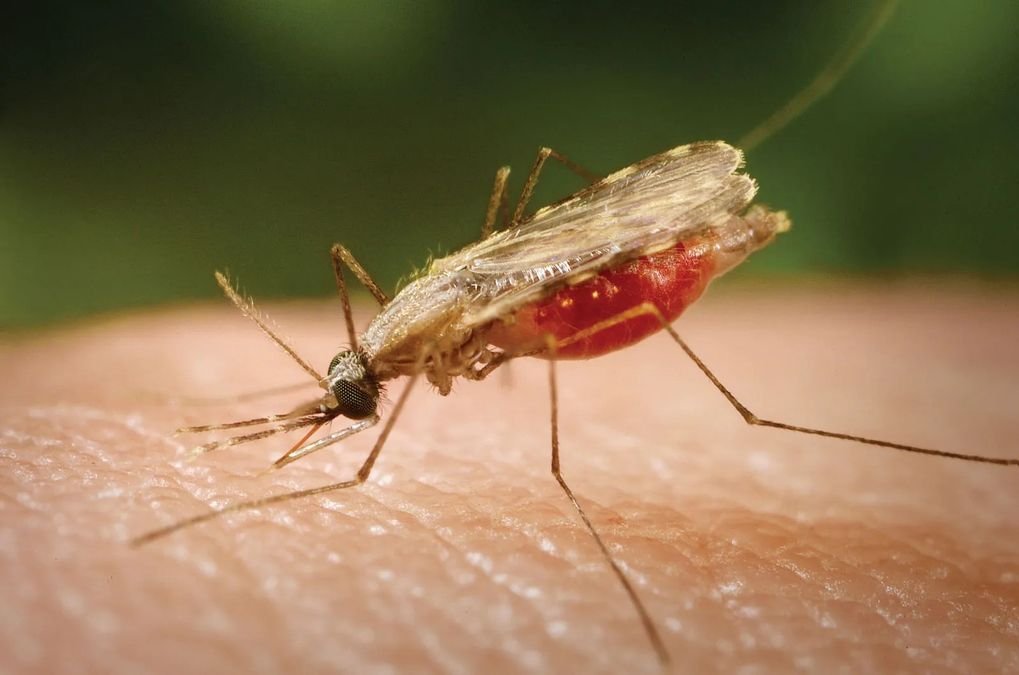
Srinagar, Aug 22: India has made significant progress towards eliminating major vector-borne diseases, with the Health Ministry reporting substantial declines in malaria and sustained gains in controlling Kala Azar and lymphatic filariasis.
As per the Annual Report 2025-26 of the Ministry of Health and Family Welfare, Government of India, under the National Vector Borne Disease Control Programme (NVBDCP), three diseases—Malaria, Kala Azar and Lymphatic Filariasis—are currently under an elimination programme.
The report said India achieved the elimination threshold for Kala Azar, defined as fewer than one case per 10,000 population, in 2023 across all 633 endemic blocks in 54 districts spread over four endemic States. The achievement came well ahead of the 2030 global SDG target and has been sustained since then.
According to the Health Ministry, India recorded a 78.15 per cent reduction in malaria cases and a 77.60 per cent decline in malaria-related deaths between 2015 and 2024, reflecting sustained efforts towards malaria elimination.
The report further stated that 160 districts across 23 States have reported zero indigenous malaria cases for three consecutive years since 2022.
The Union Health Ministry said these districts are therefore eligible for Sub-National Verification for Malaria Elimination, marking an important milestone in the country’s fight against the disease.
As per the World Malaria Report 2025, India officially exited the list of High Burden to High Impact (HBHI) countries in 2024. The country is also on track to meet the Global Technical Strategy for Malaria 2016–2030 target of achieving a 75 per cent reduction in malaria incidence by 2025, with reductions of 70 per cent or more already recorded in 2024.
The report also highlighted progress in the elimination of Lymphatic Filariasis, for which the elimination target is a microfilaria rate of less than one per cent.
During the Mass Drug Administration (MDA) campaigns in 2025, the country achieved 94 per cent coverage across 111 districts and 696 blocks in 13 States during the February round.
Similarly, the August MDA round recorded 95 per cent coverage across 50 districts and 394 blocks in four States, indicating improved community participation and strengthening of the country’s efforts to interrupt transmission of lymphatic filariasis.
The Health Ministry said these achievements reflect sustained implementation of disease surveillance, early diagnosis and treatment, vector control measures, mass drug administration and community-level interventions under the national elimination programmes.


