






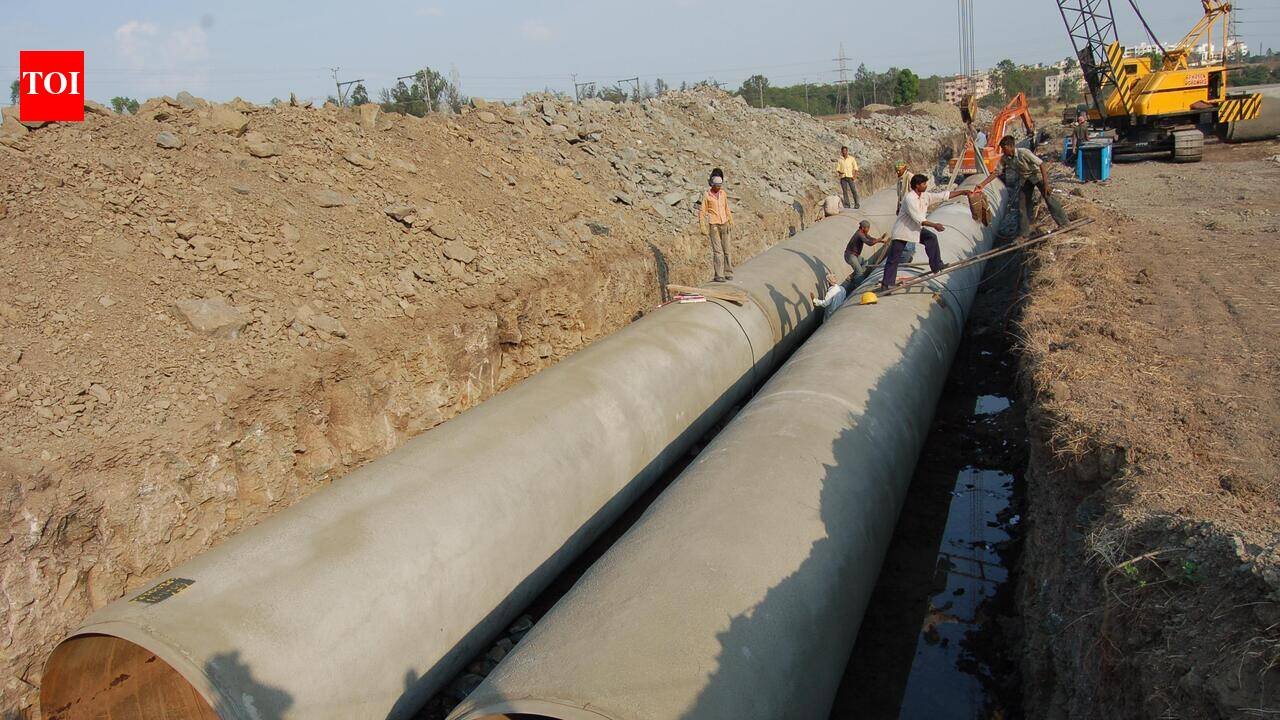
Pune: Chief minister Devendra Fadnavis has convened a meeting of all stakeholders on July 3, including MPs, MLAs and senior officials from Pimpri Chinchwad and Pune district, to discuss possible revival of the long-pending Pavana closed water pipeline project.However, farmers who had initiated the agitation against the project said they had not received any official communication regarding the meeting and warned that they would not accept any decision taken without consulting them. The project has remained stalled since 2011 after protests against it turned violent, leaving three farmers dead in police firing.Although the state govt lifted the stay on the project in 2023 and the Pimpri Chinchwad Municipal Corporation (PCMC) prepared a revised detailed project report (DPR), work is yet to resume due to continued opposition from farmers and lack of funds. While the civic body now plans to finance the project from its own resources, concerns over renewed protests prompted elected representatives to seek the chief minister’s intervention.Maval MP Shrirang Barne and Bhosari MLA Mahesh Landge had urged Fadnavis to convene an all-party meeting to break the deadlock. Landge said the meeting, scheduled at 3pm on July 3, will be attended by public representatives from Pimpri Chinchwad and Maval, PCMC commissioner, Pune district collector, divisional commissioner and senior irrigation department officials. “The need for the project has grown with Pimpri Chinchwad’s rising water demand. Our effort, along with the chief minister, is to restart the project while ensuring that no injustice is caused to farmers, landowners and villagers,” Landge said.Launched in 2009, the project was suspended in 2011 after Prithviraj Chavan, who was chief minister then, halted the work following violent protests. The project envisages laying a 34-km closed pipeline from Pavana dam to the PCMC’s water treatment plant at Ravet. Around 4km of the pipeline was completed before work stopped, leaving nearly 30km still pending.Originally estimated at Rs398 crore, the project’s cost has now escalated to around Rs1,200 crore under the revised DPR. Civic officials said the pipeline would enable the PCMC to utilise an additional 100MLD of water from the Pavana dam that is currently lost to evaporation. They added that drawing water directly from the dam would also improve drinking water quality by avoiding pollution in the downstream river.The farmers’ group opposing the project said it had not been informed about the July 3 meeting. Dnyaneshwar Dalvi, president of the Pavana Closed Water Pipeline Project Kruti Samiti, said it was “unfortunate” that those likely to be affected by the project had neither been consulted nor invited for discussions. Dalvi said nearly 75 villages depend on water released from the Pavana dam into the river for irrigation. “Most farmers in these villages own barely one or two acres of land and rely entirely on this water for cultivation. If the water is diverted directly from the dam through a closed pipeline, how will these farmers survive?” he asked.Clarifying that the group was not opposed to the civic body’s plan to draw water from the dam, Dalvi said it should not come at the cost of farmers who had already sacrificed their land for the dam. “We opposed the project in 2008 and will continue to oppose it even now,” he said.Narayan Bodke, president of the Pavana Dam-Affected Farmers Committee, said 863 farmers who surrendered their land for the construction of the dam in 1972 are still awaiting rehabilitation and the allotment of the land promised to them. “We have been demanding the same rehabilitation package that was extended to 340 other affected farmers, but all we have received over the years are assurances,” Bodke said.The farmers are demanding four acres of land each in lieu of their land acquired for the project. Under an earlier rehabilitation plan, they were to receive two acres near the dam site and another two acres elsewhere in the district, subject to land availability, on the same lines as the 340 farmers who were rehabilitated. However, Bodke said the decision was never implemented.


