



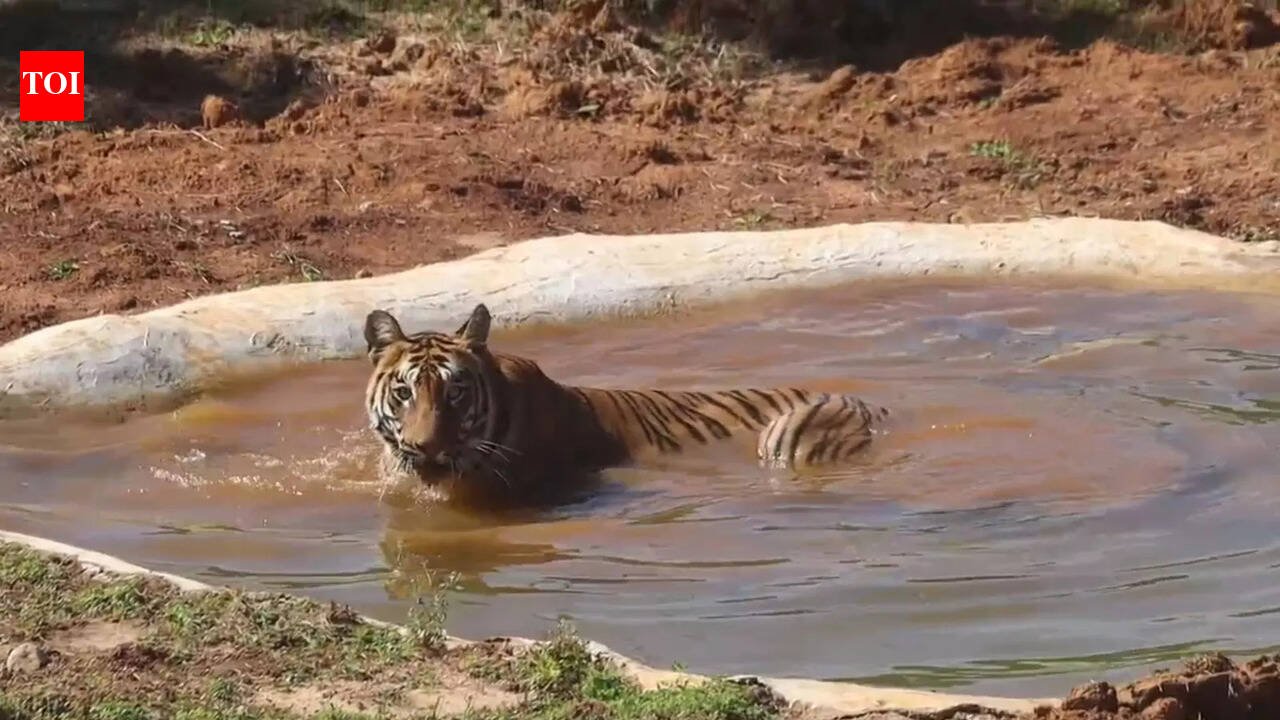
Bhubaneswar: The second phase of tiger translocation in the state is caught in a catch-22 situation. While Madhya Pradesh is ready to give away its tigers for Debrigarh Wildlife Sanctuary, Karnataka is reportedly dilly-dallying on providing kumki elephants, a mandatory requirement before tigers are brought.Earlier, Debrigarh authorities visited Madhya Pradesh to study tiger habitats there. The MP wildlife wing is also keen on giving the right pair of a male and female big cat, wildlife officials said.After Similipal’s tiger translocation in the first phase in Oct-Nov 2024, bringing tigers from Maharashtra, the second phase is awaited in Debrigarh. The wildlife wing wrote to its Karnataka counterpart but the latter is yet to confirm if kumki elephants would be given, officials said.“In recent years, we faced challenges in mitigating human-elephant conflict. Your help in getting kumki elephants would greatly assist us in addressing the conflicts. The elephants can be used for patrolling and monitoring. In view of the urgency, I request your prompt consideration of our proposal to give 5-6 kumki elephants with mahouts,” Odisha chief wildlife warden Prem Kumar Jha wrote to his Karnataka counterpart.He said they are yet to get any signal from Karnataka as to whether kumki elephants would come.In Debrigarh, wildlife authorities geared up to meet mandatory requirements such as villagers’ sensitisation, making a soft enclosure, capacity building and erecting 120-km-long iron mesh fencing.“All villages inside the sanctuary were successfully relocated before 2023, and they were rehabilitated outside. The sanctuary has 350 sq km of inviolate breeding space available. Community engagement programmes like Debrigarh Abhinandan, storytelling sessions and eco-development activities ran successfully for the past three years,” said a wildlife officer.Additionally, 30 per cent work on the physical barrier of wire mesh, continuous contour bunds and solar fencing was completed. Seven per cent of the sanctuary is now converted and maintained as meadow, officials said.Officials said local people’s representatives and villagers need to understand the need to bring tigers so that, post-release, any hiccups could be handled without hassle.The 120-km-long steel mesh boundary along the human habitation side is meant to maintain a barrier between 150 villages and the sanctuary. This is to pave way for the much-awaited tiger translocation to allay fear among the community regarding the possible dispersion of animals, especially big cats.Earlier, the wildlife wing wrote to the revenue department to hold a gram sabha in 55 villages adjoining Debrigarh Wildlife Sanctuary, a mandatory exercise before notifying it as a tiger reserve. Recently, an expert committee formed to conduct a study in the sanctuary also submitted its report.


