



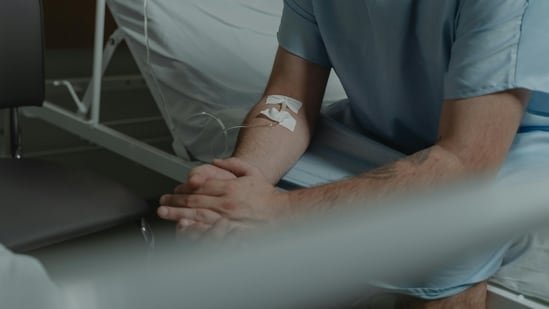
On paper, I am rare. In real life, I am the man waiting in OPD queues, googling symptoms at 2 a.m., and nodding politely when someone says, “But you look fine.” Rare feels ordinary — until it doesn’t.
I live with Isaacs’ syndrome, a rare neurological condition that causes continuous muscle stiffness, twitching, cramps and nerve hyperexcitability. In simple terms, my nerves forgot how to relax. In India, that almost sounds like a personality trait. But there is nothing quirky about a body that refuses to switch off.
Healthcare system still falls short
If rare diseases were an Olympic sport, Indian patients would win gold in hospital hopping. I went from neurologists to rheumatologists, orthopaedic specialists to psychiatrists. There were blood tests, EMGs, MRIs — and then the cycle would begin again. Over time, I developed a rehearsed introduction: “Hi, I’m Archith. This file is my plus one. It weighs more than MBBS textbooks. If medical records earned frequent flyer miles, mine would be platinum.”
Doctors flipped through pages while I flipped through hope.
The hardest part was never just the pain. Pain can be measured, scanned, and charted. Invisibility cannot. Rare diseases don’t always arrive dramatically; they whisper, mimic other conditions, and confuse even seasoned clinicians. In an already stretched healthcare system, unusual symptoms are often dismissed as stress, vitamin deficiency, or something that will “settle.” Mine didn’t.
By the time a rare disease is finally diagnosed, the patient is not only medically exhausted but emotionally drained. India has millions living with rare conditions, yet because each individual disease affects a small percentage of the population, they are treated like statistical footnotes. There is limited awareness in primary care, expensive or inaccessible genetic testing, delayed diagnoses, fragmented treatment pathways, and insurance battles that feel like courtroom dramas. The irony is that rare does not mean insignificant. Globally, more than 7,000 rare diseases have been identified, and in a country as large as India, even a “rare” disorder can affect thousands. The system is designed to treat what it sees often; it struggles with what it sees rarely.
Then there is the social script. At family gatherings, advice arrives generously — yoga, turmeric, miracle cures forwarded on WhatsApp. At work, the questions are gentler but no less heavy: “Can you push through?” “It’s just fatigue, right?” You learn to compress neurology into digestible explanations. You smile, reassure, and simplify. Later, at home, you manage muscles that refuse to relax. Humour becomes survival, because if you don’t laugh at the twitching sometimes, you might cry at the pharmacy bill.
What the system still doesn’t see are the invisible costs — the years before diagnosis, the mental health toll, the financial strain, the isolation of being “the only one,” and the constant self-advocacy required just to be heard. Awareness is not about sympathy; it is about equipping primary doctors to recognise red flags, expanding access to genetic testing, supporting domestic research, strengthening insurance coverage, and building registries that reflect the real scale of the issue. What healthcare does not see, it cannot fix. What society does not understand, it cannot support.
Living with Isaacs’ syndrome changed more than my nervous system; it changed my philosophy. Rare diseases are not rare experiences. They are stories of delayed answers, quiet resilience, and families navigating uncertainty. Through advocacy, I have met parents fighting for diagnoses, young adults balancing careers with chronic symptoms, and doctors trying their best within limited infrastructure. The rise in rare conditions is not a scare headline; it is a wake-up call. The future of healthcare in India cannot focus solely on high-volume diseases. It must also prepare for low-frequency, high-complexity conditions.
I am rare, but I am not alone. If you are living with a rare condition — diagnosed or still searching — I see you. If you are a doctor piecing together unusual symptoms, thank you. If you are a policymaker, Rare Disease Day is more than a date; invisibility itself is a healthcare crisis. Rare diseases may be medically uncommon, but in India, the struggle around them is far too common. I am rare. But I am not invisible — and neither are the millions waiting for a system that finally learns to see.
About the Author
Founder of Ordinarily Rare, Archith Shah lives with Isaacs Syndrome, a rare neurological disorder, and turns that experience into storytelling and advocacy.


