



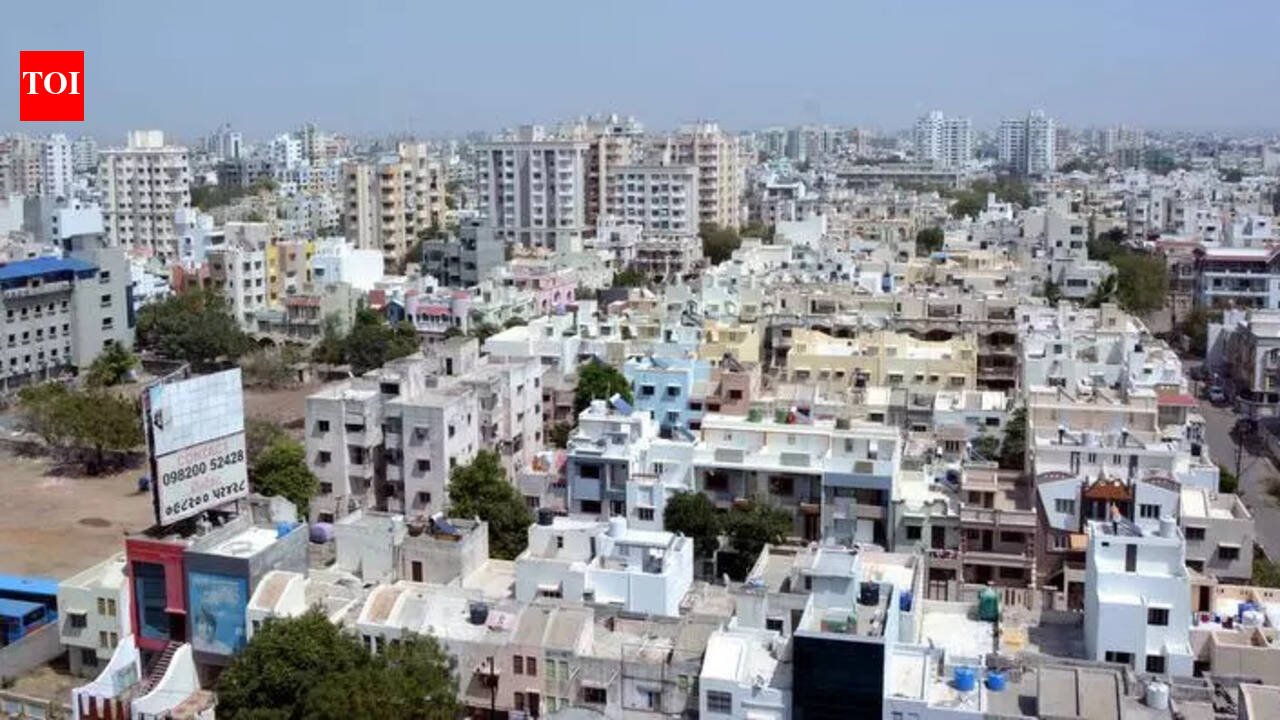
Rajkot: The real estate sector here is facing a severe liquidity crisis that has dragged on for the past two years, reflected in a sharp fall in projects registered with the Real Estate Regulation Authority (RERA).The crunch is driven by several factors, including global economic volatility that has hit profits in industries in the region, investors shifting funds to commodities such as gold, silver and copper and a large volume of money vanishing after the bankruptcy of key financiers. The slowdown has been so sharp that the Rajkot Builder Association (RBA) postponed its biannual property expo this year, citing the absence of new projects to showcase. The last expo was held in 2024. RERA data underlines the slide. The number of registered residential and commercial projects dropped from 101 in 2022-23 to 79 in 2024-25 and further to 68 in the current financial year. Rajkot’s real estate market depends heavily on non-conventional finance. Only 15% to 20% of project funding comes from banks, while the rest is typically provided by financiers with other business interests. These financiers either act as silent partners or buy units in bulk at nominal pre-development rates, a system now at the heart of the crisis. Dhruvik Talaviya, a developer, pointed to stress in the industrial belt around Rajkot, including Shapar, Metoda and Morbi. “These industrialists used to invest in real estate, but for the last year, their businesses have seen uncertainty due to export-related issues and US tariffs. As their profits shrank, they stopped pouring money into real estate,” he said. Investment also shifted to commodities during the boom phase. Another developer, Raju Pobaru, said, “The prices of metal were skyrocketing and people had invested heavily, believing there was no turning back. But metal prices fell drastically. Such drops are not seen in real estate.” Sources said the core of the liquidity crisis lies in the collapse of several large financiers. Some went bankrupt, taking with them the money of many small investors. An estimated Rs 2,500 crore to Rs 3,000 crore is believed to have disappeared from the market, triggering the current cash crunch. The strain is forcing builders to find new ways to acquire land. “We give a farmer land in other villages in exchange for land near Rajkot and pay about 20% to 30% of the price in cash. The use of this practice has increased manyfold in the last year,” said one builder, explaining the rise in land barter deals.


