



Srinagar, Aug 13: Two teenagers were killed and two others injured after a lightning strike hit the Gawran Nard area of Larnoo in south Kashmir’s Anantnag district on Thursday, highlighting the growing threat posed by extreme weather events across J&K.
Officials said the incident occurred during a thunderstorm when lightning struck a group of people in the area.
The deceased were identified as Faizan Ahmad (18), son of Mohammad Yaqoob Chard, a resident of Gawran, and Bilal Ahmad Battana (16), son of Nazir Ahmad, a resident of Redwani Gawran.
The injured were identified as Sajad Ahmad Battana (15), son of Sai Battana, and Shareef Ahmad Battana, son of Jumma Battana, both residents of Redwani Gawran. They were rushed to the Primary Health Centre (PHC) Larnoo for treatment. Officials said their condition was being monitored.
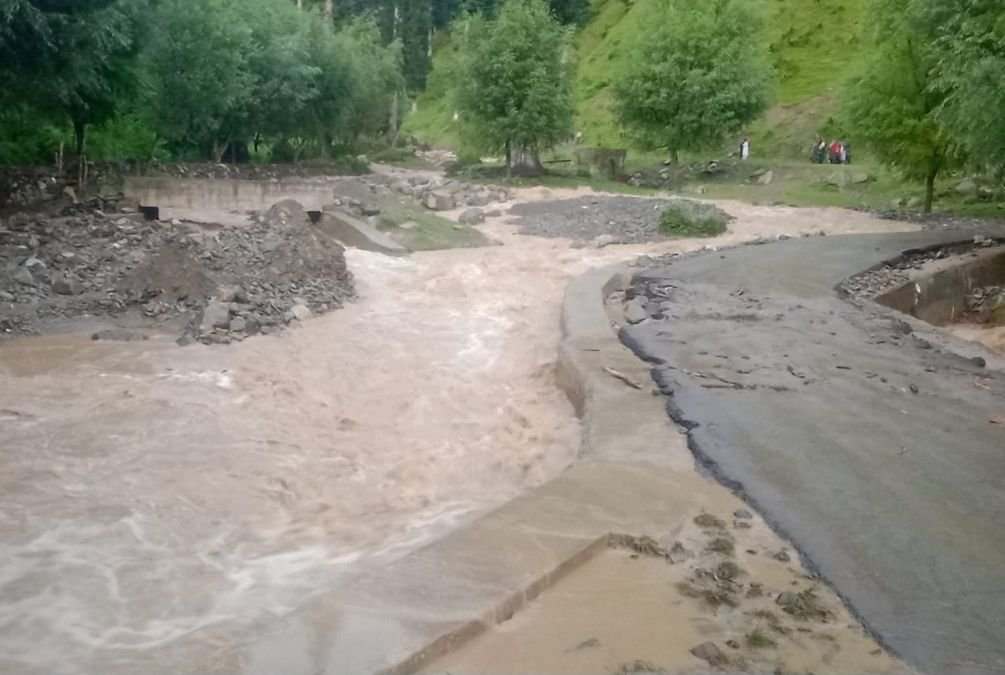
The latest tragedy comes amid a season marked by frequent thunderstorms, cloudbursts, flash floods and landslides across Jammu and Kashmir. Since June, at least 32 people have lost their lives in weather-related incidents, including cloudbursts, flash floods, landslides and lightning strikes, while dozens have been injured and significant damage has been caused to homes, roads and agricultural land.
Dr Touseef Ahmad Bhat, climate expert and Assistant Professor at the University of Kashmir, said lightning activity is closely linked to the intensity of thunderstorms.
“Lightning forms when towering thunderclouds develop strong electrical charges due to collisions between ice particles and water droplets. A warmer atmosphere can hold more moisture and energy, leading to stronger convective storms and increasing the likelihood of intense lightning,” he said.
“While not every lightning event can be directly attributed to climate change, rising temperatures are creating conditions favourable for more powerful thunderstorms,” Dr Bhat added.
Afreen Khurshid, PhD researcher in the Department of Environmental Science, University of Kashmir, said lightning is among the most underestimated weather hazards in the Himalayan region.
“People working outdoors, particularly in open fields, high-altitude meadows and mountainous terrain, remain highly vulnerable during thunderstorms. As weather patterns become more erratic, there is a growing need for better early-warning dissemination, public awareness and adherence to lightning safety protocols,” she said.
She advised people to immediately seek shelter inside a substantial building or enclosed vehicle when thunderstorms develop and avoid taking refuge under isolated trees, standing in open fields or remaining near water bodies and metal objects.
Meteorological experts have repeatedly advised residents to remain indoors during thunderstorms and avoid outdoor activities when lightning warnings are issued, as even a single strike can prove fatal.
The incident has once again underscored the increasing vulnerability of Jammu and Kashmir to extreme weather events, with experts stressing that preparedness, timely forecasts and public awareness are essential to reducing casualties.


