



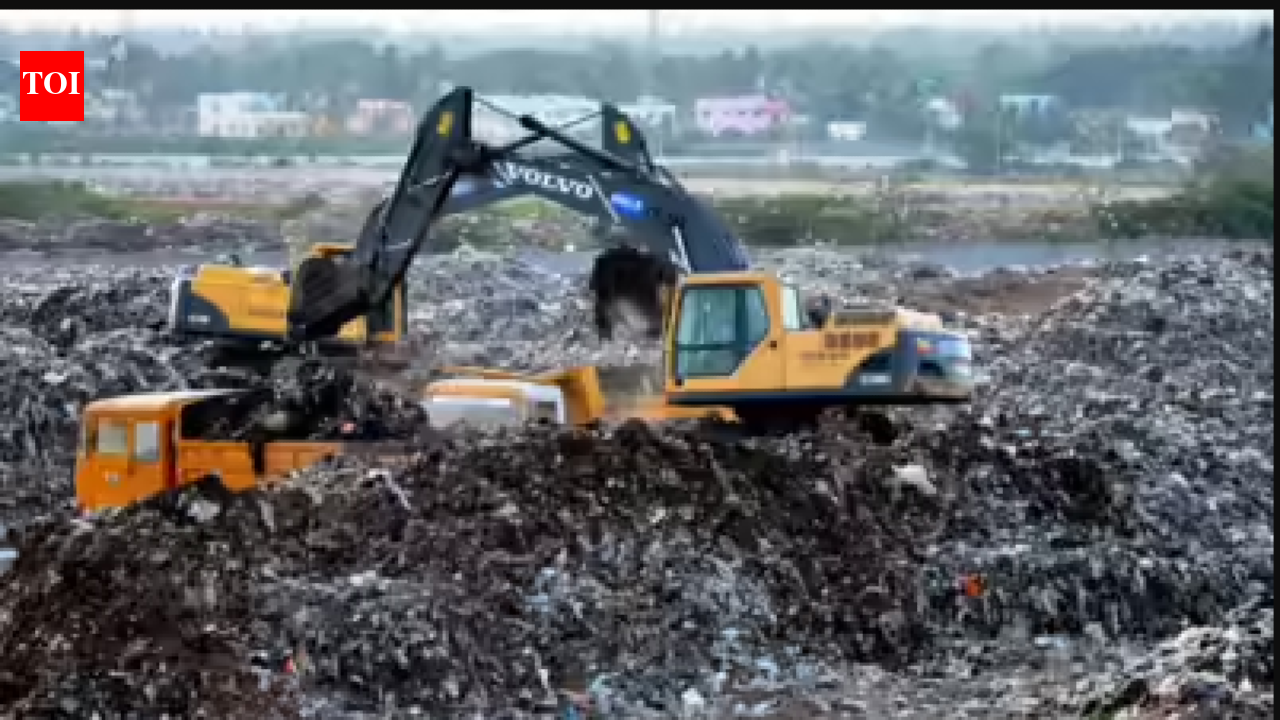
COIMBATORE: Reports from the Tamil Nadu Pollution Control Board and a private lab have revealed a high level of contamination of groundwater in residential areas surrounding the Vellalore dumpyard in Coimbatore. According to the TNPCB report, the total dissolved substance in the water was found to be 3,600 mg/l, exceeding the permissible level of 500 mg/L up to 2,000 mg/L maximum.In February, a TNPCB team collected 20 water samples from Vellalore dumpyard and borewells in the surrounding residential areas. The collected samples included those from the leachate treatment plant (LTP) inlet and outlet and the leachate pit of the sanitary landfill. According to the TNPCB report, the TDS levels reached nearly 19,000 mg/l in the leachate samples.Likewise, the test reports from the private lab (SITARC) in the first fortnight of March identified the presence of E. coli and coliform bacteria that pose a severe health risk to the residents. The private lab report recorded a total hardness of 1300 mg/L, more than two times the limit, and chloride at 1806 mg/L, indicating extremely high contamination.K S Mohan, secretary of the Kurichi-Vellalore Pollution Prevention Action Committee, said, “The E.coli and coliform confirm sewage contamination, making the water completely unsafe for human use and the residents vulnerable to water-borne diseases like diarrhoea, typhoid and cholera. These reports clearly prove the leachate seepage from the dumpyard, mixing of garbage waste and sewage into groundwater.”Corporation commissioner M Sivaguru Prabakaran said a scientific storage of leachate with lagoon has been created using bentonite clay, a chemical clay material that prevents leachate seepage into the soil. Prabakaran said this would prevent groundwater contamination.The lagoon spans about 50 cents of land on the dumpyard premises, 30 metres in length, 90 metres in width and one metre in depth, capable of storing approximately 2.7 million litres of leachate water. The soil stabilisation, which is the base, is prepared by laying a layer of sand, over which bentonite is placed along with protective layers, and then the leachate is let into the lagoon, he said.


