






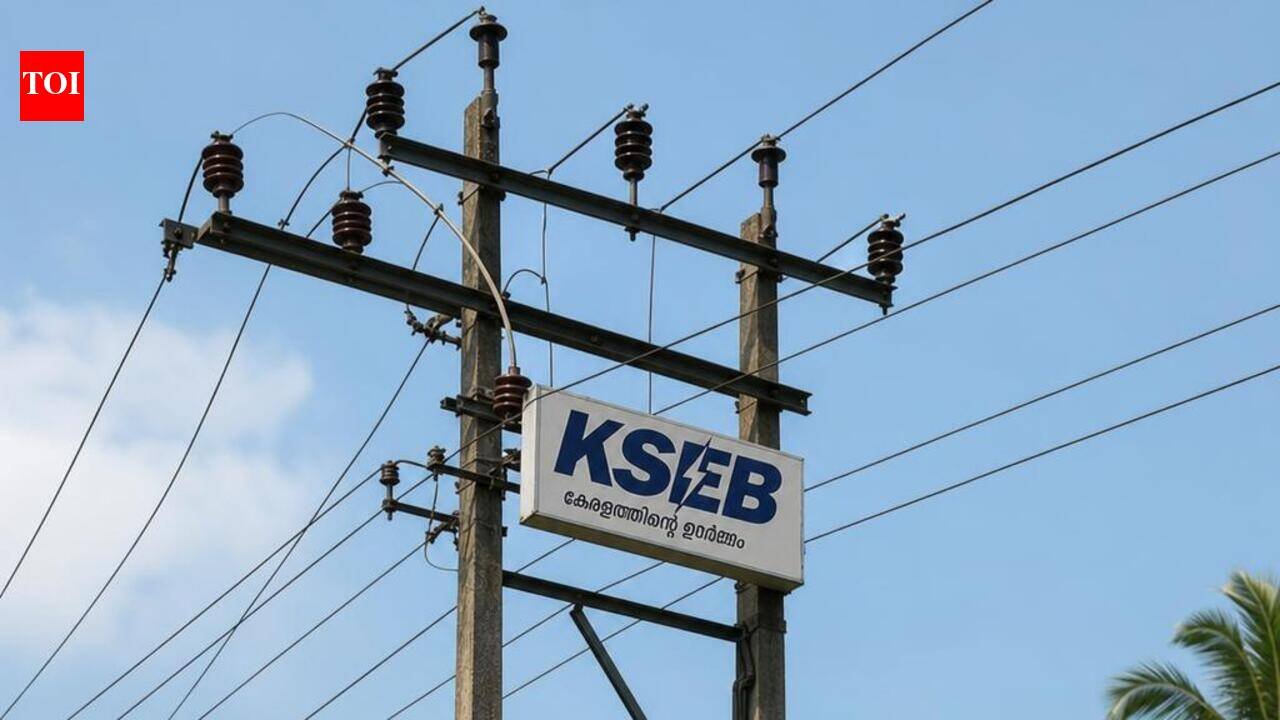
Thiruvananthapuram: KSEB authorities have warned that the state electricity regulator’s decision to reject a large part of the board’s short-term power procurement plan could limit its ability to manage shortages and grid schedules in the coming months.Power restrictions continue amid an acute shortage caused by rising consumption and reduced availability in the national market. The daily deficit is hovering at 900 MW or more, while peak demand crossed 5,000 MW in Sept.In its Sept 11 order, Kerala State Electricity Regulatory Commission (KSERC) approved the purchase of 346.42 million units (MU) of peak-hour power for Rs 347.79 crore between Oct 2026 and May 15, 2027. KSEB had proposed procuring 835.50 MU between Sept 2026 and May 15, 2027, at an estimated cost of Rs 749.72 crore.The commission rejected all purchases proposed by KSEB for Sept — 100 MW of night-time off-peak power between midnight and 5 am at Rs 9.15 per unit and 25 MW of round-the-clock (RTC) power at Rs 6.50 per unit. It reasoned that the night-time demand of 4,000 MW–4,200 MW in Sept could be met using available hydel resources and contracted capacity. It also held that off-peak power purchases would not ease the peak-hour shortage, while RTC supply could result in surplus power during daytime solar hours.KSEB authorities, however, questioned the description of the Rs 6.50-per-unit RTC offer as excessive when substantially costlier peak-hour purchases were approved for subsequent months. The approved tariffs range from Rs 9.40 per unit in Jan and Feb to Rs 12.50 per unit for portions of the April and May purchases. They said such observations could send a wrong signal to generators and traders, affecting KSEB’s ability to secure power through future tenders. Inadequate contracted capacity could also make it harder to manage sudden demand fluctuations while complying with grid withdrawal limits.KSERC approved 295 MW of the 500 MW sought for Jan and 331 MW of the 500 MW proposed for Feb. The remaining bids were rejected as the suppliers did not match the lowest tariff of Rs 9.40 per unit. The commission also rejected 450 MW of night-time off-peak power and 300 MW of RTC supply proposed for April, besides 240 MW of off-peak power and 260 MW of RTC supply for May. It, however, approved peak-hour purchases for both periods in view of the anticipated shortage. The utility has projected peak shortages ranging from 500 MW to 2,000 MW until May 15, 2027.KSERC said availability could improve with the northeast monsoon, lower winter demand and the commissioning of battery energy-storage projects. It also directed KSEB to strengthen demand-side management, explore power-banking arrangements with other states and conserve reservoir water for peak-hour generation. KSEB officials said the commission was placing too much reliance on battery energy-storage systems (BESS), whose costs fluctuate with battery prices amid China’s dominance of the global battery supply chain.


