






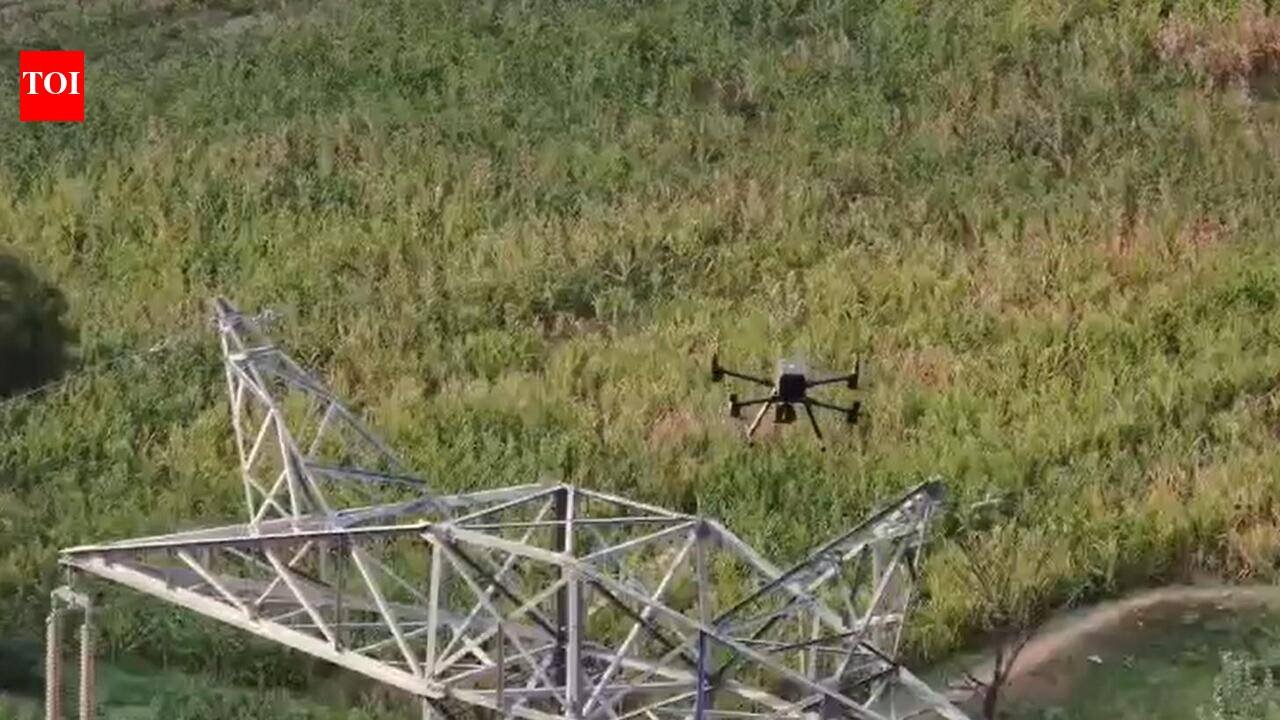
Bengaluru: As power utilities across the world increasingly deploy artificial intelligence (AI), drones and digital twin technology to modernise electricity networks, Karnataka has taken a significant leap in that direction. Moving away from the age-old practice of manually climbing transmission towers — often located in forests, hilly terrain and other inaccessible locations — the Karnataka Power Transmission Corporation Limited (KPTCL) has begun using advanced drones equipped with thermal imaging cameras and LiDAR sensors to inspect and monitor the state’s high-voltage power transmission network.The technology-driven initiative marks a major milestone in the digital transformation of Karnataka’s power sector. KPTCL plans to deploy a fleet of drones to inspect more than 11,000 high voltage and extra high voltage transmission towers. “Henceforth, the fleet of drones will inspect more than 11,000 high voltage and extra-high voltage transmission towers across Karnataka. During the pilot study over the past few weeks, the drones have identified and rectified over 1.5 lakh technical defects and helped reduce transmission-related outages by 85%,” said Ram Prasath Manohar, IAS, managing director, KPTCL.
A thermal image captured by a drone-mounted camera shows a section of the transmission network where abnormal heat buildup has identified a defect caused by increased load on the transmission line.
Senior KPTCL engineers said the drones are equipped with high-resolution optical cameras, thermal imaging systems and LiDAR sensors, enabling detailed inspections of transmission towers, conductors and insulators with far greater accuracy than conventional methods. “Thermal cameras detect abnormal heat signatures and hotspots caused by loose electrical connections or deteriorating equipment, allowing utilities to undertake predictive maintenance before faults develop into major outages,” a senior KPTCL technical officer explained.Beyond inspections, the drone programme forms a key pillar of KPTCL’s broader digital transformation roadmap. The data generated through aerial surveys is being integrated into the corporation’s digital asset management system and will eventually feed into its upcoming Digital Twin Platform. Once operational, the platform will create a real-time virtual replica of Karnataka’s transmission network, enabling continuous monitoring, predictive analytics and faster decision-making from the central control room at the newly-inaugurated Energy Bhavan in Bengaluru.
A close-up drone image revealing a damaged transmission line of KPTCL’s network in Karnataka.
Highlighting the shift towards predictive maintenance, Ram Prasath said, “Our focus is shifting from repairing faults after they occur to identifying and addressing risks before they lead to failures. This predictive maintenance model is making Karnataka’s transmission grid more resilient and reliable. By leveraging advanced technologies, we are ensuring uninterrupted power supply to farmers, industries, and consumers while simultaneously enhancing the safety of our field personnel.”Energy minister KJ George said the adoption of drone technology has considerably improved the corporation’s ability to detect faults before they result in outages. “Inspecting Karnataka’s vast transmission network spanning nearly 45,000 kilometres through conventional methods is both time-consuming and challenging. By deploying drones equipped with thermal imaging and LiDAR technologies, we can now conduct comprehensive 360-degree inspections of transmission assets in a fraction of the time. The technology enables our engineers to detect even the smallest defects that are invisible to the naked eye,” he said.
A file photo of KPTCL’s transmission network passing through dense forest in southern Karnataka.
Key Milestones Achieved By Drone Fleet* Power outages reduced by 85% * Power outages dropped from 519 to just 73 across inspected corridors* Drones inspected more than 3,370 km of transmission lines * Inspected lines include 2,500 km of 220 kV and 843 km of 400 kV corridors * Checked over 11,000 transmission towers, spans* Over 1.50 lakh defects identified


