



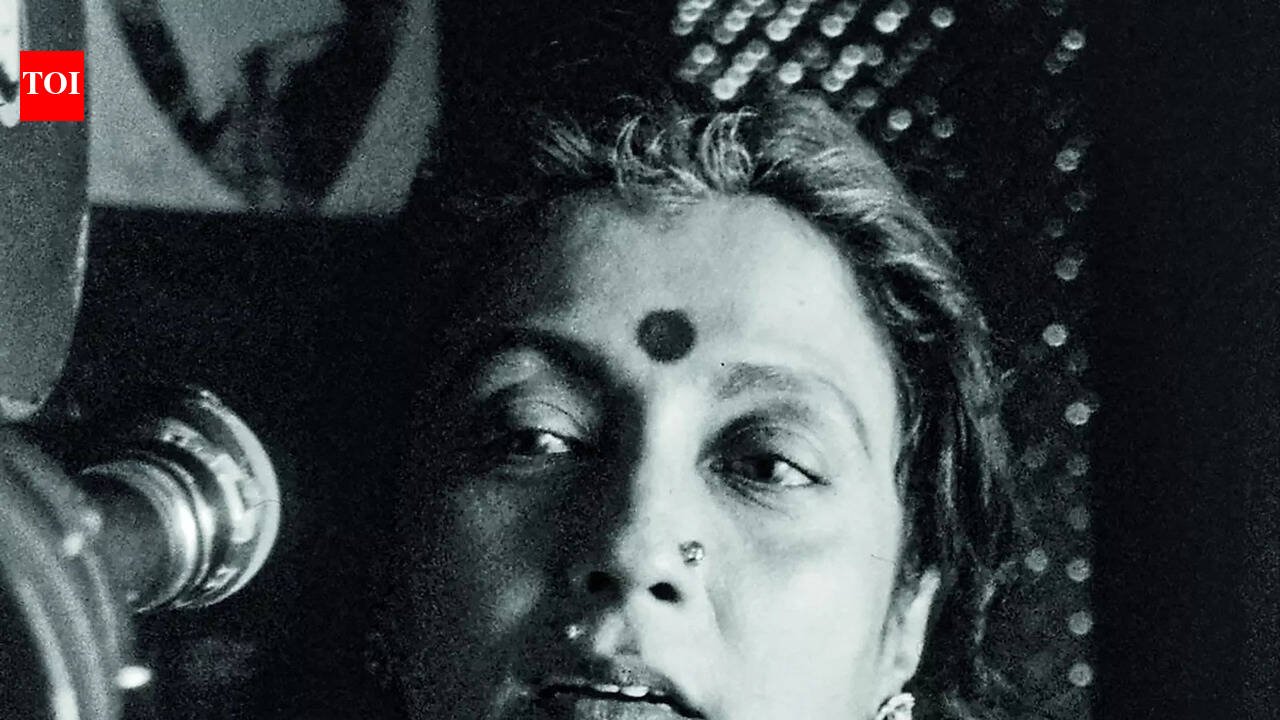
Fearless, perceptive and deeply human in her storytelling – Aparna Sen has spent decades reshaping the way Indian cinema looks at women, identity and society. From her early acting years in films like Teen Kanya to powerful performances in Unishe April, Sen evolved into one of the country’s most distinctive filmmakers. Her directorial debut 36 Chowringhee Lane won the National Film Award for Best Director, and she went on to create bold, thought-provoking films such as Parama, Mr and Mrs Iyer and The Japanese Wife — works that confront gender, loneliness, prejudice and moral conflict with uncommon honesty. That’s what makes her a changemaker. For CT’s 25th anniversary, the filmmaker explores her evolving relationship with cinema, what Kolkata means to her and more. Excerpts:
I’m not drawn to cinema that relies on speed to keep audiences engaged. The subject should determine the film’s pace because a viewer can be deeply engaged when the mood is right
Aparna Sen
Your films often feel handcrafted — patient, intimate and deeply observant. In an age of speed, what does craft mean to you today? Also how has your relationship with it evolved over the years?Nuanced characterisation combined with good acting is often sufficient to hold the attention of the viewer. My films are usually probing and introspective. My narratives often deal with loneliness or complex emotional situations, which demand a probing and observant style. If I were to make a crime thriller, I would probably make sure that the narrative was pacy. Not necessarily, though! A crime thriller like Ripley made in black and white, moves quite slowly but engages one’s attention throughout. Having said that, my latest film The Rapist, which still hasn’t seen the light of day, is pretty pacy.The city you belong to has always felt like more than a backdrop in your work — it breathes, remembers, and sometimes argues back. How has your relationship with Kolkata changed as both of you have matured together?For me, Kolkata has always been a living, breathing presence – a city that I have loved and hated in equal measure. I have known and loved its smells in different seasons…its sounds…the calls of its hawkers who ferried their ware down its roads and alleyways, the fruits they sold in winter, those in summer, and those during the monsoon; the sound of the trams that went majestically by and the sweet sound of rickshaw bells. I loved the somnambulant afternoons, silent as midnight, broken only by the cawing of a crow, or a Kabuliwallah’s deep baritone calling out, ‘Heeng chaai, heeng…” I knew the quality of light in my city at different times of day. I loved its nor’westers and its hailstorms…its winters, where monkey caps smelling of naphthalene came out of rusty iron trunks as soon as the barometer touched 15 degrees; its blazing Gulmohar summers setting the streets on fire. Equally, I hated its piles of garbage lying at every street corner with stray dogs scattering them all over; its traffic snarls and the endless waiting for traffic to start moving again…the waterlogged streets filled with unimaginable floating filth, which was also fun in a way when we were children, sailing our paper boats in the muddy water…its forever power cuts…All that disappeared as I grew up…the sleepy afternoons, the waterlogged streets… The hawkers disappeared along with the little neighbourhood grocery stores as malls and multiplexes began to take their place…stand-alone houses gave way to multistoried complexes…power cuts became a thing of the past…the parks, those small oases of green where children played after school, vanished along with street cricket. Garbage has been taken care of to a large extent as has the traffic. In fact, Kolkata can now boast of the best regulated traffic in any Indian metropolis. The Gulmohar trees still bloom against the summer sky, but the time to watch them and marvel seems to have disappeared from our lives. I, too, have matured along with my city and grown busier and more materialistic. Looking back, are there moments in the city — streets, sounds, silences — that quietly shaped your artistic sensibility before you were even aware of it?Yes, indeed. All that had become a part of my persona. It shaped me and my sensibilities and made me the artist I am, informing my films as I made them, without my being aware of the process. When you create, your life experiences become your resource material and that’s what you naturally draw from. Your cinema often finds beauty in restraint and in the unsaid. Do you think this aesthetic comes from deliberate choice, or from a deeper way of seeing the world?It’s difficult to say… it’s a bit of both. I tend to like things left unsaid and endings left open. It leaves so much more to the audience’s imagination, which I do not like to underestimate. I remember when making 36 Chowringhee Lane, my chief assistant kept insisting that I take a close up of Jennifer Kendal (as Miss Stoneham) when she watches the young couple at their Christmas party, which she has been deliberately left out of, from outside the glass window. “You can always throw it away during editing if you find you don’t need it,” he persisted as I started setting up for the next shot. “I know I won’t need it,” I told him finally, “You know why? Because not even an actor of Jennifer’s calibre, nor the amazing cinematography of Ashok Mehta, nor my passionate effort at directing my first film, can match up to the audience’s collective imagination of what Miss Stoneham must be feeling at that point of time.” When Mr And Mrs Iyer was screened at Berkley, someone stood up during the Q&A session and said, “Couldn’t you have allowed them even one kiss?” I had more or less the same answer, “Then it would not have left you yearning to see it!” I replied. The ending of 15 Park Avenue has been much discussed. Many viewers have asked whether Meethi (Konkona Sensharma) really found her house. The truth is, I don’t know. She had been living within the reality of others for such a long time. Perhaps, in another reality, she did find it. After all, the film had also been about the nature of reality aside from being Meethi and her sister’s story. And, as long as the film generates such questions in the viewers’ minds, it continues to live on.
(Clockwise) A still from 36 Chowringhee Lane; A still from Teen Kanya; A still from Paromitar Ek Din; A still from Mr and Mrs Iyer
When you look at the younger generation of artists and filmmakers, what do you feel they understand instinctively that your generation had to learn the hard way?Well, not instinctively perhaps, but most of them know, just by way of common knowledge, that we began by working on analog instead of digital. They know that we worked with film and that we had to be very careful with our shooting ratio because raw stock was so costly. The aware ones among today’s filmmakers also know that the generation before us faced even tougher challenges and did pioneering work. With the advent of the digital medium everything became that much easier. Now we can see how a lap dissolve will look right there on the editing table. Earlier we had to leave it to our imagination and to the assurance of experienced editors. When filming 36 Chowringhee Lane, I had taken a shot pulling up and away from Jennifer Kendal’s close up as Miss Violet Stoneham falls asleep. Then she has a dream. The first shot of the dream sequence was a tilt down from the arched boughs of a tree to the young Violet standing under the boughs. I did a long lap dissolve of these two shots only on a hunch. I had no way of knowing how it would look until it was done. It was probably due to beginner’s luck that the dissolve created the effect of Violet Stoneham plunging into her dream. Today it would be a piece of cake! You would be able to see the entire effect in the editing room and take a call. People still call you the OG Miss Calcutta… I appreciate the affection contained within that name. That too, is nostalgia.City as an inspirationI’m not sure the city still inspires me – or even if it’s truly my city anymore. It often feels driven by mall culture and mediocrity. And yet, there are moments when I feel so deeply connected to it. When people across Kolkata poured into the streets in protest after the RG Kar incident, I felt a surge of pride – this was still my city of outrage, of questioning authority, of refusing to stay silent. I feel it again when crowds flock to Boimela with the same passion they bring to Durga Puja, or when pandals compete with extraordinary creativity each year. In those moments, the city feels young and alive, brimming with ideas and excitement. The rest, perhaps, is nostalgia.
I miss Kolkata’s eccentric spirit when all manner of people gave it its cosmopolitan character, while still retaining its essential Bengaliness
Aparna Sen


