



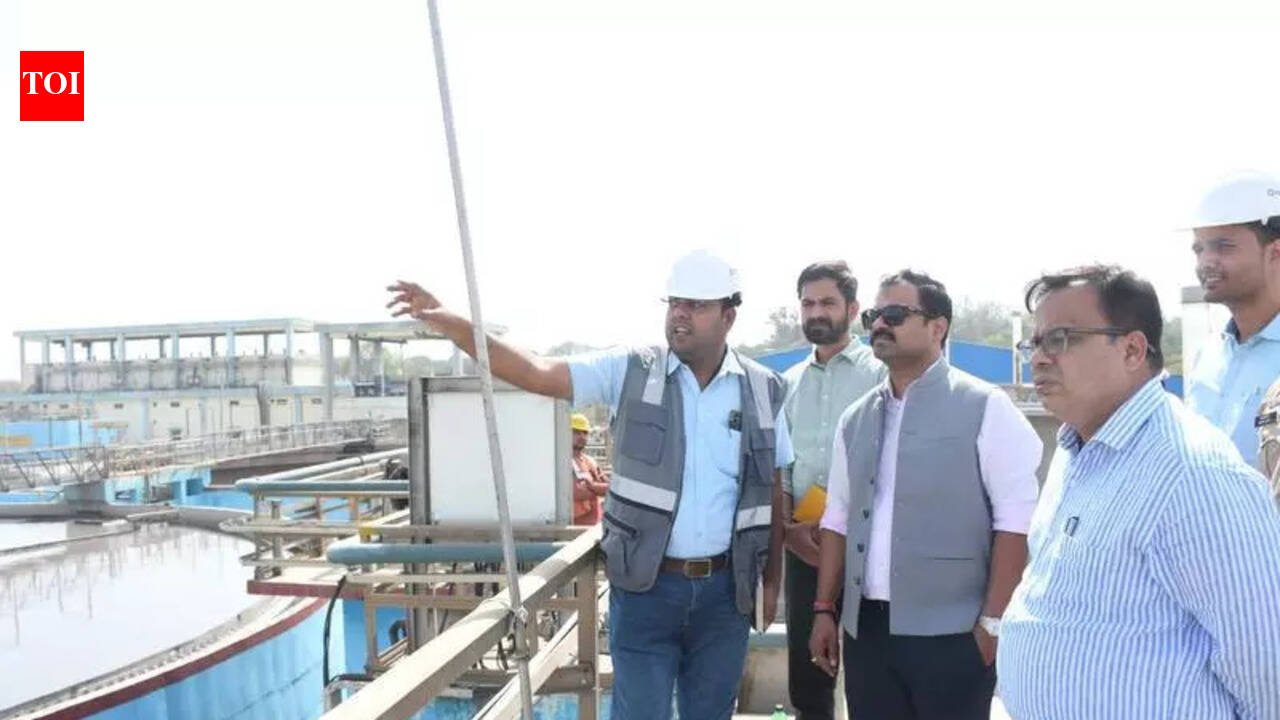
Kanpur: In a suprise inspection on Thursday, the Kanpur municipal commissioner Arpit Upadhyay, while reviewing the relocation of Ramadevi fruit and vegetable market and finding various laxity, served show-cause notices to the zonal officer and zonal engineer for negligence in work, and attached the zonal sanitation officer Kshitij Mishra to the office of the City Health Officer at Nagar Nigam headquarters. A site inspection was conducted around the Ramadevi intersection on all four sides. During the inspection, a large number of fruit and vegetable vendors were found fully operational at the Ramadevi intersection towards Bhabha Nagar. On prima facie observation, it appeared that no efforts were made for relocation of the market. The same situation was found on the stretch from Ramadevi towards Yashoda Nagar. Filth was found in considerable quantities at various places throughout the vegetable market. The zonal sanitation officer of Zone-2 was also not found present on site.Acting on the laxity, Upadhyay also ordered the officials to withhold the salary of sanitation inspector Gorakhnath Prajapati until further orders. Directions were also issued to conduct daily ground checks and a drive to remove encroachments within four hours and to send geotagged photographs.The municipal commissioner inspected two files related to the green belt under Zone-2. He inspected the beautification work of the green belt in front of a private bank in Krishna Nagar, costing Rs 9,66,198, and the green belt in front of Sajju Enclave, costing Rs 9,78,712.The work was not found to be as per standards on site. The files mentioned work being carried out on the directions of senior officials, but no such directions or orders from senior officials were found available anywhere. A technical committee was constituted to investigate both files, and directed to submit a clear report within a week. In view of contaminated water supply, an inspection was conducted in chromium-affected areas of Kishanpur, Shekhpur and Jana village. Officials informed that a plan was approved for a tube well, 4,425 metres of distribution system, and 300 drinking water connections to ensure a pure drinking water supply in the villages. The municipal commissioner directed that the executing agency be instructed to commence work at the earliest to provide pure drinking water to local residents, and that the work be completed within two months under all circumstances. Upadhyay also conducted a surprise inspection of the 20 MLD Common Effluent Treatment Plant. Officials were directed to ensure that tannery connections to the nearest manholes are systematically established and that regular monitoring of the maintenance of manholes and pipelines is carried out. Directions were also issued to strictly enforce the disposal and management of hazardous sludge spillage in accordance with the environmental standards prescribed by CPCB.


