



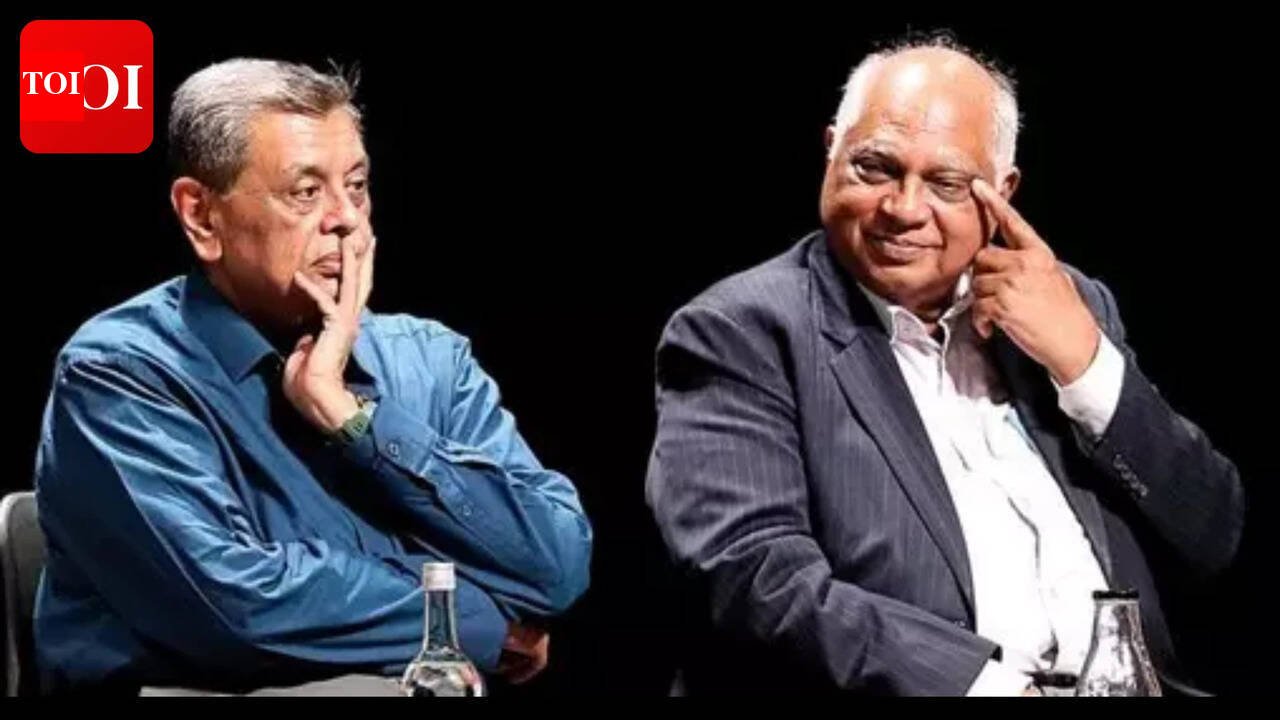
Panaji: Retired Bombay high court judge Gautam Patel flayed the controversial Section 39A of the Town and Country Planning Act, stating that it is frontally and fundamentally unconstitutional.He said the section reduced Goa and its people to irrelevance. “This is not how it should be. There is the strongest possible judicial principle in support of the right to environmental self-determination, and it is the April 18, 2013 SC decision by Justice Radhakrishnan in the Odisha mining case involving Sterlite and Vedanta…,” he said, adding that the parallels with Goa are uncanny.The tribals were assumed to be too poor to know their rights and what was good for them, and therefore authorities said the mega project should go through, but the Supreme Court ordered a referendum and the villagers voted out the project.“Let there be a referendum on any one of these proposed land-use zoning changes, not just suggestions and objections. Put it to the vote and let the chief town planner behave as he should, as a public servant, with emphasis on servant, and not like some self-inflated satrap exercising dominion over that which is not his but is yours and your community’s, and I daresay the plan will be lost and voted out,” he said.“If you want public participation, suggestions, objections and formalities are not the answer. Let the community vote on it and let us see what happens. This is the reason I’m saying Section 39A is fundamentally, frontally unconstitutional,” he added.Patel said the feeling of despair came back to him this morning “because you walk into the airport and the first thing you see is an advertisement for a casino”. He said he was also told of a restaurant being put up within spitting distance of an Olive Ridley turtle nesting site, and of sand dunes in South Goa being mowed to accommodate a 5-star hotel chain.“The question is when will it end, and the answer you’ll find from Justice Rebello is when you say enough is enough”, he said.“Resisting this pressure is difficult, and this is how developers and planners succeed: by balkanising your communities, dividing you, the people, taking away your land, your right of self-determination, your right to decide what should and should not be allowed to happen to your community, and criminalising protest. There’s a word for this pattern, one that runs throughout recorded human history: it’s called conquest,” he said.When, on his farewell at the end of his stint at Goa bench of the Bombay high court around eight years ago he was asked whether he would ever get a house in Goa, he said no, unless he could make a home here. “This land is not a piece of meat in a butcher’s shop to be carved up and distributed. It’s a home, and it needs to be treated like one,” he said, adding that a fundamental problem is the “stereotyping of Goa”.“For those from Mumbai, Delhi, and Ahmedabad who buy up land and construct monstrous houses with not even a nod to Goan architecture, culture, climate, environment, or ecology, all done in the same style we might call Dubai-chic, or the post-aesthetics school of architecture, Goa becomes just one thing: a backdrop. It might as well be CGI scenery painted behind a trophy dwelling,” he said, adding, “In a word, Goa is made irrelevant. In popular imagination too, there are only stereotypes — the rubbish portrayal of a typical Goan in Hindi movies as someone devoted only to drink and Church, or the cassocked Catholic priest. There’s nothing in between.”He said Goa is being “dismantled bit by bit”. “The sheer number of environmental issues affecting Goa is staggering: forests, wildlife corridors, coastal and marine and estuarine areas, lakes, water bodies; the list is endless. Fling a dart and you will hit an ecological or environmental disaster, whether it is Mopa or Chimbel, saved because of these ladies, or Mirabag or Reis Magos or Mollem. It is precisely for the one reason that those elected to power just don’t seem to understand that Goa’s ecology is especially fragile, and the smallest intervention here has an outsized effect. This may partly be because the state is very small, but also because of the quality and richness of the ecology.”Goa is facing the problem of “othering” today, “where Goans have become the others, the lesser, immaterial ones, and those who are not Goan, who make no attempt to know or understand Goa, are the ones who take all decisions about the land, people, and culture. This is being done not just by outsiders but is being actively facilitated by those within Goa,” he said.


