



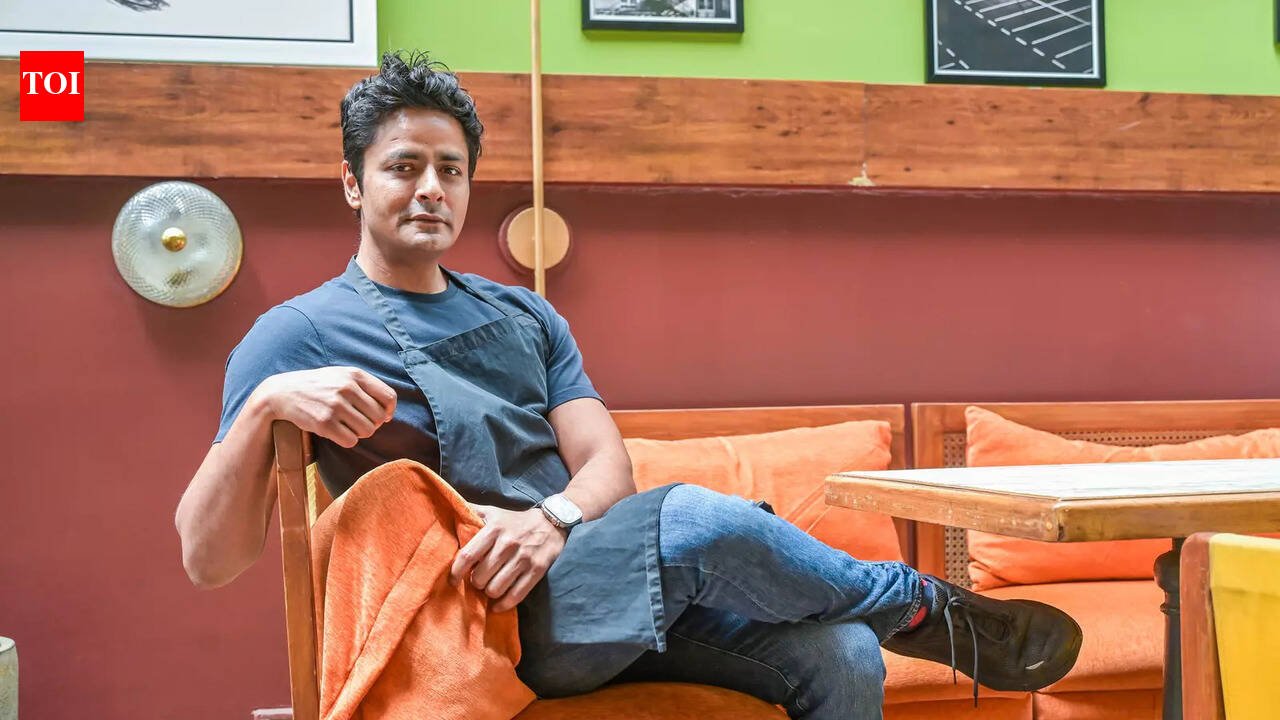
By Suruchi Kapur GomesAromas waft. Steam rises. Blades clang. Pans sizzle. At the helm stands Lupa’s founder-partner and chef Manu Chandra in his signature tee, jeans, apron, scruffy hair and serious stance, orchestrating a kind of gourmet madness. Those who have passed through Manu Chandra’s kitchens over 22 years have learnt fundamentals, multitasking, and ownership. Many now lead kitchens of their own — the city’s gift to India’s evolving culinary expertise. Recently, he showcased Indian flavours at Davos 2026. His formative years in New York — at Restaurant Daniel, Le Bernardin, Gramercy Tavern, Café Centro, Jean-Georges and Town — including the opening of the Mandarin Oriental Hotel in Manhattan, sharpened his culinary intuition.‘We are indulgent in experiential ways, not for the sake of it’Today, his home-grown fine-dining address stands on vision and conviction. The city shaped him as much as he fed its growing appetite. With a 44 per cent repeat ratio — rare in fine dining — alongside Single Thread, his bespoke catering arm, and Begum Victoria, his deli venture, he continues to expand. Yet he prefers conversations with sous chefs, trainees and ingredients — not diners.“I’ve made a conscious effort not to fall prey to trends or opinions. If I’ve built a repertoire, patronage and trust, it’s because I play to my strengths and reinvent,” he states. The menu changes every four months. “Innovation, drive, freshness, seasonality — they matter. We are indulgent in experiential ways, not for the sake of it. People know they’ll get something delicious, something exotic. We’re not trying to be the best. Yes, it will all be exceptionally crafted… but we’re not in competition.”
‘I came here at a time when there was an aversion to anything experimental’Bengaluru gave him a canvas — from Olive Beach and Monkey Bar to Toast & Tonic and now Lupa. “I came at a time when little was happening in terms of innovation in the food space. The right place and time, perhaps — but very difficult. There was a proclivity toward comfort, an aversion to anything remotely fine dining or experimental,” he says.From the early Monkey Bar days — when Yuvraj Singh and Harbhajan Singh queued outside — to date nights today, his creativity has consistently drawn crowds. After leaving Olive Beach, starting independently was daunting. “Expectations were astronomical. Unfortunately, that’s how our trade works. Today, availability and choice are insane. Forgiveness doesn’t come easy. Loyalties you bank on won’t necessarily be there. You’re only as good as your last meal.” He went into damage control. Reset. Rebuilt.“I’m a chef. I trust my team and don’t detract from my essence.” He works — morning to night, seven days a week — in what his team calls an “almost superhuman” rhythm. “It’s an old habit.”‘I miss the old Bangalore that was filled with conversations’The Garden City has evolved — welcomed the world — yet Manu finds parts of this new paradigm disconcerting. “Someone literally told my staff, ‘You don’t know who my dad is.’ I thought, hello, Delhi has arrived,” he laughs. “Bengaluru was never like that. I miss the old Bangalore. You had incredible conversations with incredible people — tech minds, actors, artistes, intellectuals — with effortless ease. There wasn’t this veneer of protectionism. Relationships were fluid, lovely. It makes me sound ageist, but experiences today feel fleeting. There’s a Korean study about attention spans being shorter than a goldfish’s. It’s killing the joy of presence. The new Bengaluru is cool, very social media–driven, but I refuse to partake. I promise to stay honest — ‘in suspended animation’ — while continuing to champion the importance of experience,” he states.‘Bengaluru’s booming brewery culture is fascinating’“This rise of brewery factories — vibes, entertainment, food, drinks, celebratory energy at a weekly-spend price point — it’s brilliant. Genius, even. Nobody talks about these hubs. There’s a tendency to speak only in hallowed fine-dining silos. This is a different ballgame,” he says.


