






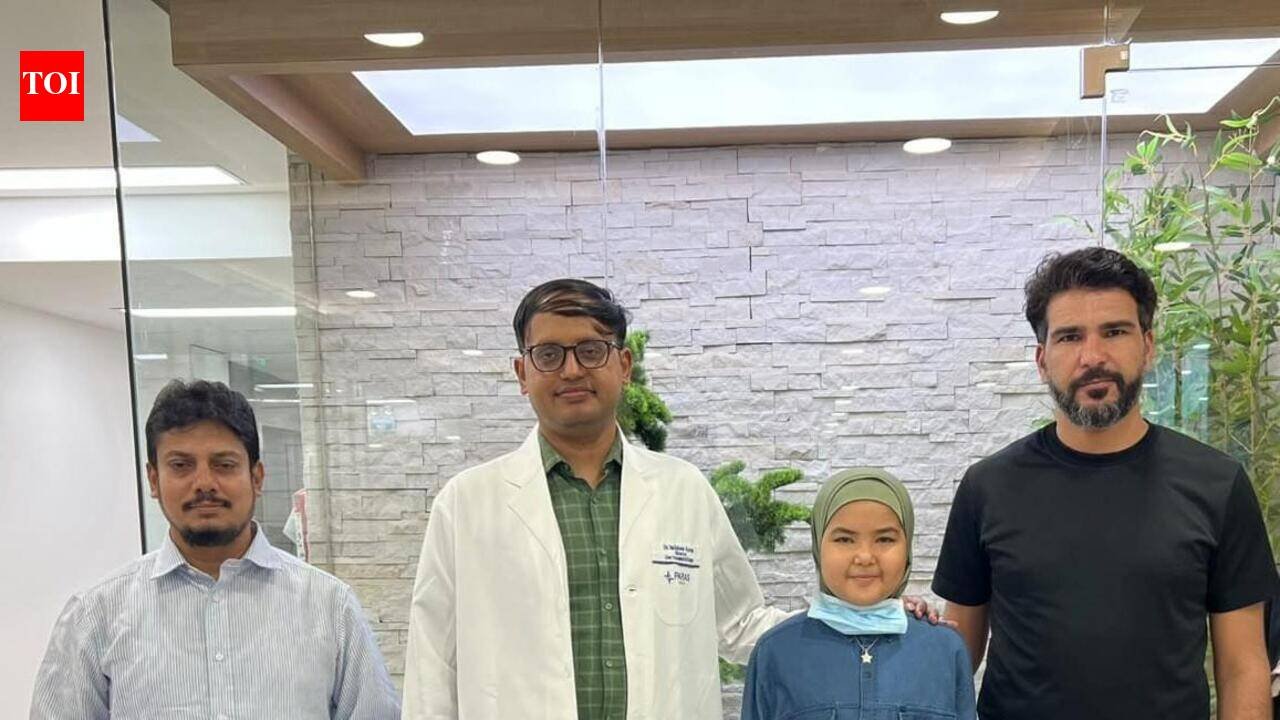
Gurgaon: An 11-year-old Iraqi girl underwent a complex living-donor liver transplant at a Gurgaon hospital after Wilson’s disease progressed to advanced liver failure, with doctors saying she had developed jaundice, hepatic encephalopathy and impaired blood clotting by the time she arrived in India.The child, Zainab, had battled recurrent jaundice, weakness and fatigue for nearly a year. Despite treatment in Iraq and repeated hospital admissions, her liver function continued to deteriorate, eventually leaving transplantation as the treatment option for her advanced liver failure. Her family then travelled to India for specialised care.At Paras Health, Gurgaon, doctors found that the transplant would require careful graft selection because of her age, body weight and severity of liver disease. Her cousin was evaluated as a living donor and found suitable.The child underwent an eight-hour transplant using a left-lobe graft with the middle hepatic vein. The graft weighed around 364 grams and had a graft-recipient weight ratio of 0.9. During surgery, doctors found her liver enlarged and nodular, with ascites. Blood vessels were reconstructed and Doppler ultrasound was used to confirm blood flow to the transplanted liver.The recipient surgery was performed by Dr Vaibhaw Kumar, director, liver transplant and GI surgery, Paras Health, along with a multidisciplinary team of 18 doctors. The donor surgery took four hours.“This was a complex paediatric liver transplant because the child had advanced liver disease with jaundice, hepatic encephalopathy and impaired blood clotting by the time she reached us,” Kumar said. He said further deterioration could have affected other organs, including the brain and kidneys.The child initially required mechanical ventilation and medicines to support her blood pressure after surgery. She was subsequently weaned off the support, while immunosuppressive medication was started to prevent rejection. She gradually progressed from a liquid diet to a normal diet and began walking.She spent about five days in the ICU and around two weeks in hospital. At discharge, she was tolerating a normal diet and had normal liver function tests. She has since returned to Iraq and is able to carry out routine daily activities independently. Doctors expect her to resume regular childhood activities and return to school in about two months.Wilson’s disease is a genetic disorder in which excess copper accumulates in the body and can damage the liver and other organs. Doctors said the girl’s two younger brothers would also need screening because of the genetic nature of the disease.


