



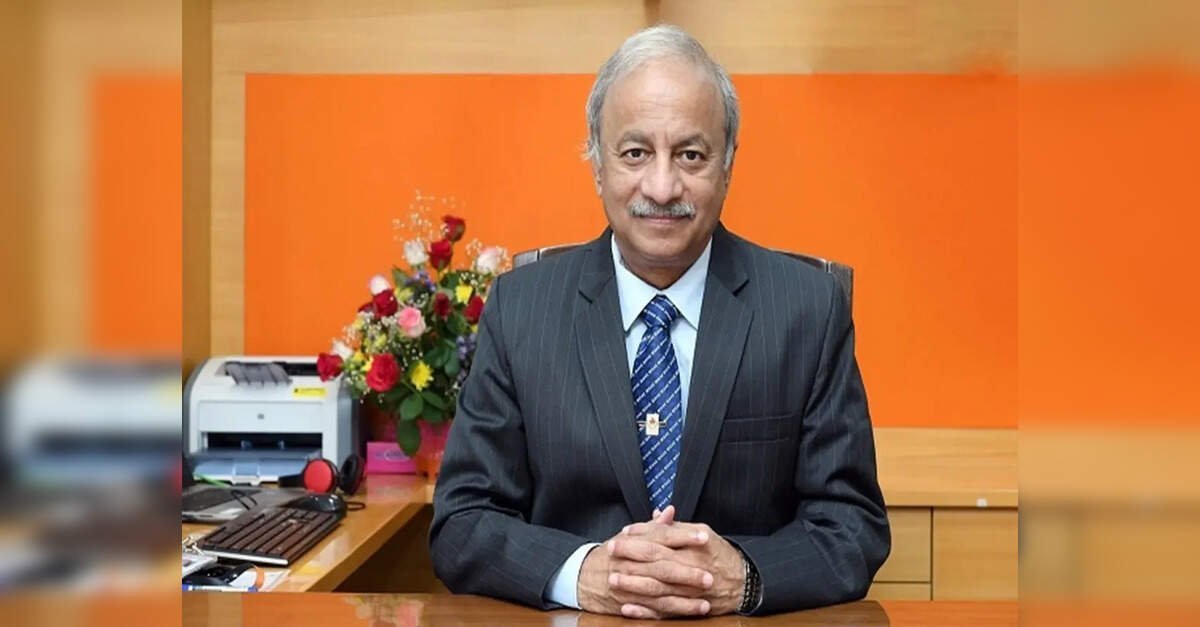
As one of the first private universities in India to be granted the Institution of Eminence (IoE) status, Manipal Academy of Higher Education (MAHE) has steadily strengthened its position in the higher education landscape through a clear focus on quality, research, and long-term vision. In this exclusive interaction, Vice-Chancellor, Lt Gen (Dr) M D Venkatesh shares insights into the university’s growth journey and future priorities.
Q. MAHE was among the first to receive IoE status. What did that recognition mean—and did you deliver on your commitments?
Dr Venkatesh: It was both an honour and a responsibility. We approached the Government of India with a structured vision built on nearly 150 metrics across five verticals—education, research, internationalisation, sustainability, and alumni engagement.
We committed to clear outcomes over five years—and I’m proud to say we met every one of them.
Our national ranking improved from 9th to 3rd. Research output has grown at around 25% year-on-year. We established a major campus in Bengaluru with nearly 10,000 students. We also co-founded one of India’s first private-private medical college partnerships with the Tata Group in Jamshedpur, where the first batch has already graduated.
This progress has been comprehensive—spanning infrastructure, faculty, research ecosystems, and student experience.
Q. You’ve said rankings are not your primary focus. That’s unusual for a university leader—why?
Dr Venkatesh: Rankings are a by-product, not the goal.
If institutional processes are strong and policies are consistently implemented, rankings will follow. I place greater value on accreditations and external audits than on chasing metrics that change frequently.
Our own journey reflects this. Without focusing on rankings directly, we moved from 9th to 3rd nationally. Globally, we are in the 601 band in Times Higher Education and in the 850–900 range in QS.
Our target is to enter the top 500 globally in the next 3–5 years, and the top 300 by 2032–33. But the focus is on sustained progress—not short-term peaks.
Q. Where is MAHE’s research currently strongest?
Dr Venkatesh: Our strength lies in breadth and interdisciplinarity. We have strong output across technology, material sciences, life sciences, clinical medicine, management, economics, and AI/ML. Importantly, we are the only university in India with a dedicated department for interdisciplinary research—because innovation today rarely happens in silos.
We are now expanding in frontier areas such as quantum technology, precision medicine, cancer research, semiconductor technology, space technology, and drug discovery. We’ve also established BSL-3 laboratories to support advanced life sciences research.
We receive funding from agencies like ICMR, DBT, and DST, and maintain active collaborations with IITs and IIMs. Beyond that, we are also working to build research capacity in neighbouring institutions.
Q. Beyond engineering and medicine, are other disciplines at MAHE getting enough attention?
Dr Venkatesh: Not nearly enough—and that needs to change. The Manipal College of Health Professions is the largest allied health institution in Asia, offering 75 programmes. Our College of Pharmaceutical Sciences ranks between 100–150 globally. Our dental and life sciences programmes have strong international standing.
Our law school in Bengaluru is emerging as one of the country’s leading institutions, and the Srishti Manipal Institute of Design has global recognition. The perception of MAHE as primarily a medical and engineering institution is outdated—the breadth today is far wider.
Q. With foreign universities entering India, do you see this as a threat?
Dr Venkatesh: Not at all—this is an opportunity. India’s demand for quality higher education is enormous. Strong Indian universities will continue to have advantages in affordability, accessibility, and contextual relevance.
At the same time, foreign campuses currently offer limited programmes and scale. There are also unanswered questions around employability and international mobility—key drivers for students seeking global education. We welcome competition. It pushes institutions to improve, opens doors for collaboration, and strengthens the overall ecosystem.


