



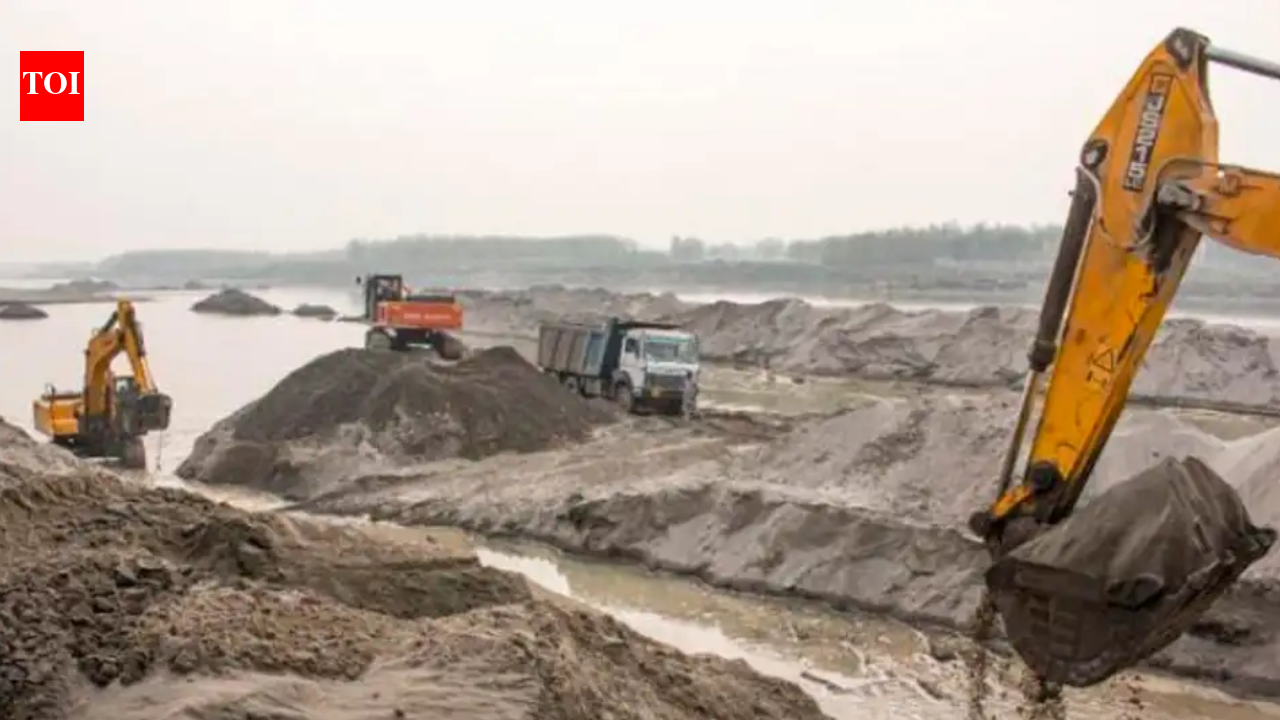
Gaya: Indiscriminate sand mining, in blatant violation of norms, is causing severe environmental damage to the Falgu river stretch between Bodh Gaya and Bitho village, said domain experts.This is despite the fact that over a decade ago, a group of environmental scientists led by late S N Chakhaiyyar, after a detailed study, had recommended a total ban on sand mining in the stretch, citing its adverse impact on ecology, water retention capacity, bridge safety and other concerns, including rising incidents of drowning in pits created by reckless miners.The demand was reiterated by Rajya Sabha member Bhim Singh at the last meeting of the District Coordination and Monitoring Committee (DISHA).They said rampant sand mining has weakened the pillar bases of several road and rail bridges over the river between Bodh Gaya and Bitho. According to official figures, sand mining is being carried out at 14 different points (ghats) along this stretch.The impact of indiscriminate sand mining on the pillars’ base of road and rail bridges in the river needs scientific evaluation as they may have an adverse effect on their strength, said domain experts.The mines and geology department has laid down clear-cut guidelines, including restricting excavation to less than three metres, regulating the use of heavy machinery, promoting manual mining and ensuring safeguards for bridges and related infrastructure.A K Gupta, environment engineer with the Bihar State Pollution Control Board, said the board does not monitor the ecological impact of sand mining. “It is for the mines and geology department to study it and take corrective measures,” he said.Mineral development officer Navendu Singh was evasive when asked about the monitoring mechanism and steps taken to ensure compliance with the conditions under which mining permissions are granted.“There are other consequences of indiscriminate sand mining,” said Brajnandan Pathak, a social activist who has filed several PILs for the protection of the Falgu river. “Water flow to irrigation channels like ‘pyne’ gets constricted due to the imbalance between the deepened riverbed and higher channel outlets,” he said.Moreover, the excavated sand is transported in overloaded trucks and other heavy vehicles, damaging national and state highways and even rural roads.Pathak added that environmental scientists have also pointed out that mining activity reduces biodiversity.The well-entrenched sand mafia has also created a reign of terror, and in several incidents over the past few years, has attacked police personnel. In one such incident, seven constables were injured, while in another, an assistant sub-inspector sustained injuries.


