



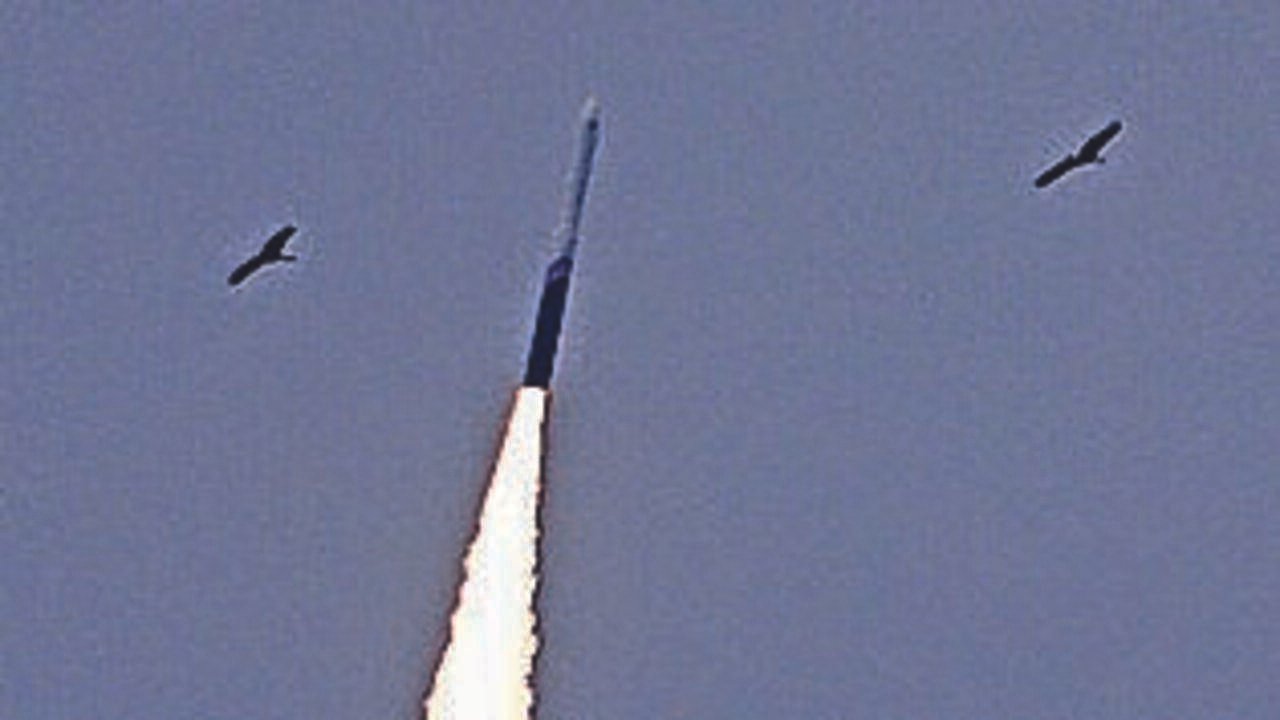
Hyderabad: At 12.05 pm on Saturday, India’s private space dream took flight. Perched on ISRO’s First Launch Pad at Sriharikota, Skyroot Aerospace’s Vikram-1 became the first privately built Indian rocket to successfully reach orbit. Six decades after India’s first sounding rocket was famously carried to the launch pad on a bicycle at Thumba, another watershed moment unfolded in India’s space journey, this time powered by a homegrown startup aiming to propel India into the global commercial launch market.Mission Aagaman’s success marks a defining moment for India’s space sector, opening a faster and more flexible route to orbit for satellite makers, global customers and strategic users, according to industry experts. This validates India’s fledgling private launch ecosystem, eases pressure on ISRO’s launch schedule and strengthens the country’s position in the fast-growing small-satellite launch market.Need sustained launch capacityPranit Mehta, co-founder of GalaxEye, said Vikram-1’s success was only the beginning, and added that India needed sustained launch capacity, and not just one single successful mission. “There is a huge shortage of launch opportunities. The sooner we’re able to prove success, and more importantly repeated success, the better,” he said.For Indian satellite startups, domestic private launch vehicles promise shorter wait times, greater scheduling certainty and less dependence on foreign launch providers or ISRO. GalaxEye recently launched one of its satellites aboard a SpaceX mission. Hyderabad-based TakeMe2Space also turned to the US launch provider after the PSLV-C62 mission failure disrupted plans to launch MOI-1, billed as the world’s first orbital AI data centre.Sanjay Nekkanti, founder and chief executive of Dhruva Space, said Vikram-1’s success would benefit the wider ecosystem by creating more launch opportunities for companies building satellites, payloads and downstream applications.“More launch opportunities will enable more satellites to reach orbit,” he said. “It will provide a major boost to the space-tech ecosystem.”Nekkanti said smaller private launch vehicles also allow customers to reach mission-specific orbits that larger rockets, which typically carry multiple payloads to predetermined destinations, cannot always offer.“It will enable targeting of specific orbits, which is not usually the case with very large rockets because they go to predefined orbits,” he said. “You can carry out dedicated launches for specific missions.”Even as the industry celebrates Vikram-1’s success, attention has already shifted to the bigger prize—a larger share of the rapidly expanding global commercial launch market.The next decade is expected to witness a surge in satellite launches as govts and private companies deploy constellations for broadband, earth observation, communications, defence, navigation, internet of things and climate monitoring. Reliable access to launch vehicles has therefore become both a commercial opportunity and a strategic asset.SpaceX dominates the global commercial launch market, but soaring demand has resulted in long waiting lists and limited scheduling flexibility for many satellite operators. That creates an opening for emerging launch providers such as Skyroot Aerospace.Window for India in global space raceDr G Satheesh Reddy, member of the National Security Advisory Board and former chairman of DRDO, said Vikram-1’s success is expected to trigger the next phase of growth for India’s private space industry and strengthen the country’s standing in the global launch market.“We’ll be able to launch satellites from around the world from India,” he said. “India has the opportunity not merely to participate in the global launch market but to capture a meaningful share of it.”Dr Subba Rao Pavuluri, chairman and managing director of Ananth Technologies and president of the Space Industry Association-India, described Vikram-1 as “the harbinger of the private sector’s entry into launch services.”“If companies like Skyroot can deliver reliable and timely launches, India can emerge as a preferred global launch hub. Cost competitiveness, coupled with dependable launch schedules, will be a significant advantage,” he said.Pavuluri said growing low-Earth orbit constellations were driving demand for launch capacity. “India has the opportunity to become a major launch centre. This mission opens up the sector in many ways,” he said.Lt Gen Anil Kumar Bhat (Retd), director general of the Indian Space Association, said launch vehicles are “the most critical element of the entire space ecosystem” and that a successful indigenous private rocket would take “India’s space story to the world.”“With SpaceX’s launch manifests booked for the next two to three years, there is a significant opportunity for companies like Skyroot,” he said.Bhat said repeated private launch successes could place India among the handful of nations with credible commercial orbital launch capabilities.Citing Novaspace’s ‘Satellites to Be Built and Launched’ report, he said more than 43,000 satellites are expected to be launched by 2035—an average of 12 satellites and eight tonnes of payload every day—creating a major opportunity for India’s private launch providers.Jainul Abedin, founder and CEO of Abyom SpaceTech & Defence, said Vikram-1’s success marks a defining moment for India’s private space ecosystem.“It proves Indian startups can build globally competitive launch systems, boosts investor confidence and accelerates the growth of the entire ecosystem, not just one company,” he said. “For startups like Abyom developing reusable launch vehicles, it enhances credibility, improves access to capital and strategic partnerships, and inspires the next generation of deep-tech entrepreneurs. Just as ISRO inspired generations of scientists, successful private launches can inspire entrepreneurs to build globally competitive space companies. It marks the beginning of an era in which India is not just launching satellites but building indigenous commercial launch infrastructure, reusable propulsion technologies and a complete space economy.”Ronak Kumar Samantray, founder of TakeMe2Space, said Vikram-1’s success could help address one of the biggest challenges facing Indian satellite companies.“As a satellite operator, our biggest bottleneck is launch cadence and the certainty of securing future launch slots,” he said. “I believe Skyroot can help solve that. With providers like SpaceX, we often have to wait nearly two years because launch manifests are booked well in advance.”Vikram-1’s success not only validates Skyroot’s technology but also demonstrates that private Indian companies can independently build, launch and commercialise orbital missions. For a country long reliant on a state-led space programme, Mission Aagaman marks the beginning of a new chapter, one in which Indian startups become key players in the global space economy.


