



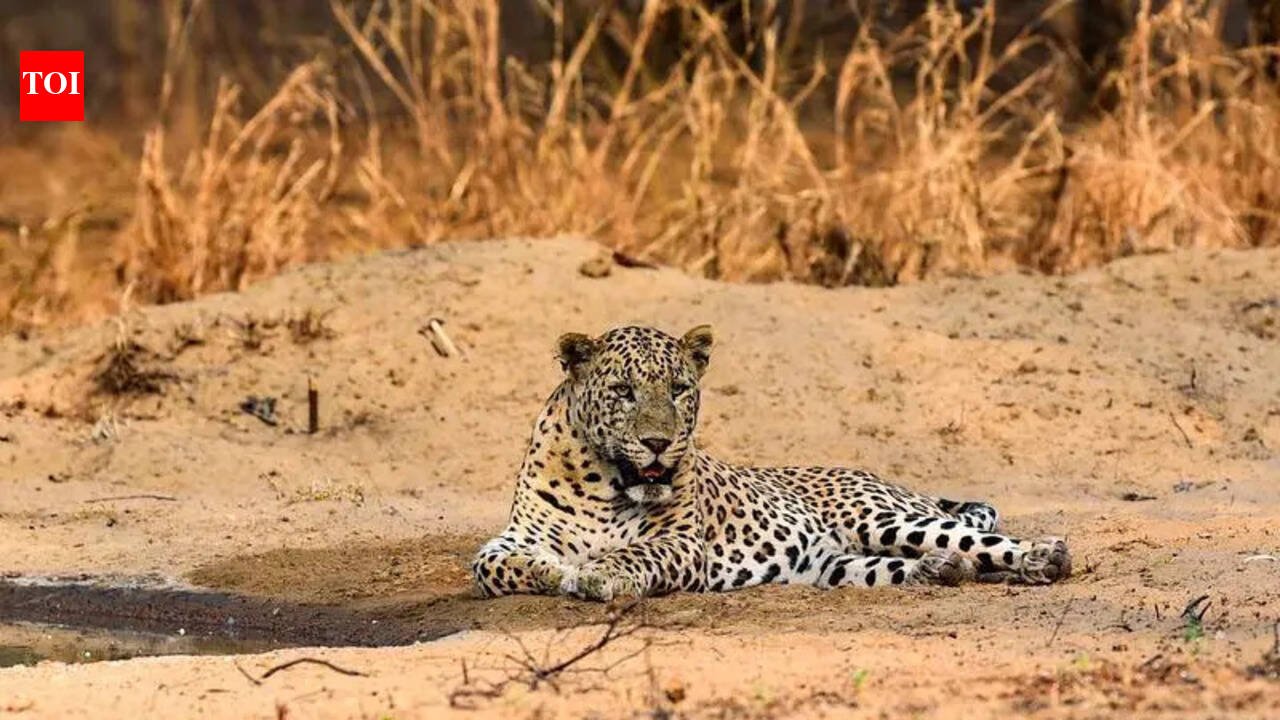
Pune:The state forest department recently launched a pilot project for immuno-contraception of leopards at the Manikdoh Leopard Rescue Centre in Junnar tehsil to scientifically regulate the population growth of the big cats in the region, about 100 km from Pune and long affected by human-animal conflict.Senior forest officials toldTOIthat the drug controller general of India has approved the project and the ministry of environment, forest and climate change has granted statutory clearance. It is being implemented in collaboration with the Indian Council of Medical Research (ICMR), whose experts will analyse blood samples collected during the study.A senior forest official said the project is a “sensitive and long-term scientific exercise,” which is being executed according to global standards — wherein animal safety is a priority.On the condition of anonymity, he toldTOI: “Five female leopards were identified and housed at the rescue centre over the last few months. They are under close observation currently, after approved contraceptive drugs were administered to prevent ovulation. Periodic blood sampling will be conducted to assess physiological responses and evaluate the effectiveness of the treatment.”Other officials cautioned that it is too early to draw conclusions, given the complexity and novelty of the intervention.Assistant conservator of Junnar forest division Smita Rajhans toldTOI: “The project is in the initial stages and we cannot comment at this juncture.”Experts from multiple national institutes are expected to study the findings over an extended period.The Junnar forest division covers Junnar, Ambegaon, Shirur and Khed tehsils. The region has among the highest density of leopards in the country. It has witnessed a steady rise in human-leopard interactions over the last five years. Experts said the conflict actually began in the early 1990s, with changes in land use, expansion of sugarcane cultivation and shrinking natural habitats.Meanwhile, former state principal chief conservator of forests (wildlife) Sunil Limaye said, “Immuno-contraception prevents ovulation in female leopards through scientifically approved drugs. It is practised globally and does not harm the animals.” He described the initiative as a significant step towards sustainable wildlife management.Limaye said such projects typically run for at least two to three years. Initially, the treated female leopards are kept in isolation and monitored. Later, they are allowed to mate. The objective is considered achieved if the mating does not lead to conception. Additionally, he advised caution and said large-scale capture and confinement of leopards is neither scientific nor effective in the long term. “However, if birth control measures span over even three to four years, leopard populations will stabilise to manageable levels. This is the need of the hour in Junnar,” he added.An expert of the Wildlife Institute of India said, “Man-animal conflict because of leopards is common in multiple regions of India, though not on the scale of Junnar division. If successful, the pilot could serve as a model for similar interventions in other conflict-prone areas across the country — marking a shift towards more humane and science-based wildlife management practices. It will provide an option to forest officials to deal with unprecedented situations in the future.“Forest officials are optimistic, but emphasise that long-term monitoring and scientific validation will be crucial to determine the project’s success. “Immuno-contraception could emerge as a sustainable alternative to conventional wildlife control measures, like sterilisation through surgery, in India, if the pilot proves effective,” they added.


