



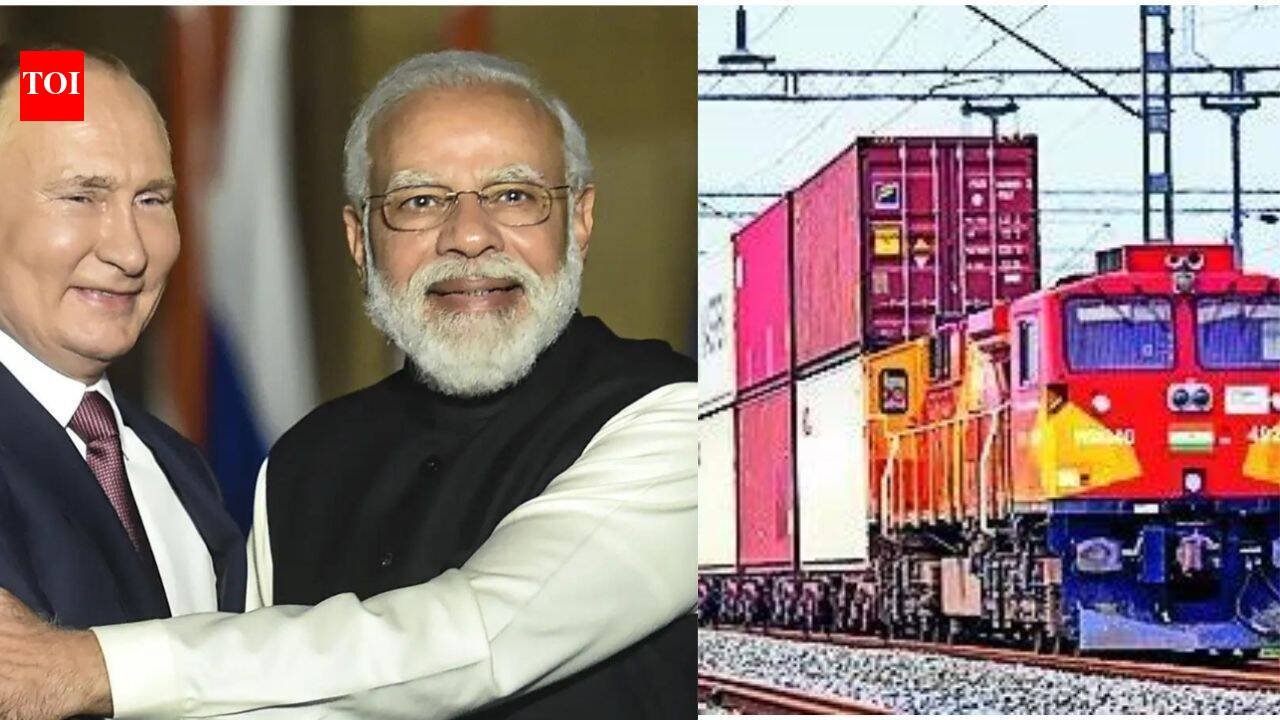
Russian Deputy Prime Minister Marat Khusnullin has called on Moscow and New Delhi to explore the feasibility of a direct rail link to the Indian Ocean, aimed at reducing transit risks associated with the Bosphorus strait and Strait of Hormuz.According to Khusnullin, potential routes could pass through Turkmenistan, Iran, Afghanistan and Pakistan, adding that any corridor providing connectivity to India would be considered “viable.”If realised, the proposal would create a direct overland rail freight link between Russia and India.“A rail link to the Indian Ocean should also be explored. Risks related to the Bosphorus and the Strait of Hormuz might require alternative routes: through Turkmenistan, Iran, Afghanistan, and Pakistan. Any options providing access to India are acceptable,” Khusnullin was quoted as saying by TASS.The proposal comes amid disruptions to maritime trade through the Strait of Hormuz following the escalation of hostilities between the US-Israel and Iran. On February 28, the US and Israel launched joint strikes on Iran, targeting key urban centres, including Tehran. Iran responded with missile and drone attacks on Israeli targets and US military bases across Bahrain, Jordan, Iraq, Qatar, Kuwait, the UAE and Saudi Arabia.Tehran subsequently announced a maritime blockade of the Strait of Hormuz targeting vessels linked to the US, Israel and allied countries involved in the conflict. The strategic waterway handles around 20% of global oil trade and nearly 20% of worldwide LNG shipments.
Share your thoughts in the comments
Be respectful · TOI community guidelines
Meanwhile, Türkiye briefly restricted access to the Bosphorus strait following attacks on vessels in the strait, including Turkish-owned ships.Beyond international transport links, Khusnullin also highlighted the need for sustained investment in Russia’s construction sector. He said the industry currently has the capacity to absorb an additional one trillion rubles annually.“The construction industry is already capable of handling an additional one trillion rubles annually. However, if such a volume is secured for the next five years, it would be possible to expand capacity and build even more,” he added.


