



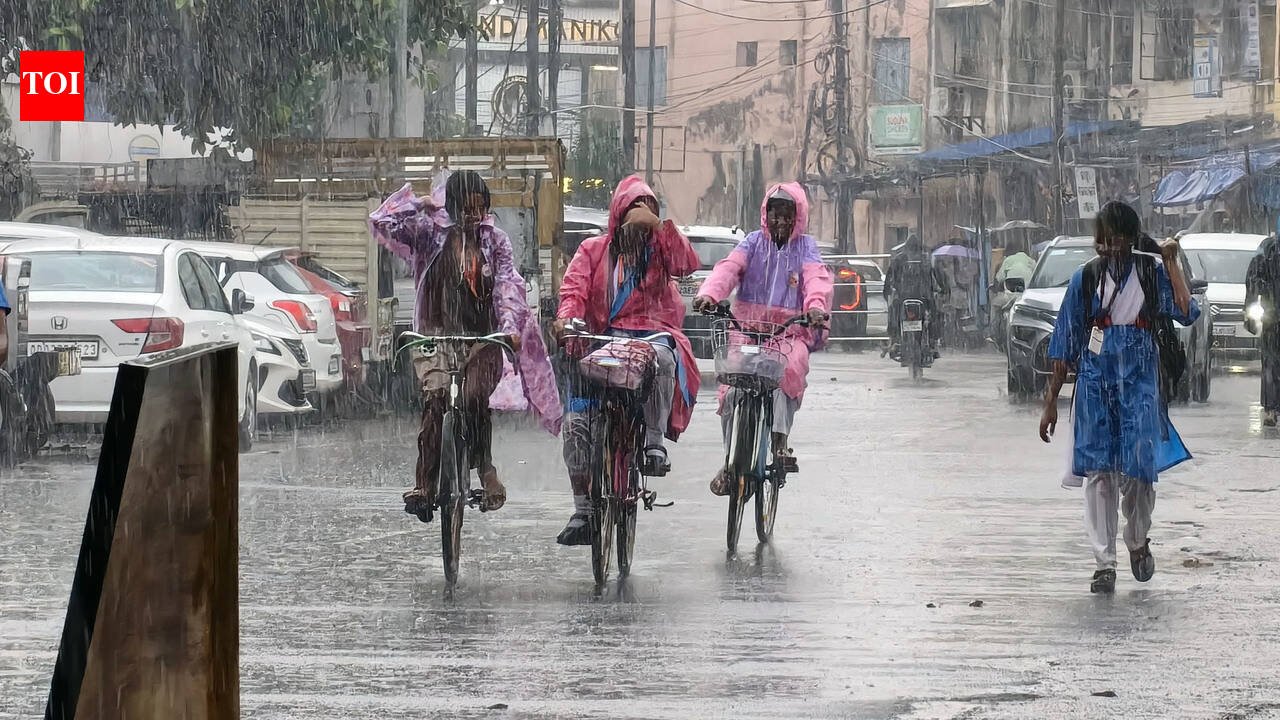
Bhubaneswar: Heavy rain triggered by a low-pressure system continued to batter Odisha this week, disrupting normal life with waterlogging and communication snags in several areas, while providing a boost to kharif farming activities.The state govt on Saturday went for closely monitoring the evolving weather situation as the low-pressure intensified into a well-marked system and likely to continue widespread rainfall across the state for another two to three days.“The state emergency operation centre (SEOC) is continuously monitoring the situation in close coordination with district administrations and all concerned departments. As of now, the overall situation in the state remains normal, and the govt is prepared to respond promptly to any weather-related emergency,” said a govt release.It said the SEOC, under the office of the special relief commissioner (SRC), also remains on round-the-clock alert in coordination with all district emergency operation centres (DEOCs).According to India Meteorological Department (IMD), heavy to very heavy rainfall (red alert) with isolated extremely heavy rainfall is likely to occur in Sambalpur, Angul, Boudh, Sonepur, Kalahandi, Bargarh and Nuapada districts in the next two days.Similarly, orange and yellow warning of heavy to very heavy rainfall was issued for six districts on Sunday and yellow warning of heavy rainfall would continue in 11 more districts for Sunday.In wake of IMD’s warning, the state govt directed all districts under red, orange and yellow warnings to keep administrative machinery fully prepared to respond to any eventuality. It said the district administrations have been advised to take precautionary measures against localised flooding, waterlogging in low-lying areas, closure of urban underpasses, and possible damage to kutcha roads, vulnerable structures, horticultural crops and standing crops.Fishermen have been advised not to venture into the sea along and off the Odisha coast till July 7.Official report said the state recorded an average rainfall of 24.8 mm in last 24 hours. Sohela block in Baragada district recorded the highest rainfall at 202 mm. Six blocks received more than 100 mm rainfall, while 38 blocks and four stations in three Urban Local Bodies recorded rainfall between 50 mm and 100 mm.Despite the widespread rainfall, all major rivers in the state are currently flowing below the warning level, the govt release pointed out.On the other, people at several low-lying areas, including in twin cities, continued to suffer as rain continued.“Every spell of heavy rain brings us fear that it may trigger waterlogging in our area and enter our house,” said Apati Behera, a resident of Bomikhal area in the city. Worried over waterlogging trouble in their locality. She said rain and drain water flooded their house twice this week following heavy rainfall. Gautam Mohanty, a resident of Nandan Vihar and a roadside businessman, said their business was affected following intermittent rain.The situation was no way better in Cuttack, where residents at several low-lying areas too encounter season’s perennial waterlogging trouble as rainfall activity continued. “The rainy season turns bane for us instead of boon,” rued V Sibnarayan, a resident of Pattapole area. On the other, farmers at several places in coastal districts were seen trying to take advantage of such rainfall and get ready to sow seeds for transplantation.It said the SEOC, under the office of the Special Relief Commissioner (SRC), also remains on round-the-clock alert in coordination with all District Emergency Operation Centres (DEOCs).According to the India Meteorological Department (IMD), heavy to very heavy rainfall with isolated extremely heavy rainfall is likely to occur in seven districts during next two days. Those districts under red warning are Sambalpur, Angul, Boudh, Sonepur, Kalahandi, Bargarh and Nuapada.Similarly, orange and yellow warning of heavy to very heavy rainfall was issued for six districts on Sunday and yellow warning of heavy rainfall would continue in 11 more districts for Sunday.In the wake of IMD’s warning, the state govt directed all districts under Red, Orange and Yellow warnings to keep the administrative machinery fully prepared to respond to any eventuality.It said the district administrations have been advised to take precautionary measures against localised flooding, waterlogging in low-lying areas, closure of urban underpasses, and possible damage to kutcha roads, vulnerable structures, horticultural crops and standing crops.Fishermen have been advised not to venture into the sea along and off the Odisha coast till July 7.Official report said the state recorded an average rainfall of 24.8 mm in last 24 hours. Sohela Block in Baragada district recorded the highest rainfall at 202 mm. Six blocks received more than 100 mm rainfall, while 38 blocks and four stations in three Urban Local Bodies recorded rainfall between 50 mm and 100 mm.Despite the widespread rainfall, all major rivers in the state are currently flowing below the warning level, the govt release pointed out.On the other, people at several low-lying areas, including in twin cities, continued to suffer as rain continued.“Every spell of heavy rain brings us fear that it may trigger waterlogging in our area and enter our house,” said Apati Behera, a resident of Bomikhal area in the city. Worried over waterlogging trouble in their locality, Behera said rain and drain water flooded their house twice this week following heavy rainfall, causing enough trouble.Gautam Mohanty, a resident of Nandan Vihar and a roadside businessman, said their business was affected following continuous rain.The situation was no way better in Cuttack city, where residents at several low-lying areas too encounter season’s perennial waterlogging trouble as rainfall activity continued. “The rainy season turns bane for us instead of boon,” laments V Sibnarayan, a resident of Pattapole area in Cuttack city.On the other, farmers at several places in coastal districts were seen trying to take advantage of such rainfall and get ready to sow seeds for transplantation.


