



I was among those who recently witnessed Tesseract—The Geometry of Truth, presented by The Times of India, and it left a lasting impression. Despite having performed in a concert the previous night in Solan, Himachal Pradesh, and flying in directly for the show, the energy and scale of Tesseract dispelled my exhaustion and kept me riveted throughout.As I stepped into the NCPA Theatre, I was struck by the ambition of the production. A Tesseract suspended in mid-air, lit dramatically, flanked by staircases and sets that appeared to defy gravity, set the tone. The show opened with a montage of The Times of India headlines, weaving a narrative thread through India’s tumultuous history. It was revelatory to see how the trajectory of this iconic daily mirrored the nation’s own journey, a testament to the brand’s enduring trust and synonymy with Indian news.
The production unfolded like a tapestry of beauty, poetry, and wonder. (Image Credit: Prathamesh Bandekar)
The tone shifted with a dance sequence choreographed in Shiamak Davar’s signature style, capturing the pace of a news cycle. The spotlight then fell on Pia Sutaria and Megan Murray, the two leads, accomplished performers who anchored the show’s central theme of Truth. Their synergy was palpable, and they deftly navigated the complex philosophical undercurrents, making the esoteric accessible without diluting its profundity.The show’s strength lay in balancing the cerebral with the performative. Dance sequences and song selections, including a rendition of Michael Jackson’s They Don’t Really Care About Us, punctuated the narrative, making the themes more relatable. One of the more striking moments came during the performance of MJ’s Man in the Mirror, when dancers pointed mirrors at the audience, forcing us to confront our own reflections.
For Ricky Kej, one of the show’s most striking moments came during the performance on MJ’s Man in the Mirror. (Image Credit: Prathamesh Bandekar)
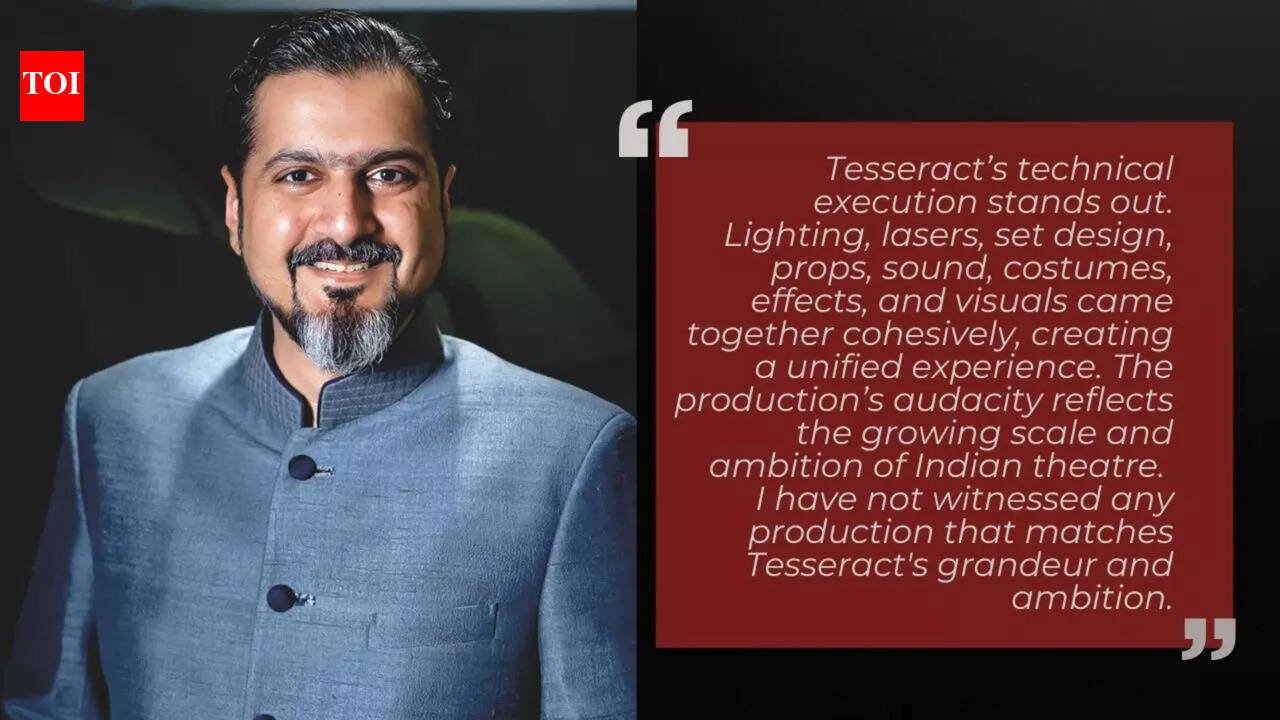
Tesseract’s technical execution stands out. Lighting, lasers, set design, props, sound, costumes, effects, and visuals came together cohesively, creating a unified experience. The production’s audacity reflects the growing scale and ambition of Indian theatre.I have not witnessed any production that matches Tesseract’s grandeur and ambition. It deserves more than a limited run; it merits a permanent venue, a destination that would draw audiences from across the world. I hope that it will tour the country, sparking conversations about the multifaceted nature of truth and the power of collective introspection. For, in the words of the show itself, “Truth cannot have a single-line definition. Truth has to come from within all of us.”


