






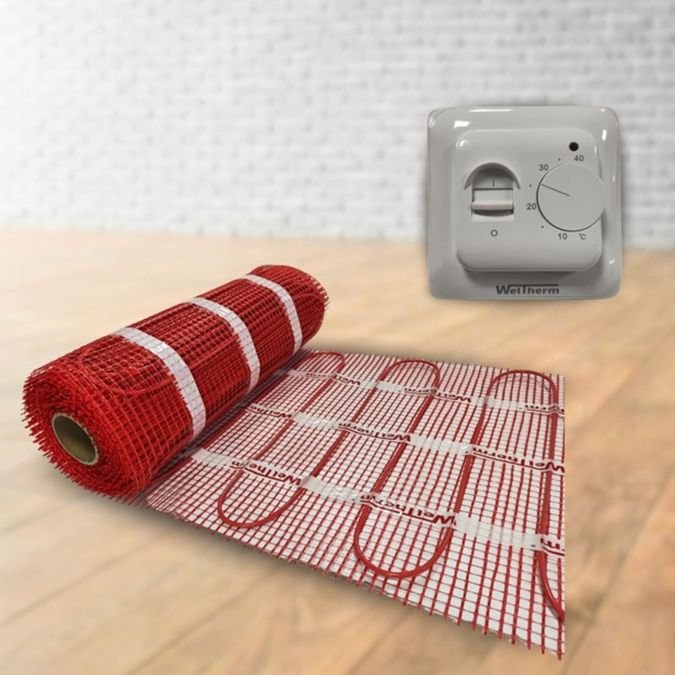
Srinagar: Fifteen years ago, selling electric underfloor heating in Kashmir often began with a simple explanation: what it was, how it worked and why a heating system installed beneath the floor could offer an alternative to conventional methods of keeping homes warm.
Today, the conversation has changed. Customers ask for an Electric Hamam by name. Specialised teams install the systems across the Valley, while dealers offer products from different manufacturers and across a range of price points.
The change reflects more than the growing acceptance of a heating technology. It marks the emergence of an industry around a product that was once unfamiliar to most Kashmiri households.
At the centre of this evolution is The Heating Store, established in Srinagar in 2011 by Taham Mubashar, who became familiar with electric underfloor heating while studying and living in the United Kingdom.
The technology was already established in international markets. Bringing it to Kashmir, however, required more than introducing a product. It meant adapting to local construction practices, understanding the demands of Kashmiri winters and explaining a relatively unfamiliar concept to customers.
The term Electric Hamam helped bridge that gap, giving the technology a familiar local identity. Over time, the name became widely associated with electric underfloor heating in the Valley.
But as awareness grew, the business surrounding the technology began to change, too. What had started as a specialised installation service gradually developed into a broader trade involving imports, wholesale distribution, regional dealerships and technical support.
From installation to distribution
In the early years, much of the work was coordinated directly from Srinagar. Each project required site inspections, heating layouts and installation supervision, often by a small team with specialised knowledge of the technology.
Outside the city, experienced installers were few and organised distribution networks were limited. Customers interested in the systems often depended on Srinagar-based suppliers to guide them through the process, from product selection to installation.
As demand increased, a centralised approach became less practical. The Heating Store began supplying dealers and installers across Kashmir, helping extend the market into Sopore, Baramulla, Anantnag, Budgam, Ganderbal and other areas.
One such arrangement involved two engineer brothers in Sopore, who were appointed to distribute imported underfloor-heating systems in north Kashmir. Their entry illustrated a broader shift: a product that had initially depended on specialist intervention from Srinagar was beginning to create opportunities for independent regional businesses.
The expansion also brought new challenges. Questions arose over installation consistency, product sourcing and the distinction between imported systems and locally manufactured alternatives. In the Sopore case, concerns about the products being supplied and adherence to the original dealership arrangement eventually led to changes in the distribution relationship and the withdrawal of certain dealership arrangements.
The episode underscored an issue that would become increasingly relevant as the market grew: an Electric Hamam was not simply another electrical product that could be sold over a counter.
Because the heating elements are embedded beneath a finished floor, product quality, installation standards and long-term performance are closely connected. Problems that might be straightforward to address in an ordinary appliance can become considerably more complicated once a floor has been completed.
For a developing industry, establishing clear product specifications, reliable installation practices and defined after-sales responsibilities became as important as expanding sales.
The technology beneath the floor
An Electric Hamam is largely invisible once a project is complete. Heating cables or mats, insulation, electrical connections and temperature controls are incorporated into the floor before the final surface is laid.
That makes the planning stage critical.
Cable spacing, electrical loading, insulation, thermostat positioning and the floor’s construction can all influence how the system performs. The layout must also account for room dimensions, fixed furniture and the electrical capacity available at the property.
In other words, the finished floor conceals much of the work that determines the system’s performance.
As the market developed, The Heating Store expanded beyond direct installations into importing, wholesale distribution and technical support. Imported systems could be supplied to regional dealers, while product selection, system design and warranty-related assistance formed part of the wider business.
The company also developed relationships with international heating manufacturers and continued to work with products serving different market segments.
This broader model helped separate the functions of sourcing, distribution and installation, even as they remained closely connected. It also reflected the changing demands of a market in which customers increasingly expected greater product choice and access to specialised expertise.
The rise of a specialised workforce
The growth of Electric Hamam created opportunities for a category of installation work that had previously been relatively unfamiliar in Kashmir.
Although the finished product may resemble a conventional heated floor, installing it involves considerably more than routine electrical work. Heating layouts must be planned before construction is completed, and the installation has to be coordinated with insulation, flooring materials and the building’s electrical system.
Once the floor is closed, correcting mistakes can be disruptive and expensive. Technical competence, therefore, is not merely an added service; it is a fundamental part of the product.
The Heating Store says it has developed Kashmir’s largest dedicated Electric Hamam installation operation, alongside its importing, wholesale and distribution activities. Its teams undertake work in individual homes as well as larger residential, hospitality and commercial projects, while regional dealers serve customers in their respective markets.
This represents a substantial change from the early years, when introducing the technology and explaining its practical application were often part of the same exercise.
As the market has grown, so has the need for installers who understand not just how to lay a heating cable, but how the entire system functions within a completed building.
A wider dealer network, a more competitive market
Greater familiarity with Electric Hamam encouraged the development of a wider dealer network. Some businesses remained associated with particular imported manufacturers, while others began offering products from multiple suppliers, including locally manufactured systems aimed at more price-sensitive customers.
The result has been greater choice for buyers, alongside a more competitive market.
But a wider selection of products has also made transparency more important. Customers need to know who manufactured a system, whether it is imported or locally produced, what warranty applies and which supplier or installer will be responsible if a problem arises.
These distinctions matter particularly in underfloor heating, where the components are concealed and future repairs may involve disturbing the finished flooring.
As the trade matured, documented supply arrangements, clearly identified products and consistent installation practices became increasingly important to the industry’s credibility.
According to the company, The Heating Store’s network now spans more than 40 dealers across 15 cities, supported by its installation and technical operations and research and development facilities.
The figures illustrate the scale of the transition: from a business built around introducing a relatively unfamiliar technology in Srinagar to a wider network of distributors, installers and competing sellers.
From the Valley to markets beyond
The expansion has not been limited to Kashmir. The Heating Store now undertakes heating projects elsewhere in India, while its international experience has included projects and supply-related work connected with the United Kingdom, Bhutan, Sweden and the United Arab Emirates.
The company also cites a combined worldwide installed base of more than two million systems across the international brands and heating technologies represented through its wider network.
These figures reflect a broader international context for the technology. Yet the more revealing story may be how electric underfloor heating developed a distinct commercial identity in Kashmir.
A product familiar in overseas markets was introduced into a different building environment, given a locally recognisable name and supported by a network of businesses that could supply, install and service it.
That transition required more than demand alone. It depended on the development of technical skills, supply relationships, regional distribution and customer familiarity.
When a product becomes a category
Electric Hamam is no longer confined to a handful of early adopters or a single specialist installer. An ecosystem has emerged around the category, bringing together importers, wholesalers, regional distributors, manufacturers, electricians, dedicated installation teams and independent dealers.
Competition has widened customer choice and created opportunities for new businesses. At the same time, it has raised questions about product origin, installation quality, warranty coverage and accountability after a project is complete.
The Heating Store has grown alongside this changing market, evolving from an early Srinagar installation business into what it describes as Kashmir’s largest specialised Electric Hamam installation and distribution operation.
Its journey forms part of a larger shift in how the technology is sold and delivered across the Valley. The industry’s development is no longer measured only by the number of installations, but also by the depth of its distribution network, the availability of trained installers and the emergence of businesses operating independently within the category.
In 2011, the principal challenge was persuading customers to understand electric underfloor heating.
Fifteen years later, the technology has a name that customers recognise, a network that reaches beyond Srinagar and a competitive market of its own.
The challenge now is different: ensuring that a rapidly expanding industry maintains the standards needed to earn and sustain customer confidence.


