



New Delhi: The first week of any Indian Premier League season is always exciting because it brings with it a sense of uncertainty. How will the new line-up perform? Will the new tactics work? Will the weaker teams turn things around? Will the stronger teams carry on in the same vein?
This is true for all teams. But with Delhi Capitals, every question point to just one thing: will this be the year that they finally win the trophy? Among the teams that played in the inaugural 2008 season, only Punjab Kings (formerly Kings XI Punjab) and Delhi Capitals (formerly Delhi Daredevils) are yet to win the title and that has been a persistent bugbear for both teams.
“We don’t have to necessarily re-emphasise what’s happened or how the season has gone. Every player who has played for us last year or even through the season recognises that we could have finished differently,” DC coach Hemang Badani said in the pre-season press conference here on Monday.
“It’s not for us to keep driving that and drilling it into their heads, try and be a lot more objective about how we will get better, what is it that you can add value, how can you be better than what you are right now to make sure that we cross the line.”
Like every season, Delhi hope to make the breakthrough this time around but they will have to contend with not just the other teams but also the new reality of T20 cricket. Teams regularly bat at a higher tempo and 200-plus totals are the name of the game.
This, however, is exactly where Delhi struggled last season. Part of the problem had was with their Powerplay performance—DC had the second lowest run-rate in the first six overs and their opening struggles impacted every other aspect of their play. This time, DC brought in fresh options such as Prithvi Shaw, Ben Duckett and Pathum Nissanka from the auction.
“Cricket is changing, so we have to change too—but while sticking to our strength. The game has evolved to a point where 180 is not sufficient and you will have to have good shots at the top. We have seen what has happened in the World Cup in recent times… and you have seen scores of 240-250.”
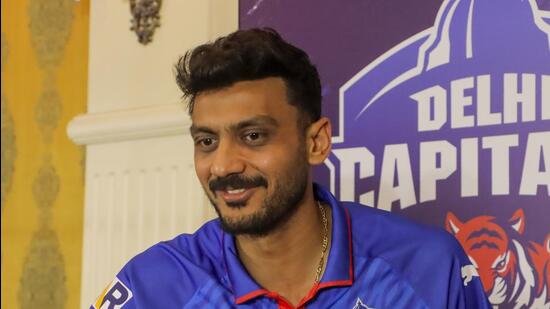
But skipper Axar Patel chimed in with a word of caution.
“Franchise cricket and Indian cricket have different cultures. For starters, here you have players flying in from different parts but the Indian team is together as a unit for a long time. We talk of intent, but winning mentality is that Indian team is flexible enough and that is what I hope Delhi can do too. We can’t play in one way. Players have to be ready to play any role and the team has to be ready to play any type of cricket.”
Part of that flexible process also requires the bowlers to think differently.
“There was a concept of dot balls,” said Badani. “We used to say bowl dot balls. Now it is a case of how do you minimise boundary balls in an over. So, I am happy if we are giving six singles rather than bowling two dot balls and three boundary balls.”
A huge part of a successful IPL season is having the right players in the correct slots, and that is where KL Rahul comes into the picture. He is vastly experienced, was an IPL team skipper, and is capable of inspiring the team to greater heights but DC didn’t quite understand how to use him last season. He batted in the middle order in the first half of the season, later returned as an opener after Fraser-McGurk’s lean patch with the bat.
“Last year, he was playing in the middle order because of our team combination. The players we had there were two foreigners who could play in the top order, and, if you make foreign players play in the middle order, then teams use spin more,” Patel told reporters.
“So, because of this we used Rahul in the middle order last year. He has always been good, in the opening slot he has made a lot of runs. And if you get a good start in T20 cricket, then it becomes easier for the ones at the back. So, I think till now, we will keep him as an opener,” he added.
And DC will hope such decisions allow them to make their own destiny in IPL 2026.


