



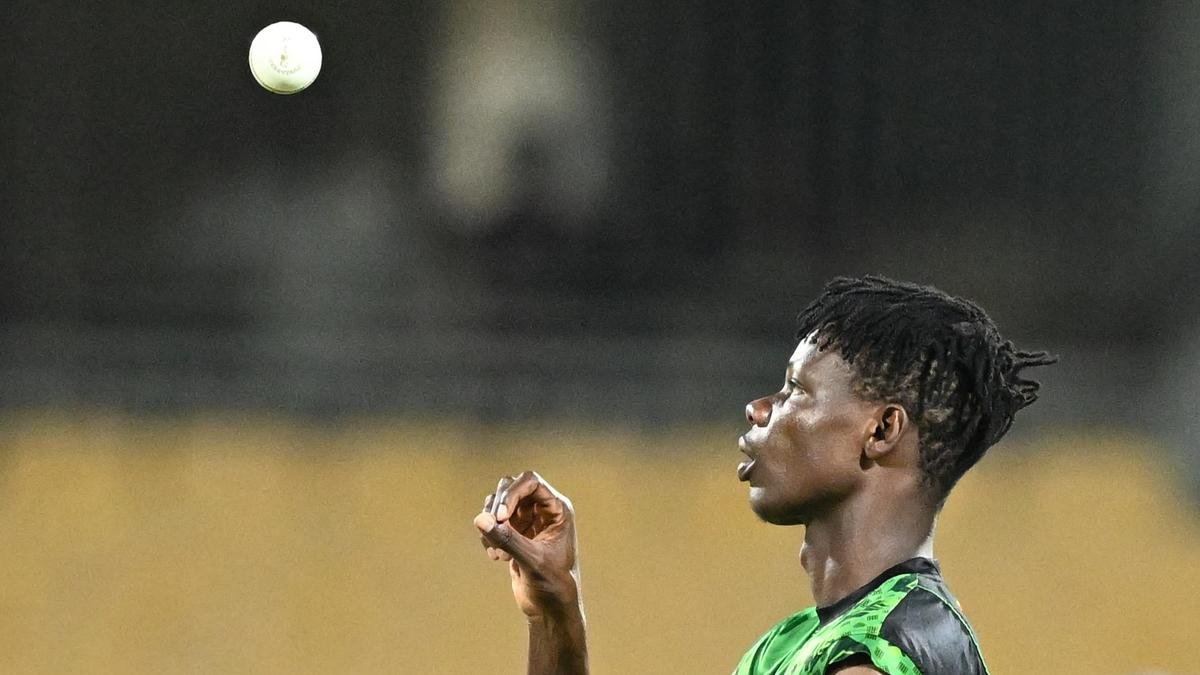
Last year, it was Corbin Bosch, the South African all-rounder. This year, the list has grown longer by one, for now — Blessing Muzarabani, the towering Zimbabwean paceman who had a wonderful T20 World Cup, and Dasun Shanaka, the all-rounder who led Sri Lanka in the same tournament which concluded earlier this month.
We are talking about the late shift of players from the Pakistan Super League to the Indian Premier League. It isn’t just a late shift, it’s about severing one contract at the last minute to sign a more lucrative deal to be a part of inarguably the most visible franchise-driven T20 competition in the world.
From 2025 onwards, there has been an overlap in dates between the PSL and the IPL. Last year, that was necessitated by Pakistan hosting the Champions Trophy in February-March, though the tournament was also played in Dubai. This year, the PSL had to be postponed from its pre-2025 window owing to the T20 World Cup, which ran in India and Sri Lanka between February 7 and March 8.
The only window available for the Pakistan Cricket Board to conduct the PSL coincided with the IPL; the PSL is due to start this Thursday, two days before the IPL kicks off at the M. Chinnaswamy Stadium with defending champions Royal Challengers Bengaluru locking horns with 2016 winners Sunrisers Hyderabad.
Shanaka.
| Photo Credit:
Getty Images
Bosch, part of the Diamond category, had been picked up by Peshawar Zalmi for PSL 2025 before he moved to Mumbai Indians as an injury replacement for fellow South African Lizaad Williams. Understandably miffed at this late ‘desertion’, the PCB slapped a one-year ban on the now 31-year-old, making him ineligible to play in PSL 2026.
Not that it has made any real difference to the right-arm pacer and hard-hitting batter, considering he is part of the MI roster this year too.
Bosch did it first
Following in Bosch’s footsteps are Muzarabani and Shanaka. Muzarabani was one of the standout players for Zimbabwe, who advanced to the Super Eight from a tricky Group B with an unbeaten record. Zimbabwe hadn’t even qualified for the previous T20 World Cup, in the Americas in June 2024, but heralded their return to the competition with a stunning victory over Australia in their second group tie.
As if to show that the performance was no flash in the pan, they then subdued the home crowd and Sri Lanka’s superstars in their final league clash to top their group and earn a shot at the West Indies, India and South Africa in the next stage.
Muzarabani took four for 17 against Australia, backed it up with two for 38 against the hosts and finished the competition with 13 wickets from just six outings. He was in the running to top the chart, and it needed the genius of Jasprit Bumrah and a solitary wicket for Varun Chakaravarthy in the final for the two Indians to get past him with 14 scalps apiece.
Long before the World Cup, Muzarabani had made a pitch for an IPL berth but went unsold at the auction. He had been a part of the RCB set-up during their title-winning campaign in 2025, signed up as a mid-tournament replacement for the WTC final-bound Lungi Ngidi, but did not play a game. Just as he was readying to extend his relationship with the PSL came a call from the Kolkata Knight Riders management, which sought his services instead of Mustafizur Rahman, the Bangladesh left-arm quick whom they let go in controversial circumstances earlier this year. There was no way Muzarabani was turning that offer down.
Shanaka has moved to Rajasthan Royals as a replacement for Sam Curran, the England all-rounder. In the closed season, Curran was one of two players — Ravindra Jadeja being the other — that five-time champions Chennai Super Kings traded out to Royals to acquire Sanju Samson, who would later go on to become the Player of the Tournament at the T20 World Cup.
Curran played a big part in England’s march to the semifinals, but during the course of that campaign, he is learnt to have picked up a groin injury that ended his chances of representing a new IPL franchise.
Shanaka, 34, has limited IPL experience; he played three games for Gujarat Titans in 2023 and was a mid-season substitute for the injured Glenn Phillips last year without getting a match. Like Muzarabani, he too was ignored at the mini-auction ahead of IPL 2026 but a backdoor has opened up through Curran’s injury and Shanaka has gratefully grabbed his chance.
Classed as an all-rounder, Shanaka is more of a hard-hitting batter who has been a reluctant bowler; he has a strike-rate of 143.13 in 283 20-over representative games (average 25.83) against 111 wickets, mainly because he averages only 1.2 overs per match.
Strong response expected
Like last year, the PCB hasn’t taken kindly to these developments. Its chairman, the irascible Mohsin Naqvi, has again threatened legal action against the ‘players who have left’. That the players left at very short notice itself would have been galling; their decision to dump the PSL for the IPL must be particularly infuriating, given the geopolitical tensions between India and Pakistan and the fact that Suryakumar Yadav refused to receive the T20 Asia Cup trophy from Naqvi, who is also the boss of the Asian Cricket Council.
As is often the case in such instances, opinion has been divided on whether Muzarabani and Shanaka this year, and Bosch before him, did the right thing. Their morals have been questioned when what is undeniable is that everyone’s morals are their own outlook and no one else has the right to impose them on someone else.
From the players’ perspective, and one is only guessing here, to pass up the chance of being a part of the IPL landscape would have been unthinkable. Without a shadow of doubt, the reach and clout of the IPL are beyond parallel in the cricketing universe. It has opened hitherto invisible doors; its profile is immense, and while the money isn’t shabby, it also provides a great opportunity to learn and grow as an individual and a cricketer.
More than just money
The tendency to view the IPL through the prism of financial gains alone is both myopic and convenient. Where else do you have the chance to pick the brains of the best in the business, either occupying the same dressing room or sitting in the opposition dugout? Where else can you savour the experience of playing in front of at least 35,000 spectators? Of learning to cope with noise, pressure and expectations? Of furthering one’s education as a cricketer?
It was once said that the English County firmament was the ideal finishing school but that has long passed into history. Admittedly, even till the start of the millennium, a tryst in England at the highest first-class level was an immense learning experience but that is no longer the case.
The IPL has become a finishing school of sorts, and while it is easy to dismiss that remark as facile because it is ‘only’ a 20-over tournament, let’s not forget which format has come to be the flavour of the sport globally. While we can continue to romanticise Test cricket and hope that it survives the very genuine threat of T20 cricket, it is the latter which has caught the imagination of a larger audience.
It’s a truism that can’t be wished away; gradually, international careers are becoming shorter as more and more professionals are plunging into franchise leagues. Who’s to blame them because while we might attach patriotic and nationalist mores, these are players trying their best to eke out a livelihood within the contours of their limited shelf lives.
Muzarabani and Shanaka, and perhaps a couple more who are still expected to make the cross-border move, might use this line of thought to justify their actions though they will also be aware of the risk they run of being called ‘mercenaries’ by those who hold a divergent point of view. To leave a team, any team, in the lurch at the last minute and therefore not honouring one’s word is far from ideal unless the circumstances are pressing and the exit unavoidable.
Those so inclined will argue with justification that there was nothing pressing or unavoidable about their shift from the PSL to the IPL, and that their decision has been influenced merely by ‘greed’. To misquote — for the sake of propriety — a popular saying, opinions are like a nose, everyone has one. And therefore, this is a debate that cannot be settled satisfactorily, one way or the other.
A change on the cards?
Perhaps, the PSL will smell the coffee and revert to its previous timeline that ensured the tournament ran ahead of the IPL and therefore there was no danger of late pullouts and moves to the bigger league. Or maybe it won’t if ego comes in the way and the PCB continues to believe in the power of the PSL which, it has said, has become so big, vibrant and productive that the Pakistan board is no longer dependent on the International Cricket Council for financial clout.
The PCB has projected Marnus Labuschagne, Steve Smith and Glenn Maxwell, the Australian trio, as being the overseas poster boys of this edition, arguing that their presence has lifted the profile of the tournament. Maybe it has, but it must not be forgotten that former captain Smith went unsold at the IPL auction or that the underachieving Maxwell, perhaps reading the obvious writing on the wall, chose to not even throw his hat in the ring.
This isn’t about which is the bigger, stronger, more influential and powerful league because that is not even a debate. But if one does want to debate the pros and cons of Muzarabani and Shanaka’s decisions, they can do so till the cows come home and still not arrive at a satisfactory conclusion. Because that’s how it is sometimes.


