


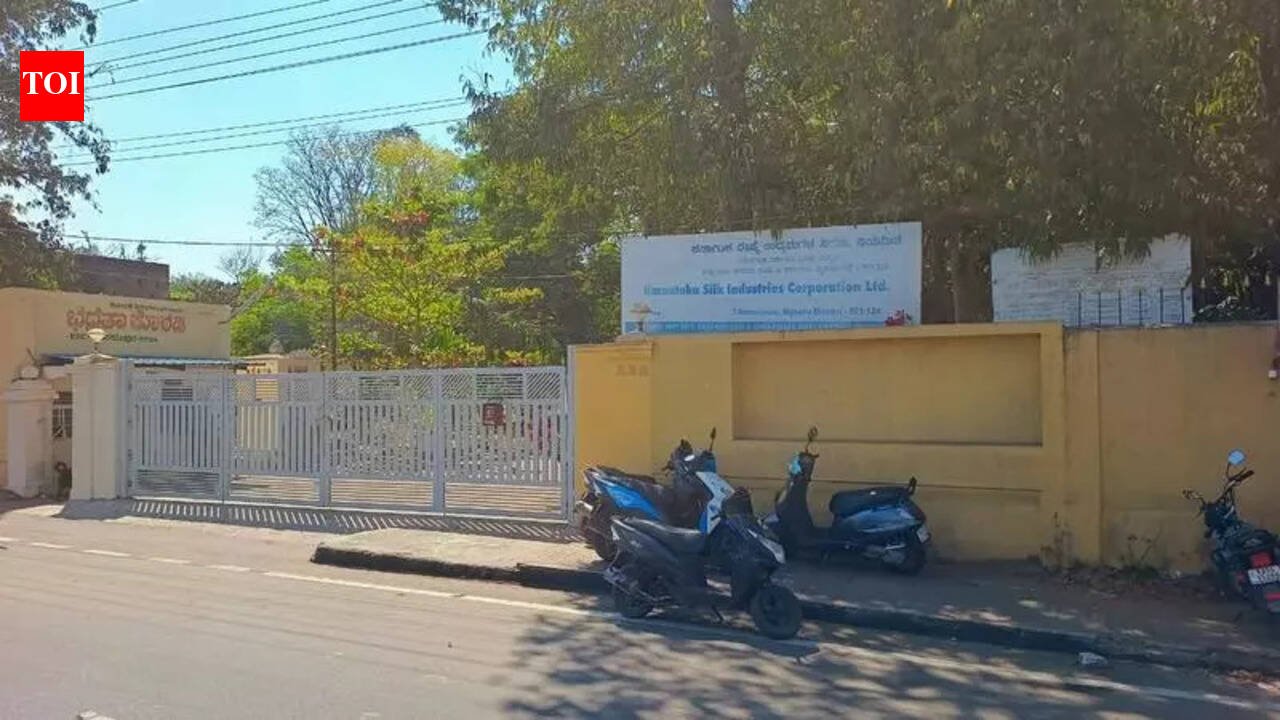
Mysuru: In a move that critics describe as a glaring case of administrative myopia, the state govt handed over five acres of prime land belonging to the iconic Karnataka Silk Industries Corporation (KSIC) in T Narasipura—barely 200m from the sacred Triveni Sangama—to the department of youth empowerment and sports for the construction of a taluk stadium.The decision was taken despite stiff resistance from locals, environmentalists, and even KSIC itself.The proposal traces back to the 2025–26 budget, in which chief minister Siddaramaiah announced a stadium for T Narasipura with an allocation of Rs 6 crore. The constituency is represented by district minister HC Mahadevappa.Established in 1912 by Maharaja Nalwadi Krishnaraja Wadiyar, the historic silk factory began with 10–44 looms to cater to royal and military needs. Equipped with imported Swiss machinery, it was the first of its kind in India. Post-Independence, it came under the Mysore State Sericulture Department, and later evolved into KSIC in 1980. Today, it remains the only fully integrated silk enterprise in the country, managing the entire chain from reeling to weaving. With ISO 9001-2015, EMS 14001-2015, and OHSAS 18001-2007 certification from TUV Rheinland, the factory employs 192 workers and produces globally sought-after Mysuru silk saris woven with 100% gold zari.Documents accessed by TOI reveal that KSIC formally objected to the land transfer, warning that stadium construction would disrupt operations. The site earmarked for the factory’s effluent treatment plant (ETP) was also handed over. The corporation flagged urgent needs for space to store coal and cinder ash, develop internal roads, and expand facilities such as a hospital, canteen, and parking. With rising international demand, KSIC planned future expansion, which is now jeopardised. Despite these concerns, construction processes, including surveys, are reportedly being fast-tracked to prevent fund lapse.Environmentalists warn the cost may be irreversible. Parashurame Gowda, general secretary of People for Environment, claimed 552 mature trees—some over a century old—stood on the proposed site, including 24 sandalwood, 55 teak, and 109 forest species. “Recreating this ecosystem would take more than 100 years. We are not against a stadium, but it must not come at the cost of heritage and ecology,” he said, cautioning that the proximity to Triveni Sangama could endanger river ecology.“Prioritising a stadium over a century-old heritage institution and fragile ecosystem, the govt risks sacrificing history and sustainability,” he warned.


