



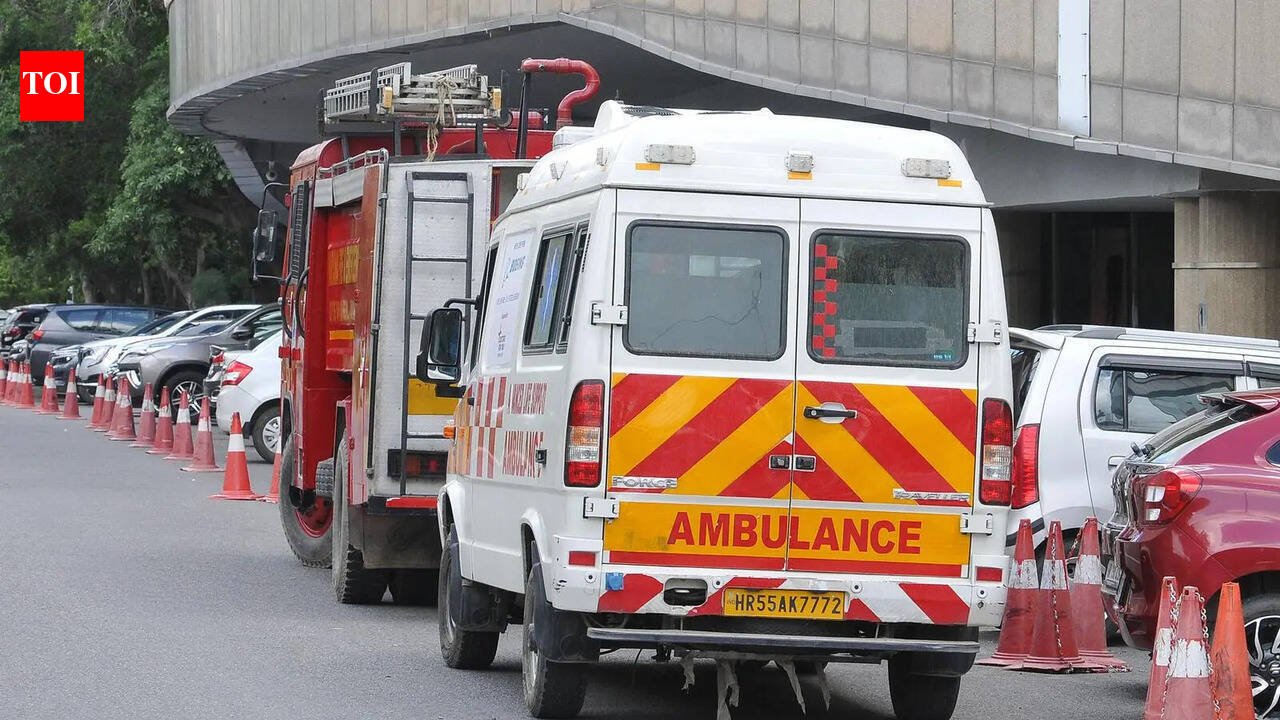
Gurgaon: Amid funding gaps and procurement delays, the state govt is planning a revamp of its emergency ambulance network and adding nearly 300 new vehicles to its fleet.“The aim is to bring down the ambulance response time to single digits. At present, it ranges between 10 and 12 minutes,” said Dr Virender Yadav, director of National Health Mission (NHM), Haryana.While the govt waits for the delivery of 70 advanced life support (ALS) vehicles, 59 such units will be deployed immediately through an outsourcing model. Meanwhile, the procurement of 167 basic life support (BLS) ambulances are still in the pipeline. Together, these will add 296 ambulances to the existing fleet.An official said lowering the response time is critical during trauma, cardiac and accident-related emergencies where minutes often make the difference between life and death. Quick response is especially vital on highways and in densely populated urban clusters where emergency calls are rising steadily, he added.The ambulance expansion is part of the govt-run emergency response network, which operates independently of private hospital ambulances, and is intended to ensure uniform access to emergency medical care across districts.Haryana currently has 550 ambulances in operation. Of these, 86 vehicles have already been condemned, while another 210 have crossed age or mileage thresholds and are due for replacement. As many as 183 ambulances require immediate replacement.In Gurgaon, the ambulance fleet is proposed to be increased to 35 from the current 27 vehicles. Faridabad is likely to see its fleet rise to 27 from 20. In Panchkula, the approved strength has been fixed at 27 against 21 ambulances presently operational. Yamunanagar’s fleet is slated to grow to 25 from 20.Hisar, which currently has 30 ambulances in service, will see the number rise to 33, while Karnal’s fleet will increase marginally from 30 to 31. In Sirsa, the number of vehicles will go from 32 to 37.The operational fleet currently includes 50 ALS ambulances, 238 BLS vehicles, 212 patient transport ambulances, besides specialised neonatal and Kilkari units.Ambulance procurement typically takes at least six months, the official said, prompting the govt to adopt a hybrid strategy to bridge immediate gaps.It is to plug the current need that 59 ALS vehicles have been deployed through outsourcing while 70 of the same units are being procured with support from the Union govt.Out of the 167 BLS ambulances, budget approval has been secured for 50 units through the road safety department. However, the proposal for the remaining vehicles is pending clearance from the finance department.These govt ambulances will be equipped with advanced technological systems, including real-time GPS tracking, automated call-routing tools and a dedicated communication device that connects emergency calls directly to the ambulance driver, cutting transfer delays. ALS ambulances will also be fitted with critical care equipment such as cardiac monitors, defibrillators, oxygen delivery systems and emergency medicines, enabling on-site stabilisation of patients.Health officials said drivers, emergency medical technicians and call centre operators will undergo specialised training to ensure optimal use of the technology and equipment, improving coordination from the moment a distress call is received until the patient reaches a health facility.


