



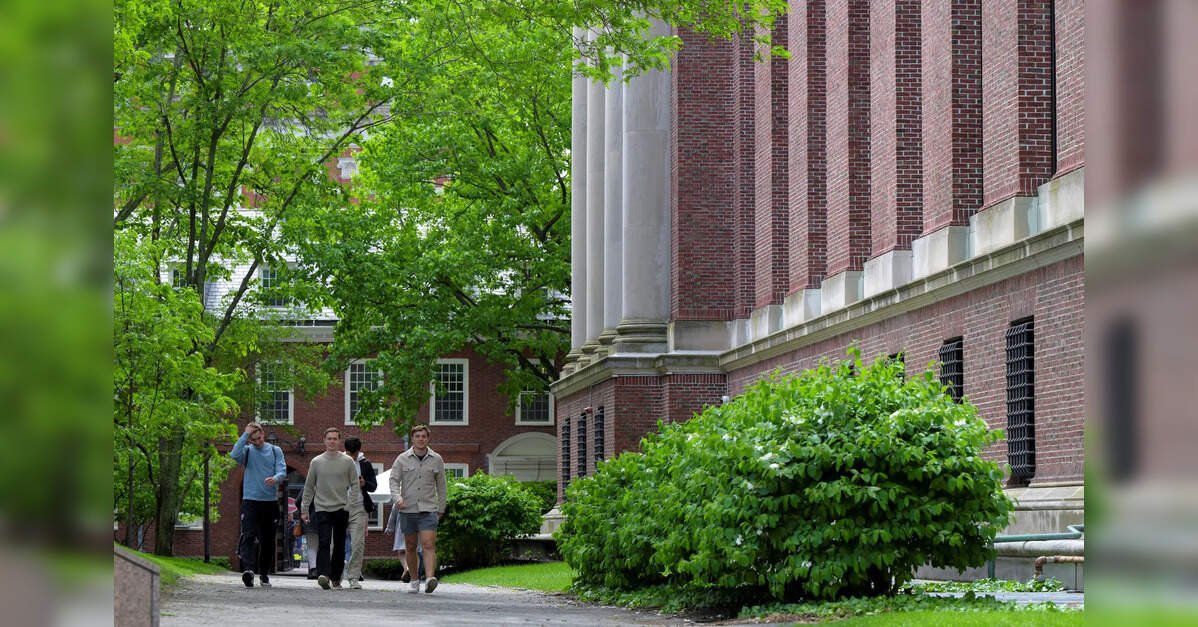
More than two-thirds of Harvard University faculty voted to cap the proportion of A-grades in undergraduate courses, instituting one of the strongest policies against grade inflation in US higher education in decades.
Starting in the fall of 2027, no more than 20% of a class, plus four additional students, can receive an A. Just under 70% of the votes were in favor of the policy in a week-long electronic vote that concluded Tuesday.
The vote represents a “large mandate for change,” said Alisha Holland, co-chair of the faculty panel that proposed the policy. She said the margin was more lopsided than she expected, adding that the vast majority of eligible faculty cast a vote.
Holland urged faculty to start revisiting their assignments and grading systems ahead of implementation of the new initiative. “The hope is that the work will begin now, so that when the policy goes into effect faculty and students are prepared for the transition.”
The proposal has rocked the Ivy League school, where roughly 60% of undergraduate grades were an A in the academic year that ended in mid-2025. The proposed cap emerged in February, with advocates arguing that the current system failed to adequately measure student performance.
Students overwhelmingly opposed the change, contending it would lead to unnecessary stress and discourage them from pursuing the most challenging majors. Nearly 85% of Harvard undergraduate respondents to a survey conducted by the student government in February opposed the limits to A-grades, according to the Harvard Crimson.
“Students are disappointed,” said Eli Johnson-Visio, a senior at Harvard pursuing a double major in neuroscience and archaeology. The cap will hurt morale and increase competitiveness on campus, he said. “This will only add to the stress and the excessive amount of time that we already spend on academics.”
Grade point averages have risen steadily at universities nationwide over the past half-century, a trend that a handful of elite schools have sought and failed to curb. Professors, researchers and even Trump administration officials have expressed optimism that, if one of the nation’s most prestigious universities tackles grade inflation, others will follow. In April, a Yale University committee proposed requiring a mean campus-wide GPA of 3.0.
Princeton University and Wellesley College put caps on high grades in the 2000s only to backtrack later in the face of student pushback. Administrators worry that reforming grading in isolation will hurt students’ post-graduation prospects. They’ve also expressed concern a crackdown will scare away applicants at a time when a looming demographic cliff threatens enrollment.
“This is a consequential vote. It will, I believe, strengthen the academic culture of Harvard,” Amanda Claybaugh, Harvard’s dean of undergraduate education, said in a statement. “It will also, I hope, encourage other institutions to confront similar questions with the same level of rigor and courage.”
Harvard faculty this week also approved a policy that will use students’ average percentile rank, not their GPA, to determine university awards. They rejected a proposal that would have allowed them to petition to rate student performance as “satisfactory” or “unsatisfactory,” rather than assign a letter grade.
Not all students opposed the cap on top grades.
Zoe Yu, who has just completed her junior year at Harvard, said she was happy to see it pass, and supports efforts to “re-center academics at Harvard.”
“An ‘A’ should actually be an exceptional distinction,” Yu said.
“Harvard has a wealth of extracurricular activities that draw some students to the school,” she added. “But the actual work of writing, reading, thinking — that’s what you actually come to university for.”


