



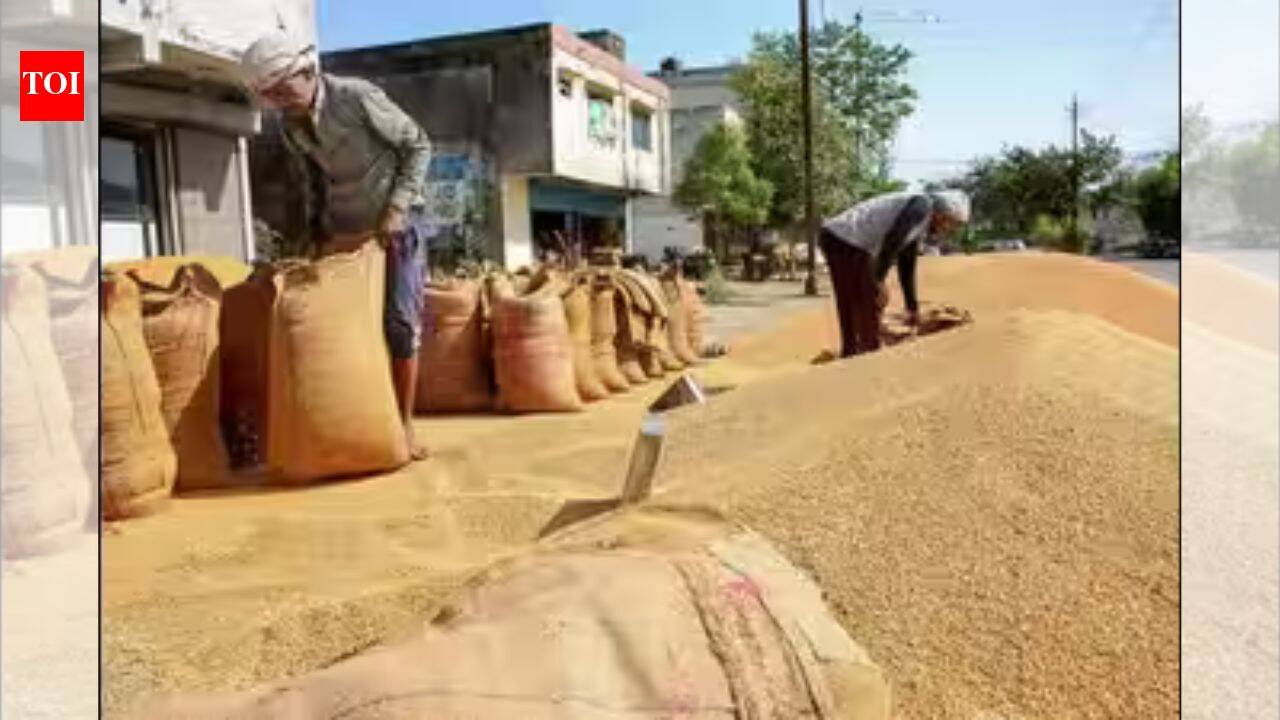
Hapur, located in the National Capital Region of Uttar Pradesh, has undergone a notable economic transformation between 2017 and 2026. Long identified with its grain markets, steel pipes, paper products and agricultural trade, the district has steadily evolved into an industrial, logistics and MSME-driven economy. Improved connectivity, industrial expansion and its strategic position on major transport corridors have driven this shift, allowing Hapur to diversify beyond its traditional agrarian and trading roots while retaining agriculture as a foundational sector.The economy of Hapur has expanded considerably over the past nine years. Rapid industrialization in the Dhaulana industrial belt, the steady growth of micro, small and medium enterprises, enhanced connectivity through the Delhi–Meerut Expressway and the Eastern Peripheral Expressway, rising investment linked to NCR proximity, and expansion in warehousing, logistics, food processing and agro-based industries have all contributed. As a result, Hapur ranks among the faster-growing economies of western Uttar Pradesh and has benefited from the broader rise in the state’s overall economic performance during this period.Industrial activity has become a central pillar of this change. Hapur now hosts a range of industries that include steel tubes and pipes, paper manufacturing, engineering goods, food processing, packaging, plastic products, pharmaceuticals, chemicals and agro-processing. The Dhaulana industrial area has drawn numerous MSMEs, helped by its convenient links to Delhi, Ghaziabad and Noida. This cluster has provided a base for both established units and newer enterprises seeking proximity to the national capital’s markets and supply chains.Infrastructure improvements have been decisive in raising the district’s investment potential. The Delhi–Meerut Expressway, Eastern Peripheral Expressway, National Highway 9, nearby access to the Dedicated Freight Corridor, excellent connectivity to Delhi NCR markets and proximity to Noida International Airport at Jewar have collectively reduced logistics costs and improved the movement of goods. These projects have shortened travel times, lowered transportation expenses and made Hapur a more attractive location for manufacturing and distribution activities.A further boost is expected from the proposed industrial corridor near the Ganga Expressway in Hapur. In 2025–26 the district administration began the Social Impact Assessment process, signalling the state government’s intention to develop a new industrial growth zone adjacent to the expressway. Once operational, the corridor is likely to attract additional investment, generate employment and further integrate Hapur into the expanding industrial landscape of western Uttar Pradesh.Agriculture continues to play a major role in the district’s economy. Principal crops include wheat, sugarcane, paddy, mustard, potato and a variety of vegetables. Improvements in irrigation, greater mechanisation and better market access have supported farm incomes even as non-agricultural sectors expand. The coexistence of a productive agricultural base with growing industrial and logistics activity gives Hapur a degree of economic resilience.The One District One Product (ODOP) programme has strengthened the district’s traditional manufacturing and MSME ecosystem. Credit support, skill development, modern machinery, branding assistance, marketing help, export promotion and participation in trade fairs have all been extended under the scheme. Across Uttar Pradesh, ODOP has generated more than 3.16 lakh jobs since 2018 and contributed to nearly doubling the state’s exports, benefits that have reached districts such as Hapur that already possess strong MSME clusters. The ODOP of Hapur is Home Décor and Textiles, particularly in the region of Pilkhua,situated along NH 9, has added to the economy of the district like never before.MSME growth itself has been visible on several fronts. Thousands of enterprises have completed digital registration, access to credit has improved through government schemes, online approval processes have become smoother, exports of engineering and manufactured goods have expanded, and employment generation has increased. These developments have helped smaller units scale up and connect more effectively with larger markets.Hapur’s location within the NCR has also turned it into a preferred destination for warehousing, cold storage, agricultural logistics, FMCG distribution and e-commerce supply chains. The district increasingly functions as a logistics gateway for western Uttar Pradesh, offering companies cost-effective space and connectivity for storing and moving goods destined for the capital region and beyond.New employment opportunities have appeared across manufacturing, transport, warehousing, construction, food processing, retail and the broader MSME sector. At the same time, urban infrastructure has advanced through investments in roads, drainage, water supply, smart civic services, industrial utilities and housing. These improvements have made the district more livable for its workforce and more efficient for businesses.Looking ahead, Hapur’s strengths remain clear: its NCR location, established industrial base, excellent road connectivity, expanding logistics sector, skilled workforce, growing industrial estates and the proposed Ganga Expressway industrial corridor. Together these factors position the district as an emerging manufacturing and logistics hub in western Uttar Pradesh.Over the last nine years Hapur has moved beyond its traditional identity as an agricultural trading centre. By leveraging its strategic location in the NCR, improved transport infrastructure, a growing MSME base and the planned industrial corridor along the Ganga Expressway, the district is steadily transforming into a more diversified industrial and logistics economy. Agriculture continues to provide a solid foundation, yet manufacturing, warehousing and services are becoming increasingly important drivers of growth. This combination places Hapur among the promising economic centres of western Uttar Pradesh as it continues its transition from a grain-market town into a modern industrial and logistics node.


