






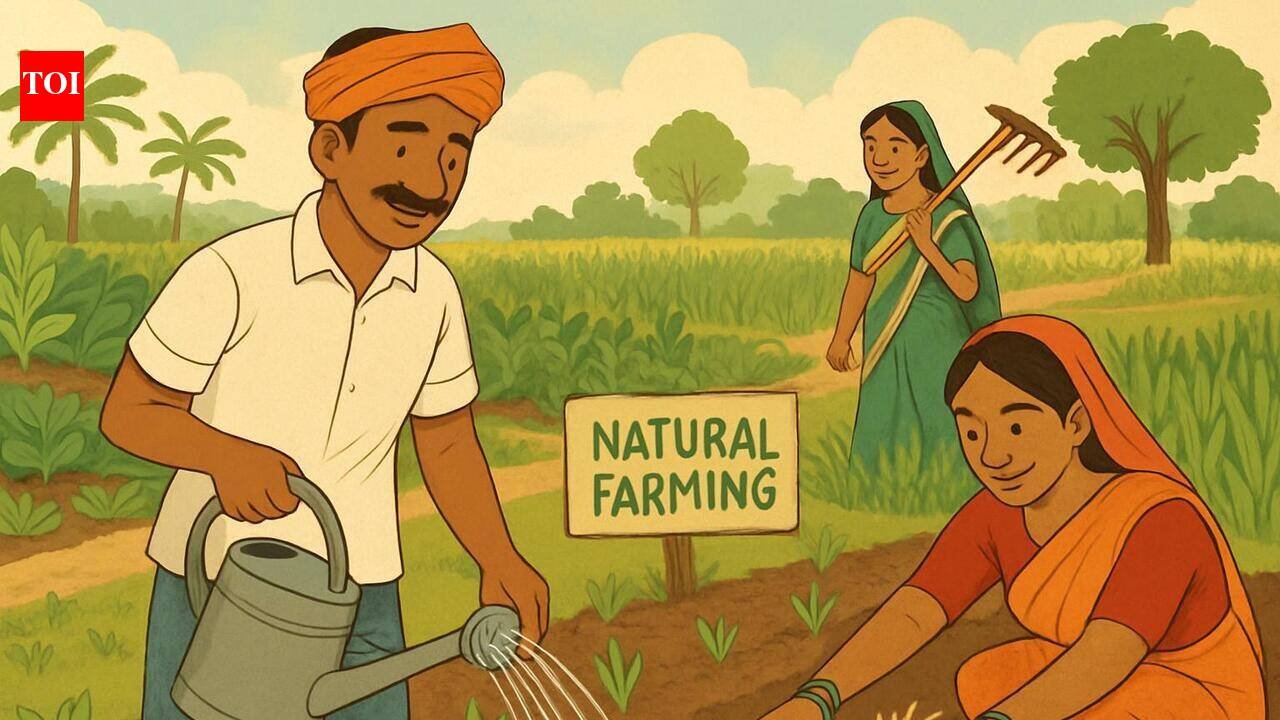
Gandhinagar: Governor Acharya Devvrat said on Tuesday that farmers who have adopted natural farming should get higher subsidies than those using chemical fertilisers. He said the move will encourage more farmers to take up natural farming.Interacting with mediapersons in Gandhinagar, the governor said that subsidies on chemical fertilisers and pesticides cannot be stopped abruptly, as such a move could lead to farmer protests. “I believe that a significant portion of govt agricultural subsidies should be allocated to those practicing natural farming rather than chemical farming, so that farmers are drawn towards this method,” he said. He added that it is necessary to convince farmers with evidence that natural farming doesn’t reduce yield but improves soil fertility, saves water and money, protects the environment and also helps in cattle conservation.Gujarat govt is already providing financial support for natural farming in the form of Rs 12,000 a year for the upkeep of cows besides financial assistance for drums and other equipment, he said.The governor stated that 300 new sales centres are being established in Gujarat to help agriculturists sell natural farm produce at fair prices, recover production and transportation costs and avoid exploitation by middlemen.Differentiating between natural and organic farming, Devvrat said organic farming often involves externally purchased inputs. “Natural farming is based on microorganisms, earthworms and beneficial insects. It does not require farmers to depend on market-bought fertilisers and other inputs,” he said.Warning against continued excessive use of urea and DAP, the governor said these have been damaging soil microorganisms and earthworms and are reducing soil fertility. He added that soil organic carbon levels, which were much higher at the beginning of the Green Revolution, have declined sharply because of excessive chemical use.He also linked chemical farming to water contamination and groundwater depletion, saying hard layers formed in the soil prevent rainwater from percolating into the ground.


