








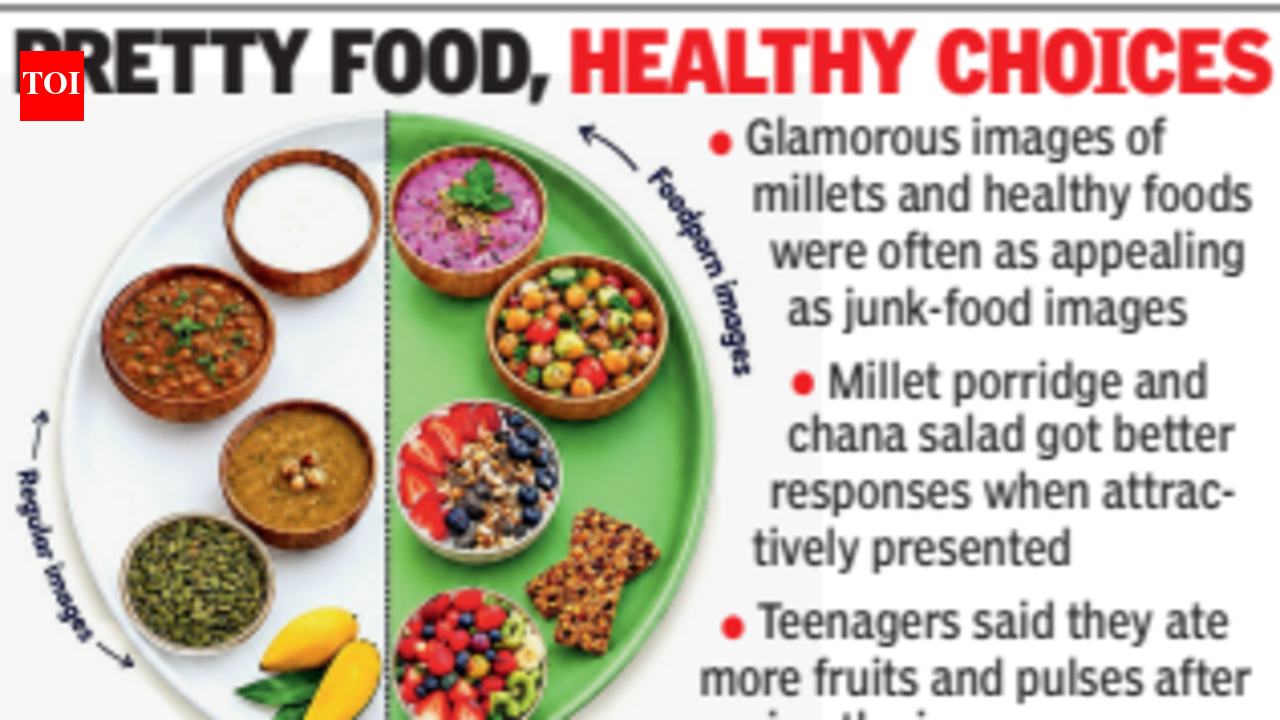
HYDERABAD: What if a glossy bowl of millet porridge could make teenagers drool as much as cheesy pizza, dripping burger and glossy ice cream? A new study by scientists at ICMR-National Institute of Nutrition (NIN), Hyderabad, suggests that giving healthy foods the same glamorous “food porn” treatment on social media could help nudge adolescents towards better eating habits.Published in BMC Public Health, the study first tested 150 images of pizzas, burgers, ice creams, fruits, millets and pulses on 43 school-going teenagers. Based on their ratings, researchers shortlisted 15 images – five unhealthy foods, five healthy foods photographed in a glamorous style and five healthy foods shown plainly. The images were then posted daily for 15 days on Instagram to 203 teenagers aged 13 to 19 from across India. Half the participants also received brief nutrition messages with the images.
Pretty food, healthy choices
All participants completed daily surveys, while 19 were later interviewed on the phone. Researchers found that glamorous images of healthy food were as appealing as – and sometimes more appealing than – those of junk food. A glossy image of millet porridge, for instance, received a better response than a plain bowl of millet cereal, while a well-presented chana salad was preferred to plain boiled dal.“Many teens said they actually ate more fruits and pulses during the 15 days, and some went out of their way to find the foods shown to them,” said NIN scientist SubbaRao Gavaravarapu.Interestingly, nutrition captions had little impact, with most teenagers saying they noticed the pictures more than the text. Gavaravarapu said social media had become a major channel for food marketing, exposing teenagers to unhealthy products through advertisements, influencers and peers. NIN director Bharati Kulkarni said the findings point to a low-cost way to promote healthier choices. “Schools, canteens and food brands could use these techniques,” she said, adding that larger studies involving diverse groups of teenagers were needed.


