





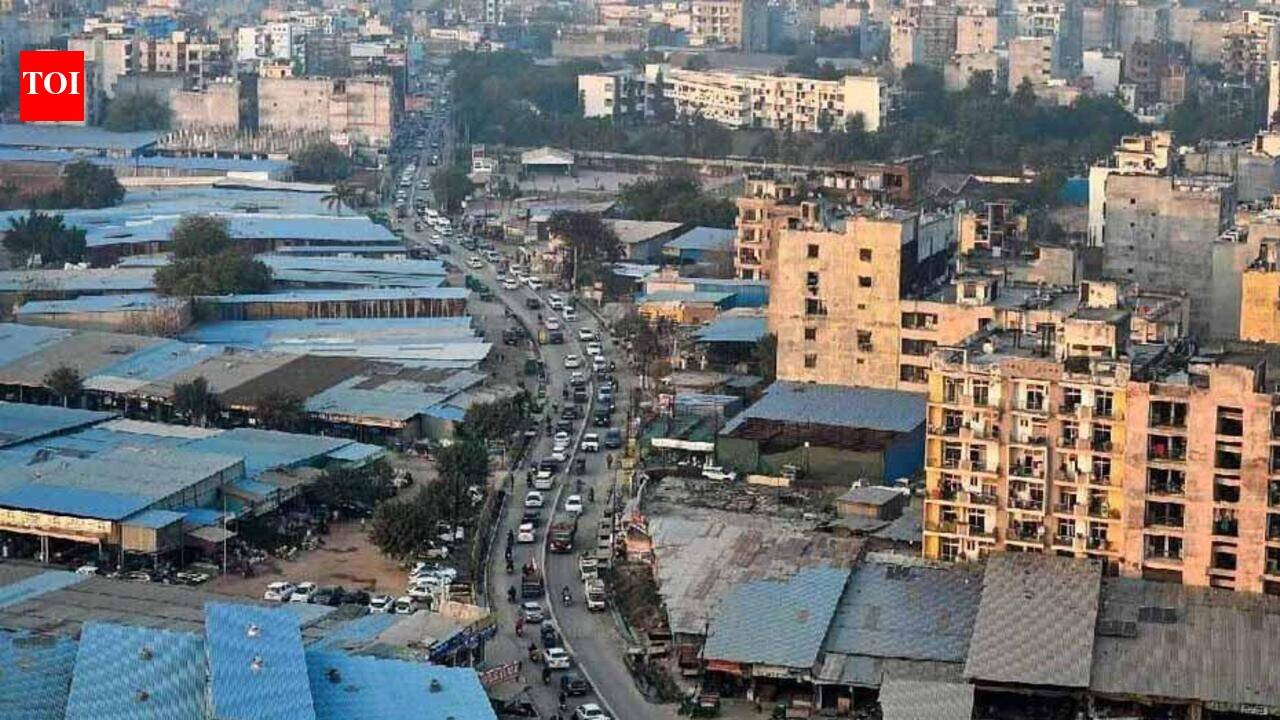
Ghaziabad: The civic body has decided to cover a 1.7km stretch of Shahberi drain using box culvert technology to widen the road along the congested Crossings Republik township by nearly 11 metres.Box culvert technology uses reinforced concrete structures that carry water beneath, officials said. It can help Ghaziabad Municipal Corporation add two more lanes to the stretch between Shahberi culvert and National Highway-9 via Crossings Republik. The 11-metre-wide drain sees a discharge of 6,524 MLD across a catchment area of 21 square kilometres at present.“The construction and design services (C&DS), which is a commercial wing of the UP Jal Nigam, has been engaged to construct a box culvert over Shahberi drain. The box culvert is a reinforced concrete structure used to carry water beneath it while maintaining the concrete structure at the level of the road, which will help increase the width of the road. The drain, as per norms, cannot be covered fully as it traps toxic gas within it, and additionally, it creates problems cleaning it,” a GMC official said.The revamped drain is also expected to benefit 21 wards and over four lakh people from annual flooding. The catchment area accounts for about 6% of the city’s total area, making the drain’s overhaul a civic priority. The project is estimated to cost Rs 132 crore.A seven-km double-decker flyover is also proposed to ease traffic movement from NH-9 to Ek Murti Chowk in Greater Noida West, bypassing the narrow and encroached Shahberi stretch. One carriageway will carry traffic from Greater Noida West towards the expressway, while the other will serve vehicles approaching from Ghaziabad and Crossings Republik. The National Highways Authority of India, which is to develop the flyover, has been tasked with finalising the project details.Shahberi, Crossings Republik and Greater Noida West, residential townships along the expressway and NH-9, have grown into major affordable housing hubs over the past decade. Poor road connectivity between them, despite their proximity, continues to cause bottlenecks and long traffic queues.


