



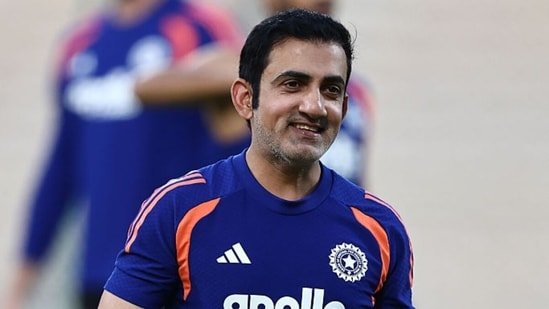
Like it or not, Gautam Gambhir isn’t going anywhere. His position as India’s head coach is under no threat, and until his contract runs out, he is here to stay. At worst, he could lose charge of the Test side, but as far as white-ball cricket is concerned, the 0-6 hammering in the United Kingdom notwithstanding, Gambhir is set to remain in charge. The public sentiment is understandable; the fury even more so. But while going winless against Ireland and England will sting, the BCCI is unlikely to let the result influence its long-term plans.
Surprised? Don’t be, for Gambhir has delivered what many coaches before him failed to: winning more than one ICC trophy. For years, the narrative was simple: bilateral series don’t count for much as long as India are winning the big ones. Under Ravi Shastri, India steamrolled opponents, clinching 26 bilateral series out of 35 (12 ODIs, 14 T20Is), but failed to win the 2019 World Cup and the 2021 T20 World Cup. Rahul Dravid wasn’t too far behind, overseeing 24 bilateral series wins (10 ODIs, 14 T20Is) from 30. However, when it mattered most, India fell short, culminating in the heartbreak of November 19 in Ahmedabad. Together, that’s a staggering 50 bilateral series wins, but only one ICC title.
Where Gambhir stands compared to Shastri, Dravid
A deeper assessment only reinforces the legacies of Shastri and Dravid. Remember 2018? After losing the Test series 1-2, India roared back to crush South Africa 5-1 in the ODIs. A few months later, they celebrated their famous Border-Gavaskar Trophy triumph in Australia before clinching the ODI series 2-1. Shastri’s India also whitewashed New Zealand 5-0 in T20Is in 2020 and beat England 2-1 in the ODI series in 2018. That Indian team was indeed every host team’s nightmare. Cut to Dravid, and India won both the ODI and T20I series in England in 2022.
Gambhir’s record in white-ball matches, meanwhile, isn’t too bad either. India may have suffered setbacks that would have been unthinkable under his predecessors. They lost an ODI series to Sri Lanka for the first time in 28 years and have now been blanked 0-2 by Ireland. But he also has two ICC titles from two attempts. And that is a record few can argue with. And to bust the myth, as of today, July 13, India under Gambhir has won 10 out of 15 white-ball bilateral series (3 out of 6 in ODIs and 7 out of 9 in T20Is).
The BCCI is set to review India’s performance in the UK, but rest assured, it won’t lead to any knee-jerk reactions. Among the many things up for discussion will be the players’ performances – why many of them, despite starring in the IPL, were at sixes and sevens – the selection, player replacements, injuries, and ways to course-correct. What won’t be discussed, however, is Gambhir’s future. The BCCI is firm in its plans. Gambhir’s performance in Tests is a debate for another day, but as far as white-ball cricket is concerned, there’s no doubt his position remains secure.
Why Gambhir?
Not that the decision-makers have any doubts about Gambhir’s abilities. But even in the unlikely event that the current head coach is asked to go, what are the alternatives? Quite simply, they are limited. Centre of Excellence chief VVS Laxman, despite his sporadic gigs as a temporary coach, has already expressed his reluctance to spend so many days on the road, and it is unlikely that the BCCI will return to overseas coaches anytime soon. The last foreign coach India had was Duncan Fletcher, and Indian cricket has come a long way since those days, when failing to reach the knockout stage of an ICC tournament and losing Test matches at home was, simply put, acceptable. Among the names that come to mind is WV Raman, who helped turn the Indian women’s team into a force to be reckoned with. But the men’s team is a different kettle of fish. The pressure is far greater, and being the head coach of the Indian men’s cricket team is the most scrutinised job in this country.
Also Read: Gautam Gambhir in line of fire for ‘unprofessional’ treatment of Vaibhav Sooryavanshi, Sanju Samson
Sacking a coach is easy; finding one capable of handling the relentless scrutiny that comes with leading Indian cricket is not. Bilateral failures deserve criticism, and Gambhir will be expected to answer difficult questions about India’s decline in Tests and the white-ball collapse in the UK. But the board also recognises that judging a coach solely on one disastrous tour would contradict the very yardstick it has used for years. ICC trophies have long been the currency by which Indian coaches are measured, and Gambhir has an unblemished record there. Until that equation changes, one poor tour is unlikely to outweigh silverware.
The review will be exhaustive, players will be held accountable, and systems may be tweaked. But unless the BCCI fundamentally changes its philosophy, Gambhir’s biggest challenge is likely to be rebuilding this team, not keeping his job. There is a World Cup to be won next year, and an Olympic gold in 2028. That, of course, depends on whether the BCCI grants Gambhir the one-year extension he is reportedly keen on.


