


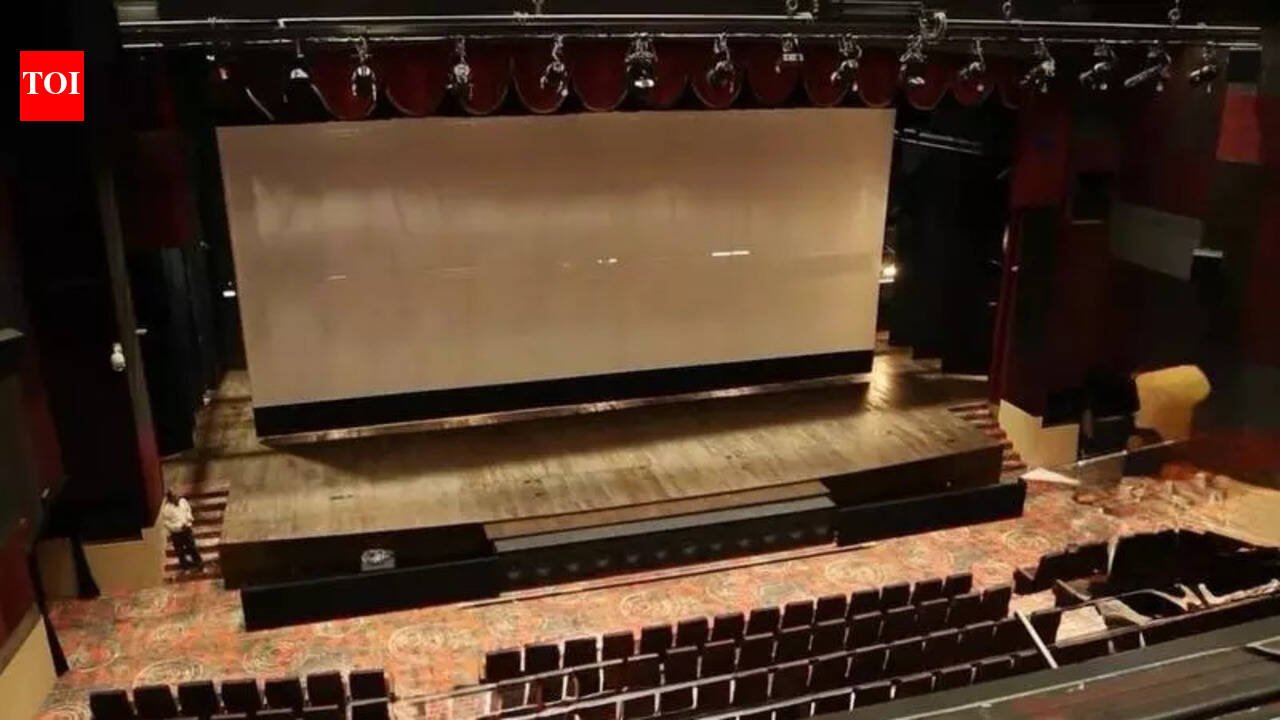
The project was developed by Ranjit Sadakale, assistant professor in the Television Engineering department at FTII, along with his team of students. At the core of the auditorium is a synchronised electromechanical system installed in the stage section.Traditionally, theatres have been divided into two parts: the audience and the stage. While audience requirements remain largely similar for cinema and drama, the stage section differs significantly. In cinema theatres, the screen and sound system must be placed at the lip of the stage, with perforated screens allowing sound from 3 frontal speakers – Left, Right and Centre (LCR) – to pass through. In contrast, drama theatres require an open stage for performers.“We initially planned to install the cinema screen at the back of the stage to allow space for performances. However, acoustic calculations revealed a major drawback. About 30-40% of sound was lost for front-row audiences due to the formation of an audio cavity on stage,” said Sadakale.Moving the screen and speakers to the front solved the sound problem but made the space unusable for live performances. The patented solution bridged this gap. “The system mounts the screen and LCR speakers on a movable electromechanical structure that shifts forward or backward depending on the use. The movement takes 8 to 10 seconds, allowing the same auditorium to function as a cinema or a drama theatre without compromising sound aesthetics,” said Sadakale. The solution draws from electronics, mechanical engineering and sound design, making it a multidisciplinary innovation.This state-of-the-art auditorium was inaugurated on Jan 11, 2025, by Union minister for Information and Broadcasting Ashwini Vaishnaw.


