






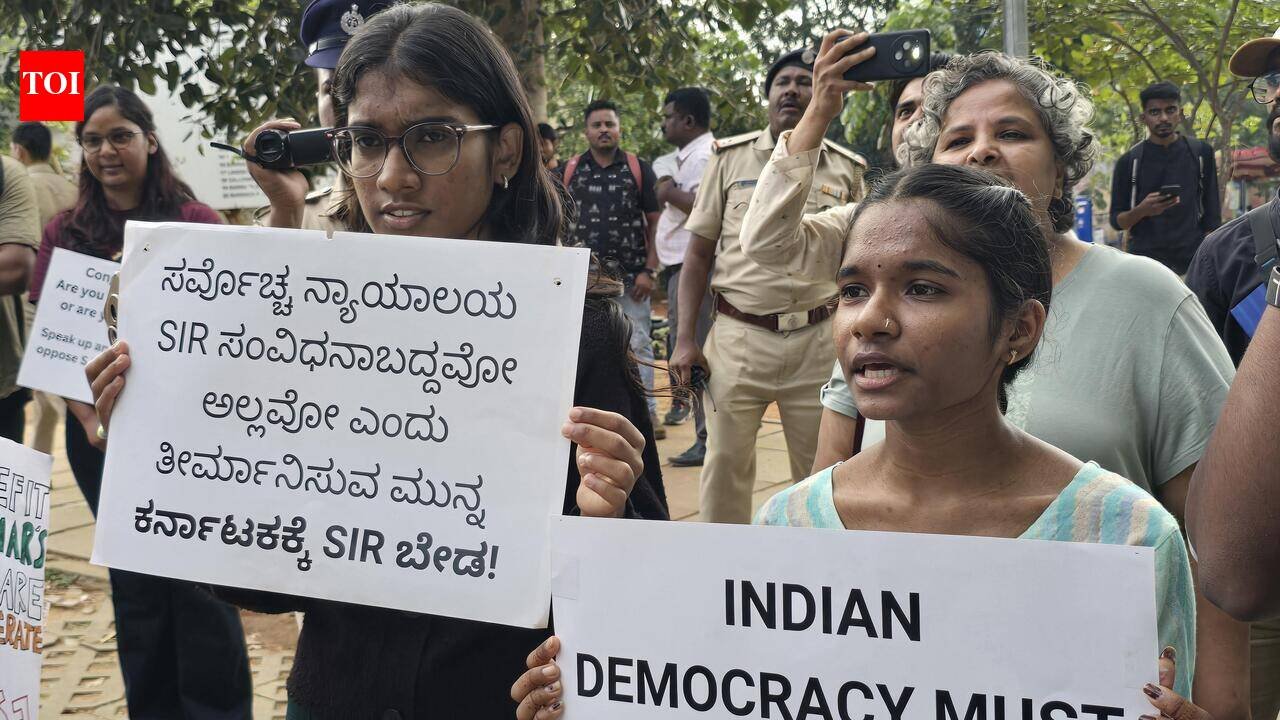
Bengaluru: The controversy over alleged misuse of Form 7 applications in Karnataka has reached a point where neither the Election Commission nor political parties can afford to let competing claims remain unresolved.The inquiry ordered across all 224 assembly constituencies following a six-hour dharna by chief minister DK Shivakumar and his cabinet colleagues could determine whether the controversy was driven by genuine electoral irregularities, isolated misuse or a wider pattern.If the inquiry establishes attempts were made to delete genuine voters from the rolls, especially those from minority, Dalit and backward-class communities as alleged by Congress, it will raise serious questions about the safeguards used during the special intensive revision (SIR). If the findings do not support the allegations, it would equally matter because political claims about systematic voter deletion would then have to be reassessed.Form 7 is a legitimate mechanism to object to a voter’s inclusion in the electoral roll. The issue, therefore, is not the use of Form 7 itself, but whether false or improperly sourced applications were used to trigger deletion proceedings against eligible voters.Political analyst MN Patil said the EC’s credibility would depend on how transparently it establishes facts. “An electoral roll can command public confidence only when every deletion is supported by a verifiable reason, and every eligible voter has a meaningful opportunity to remain enrolled,” Patil said.The EC’s latest direction to states where SIR has been completed adds weight to this concern. It has asked officials to identify eligible voters who may have been left out and facilitate their re-enrolment. The direction effectively puts equal emphasis on correcting omissions after the revision.For Karnataka, this means the Form 7 inquiry and the post-SIR exercise could answer competing questions: whether names were wrongly sought to be removed and whether eligible voters who disappeared from the rolls can be brought back.Political analyst Vishwas Shetty said the investigation should go beyond counting applications. “The important questions are, who prepared the applications, who submitted them, whether the objectors were genuine and whether the voters concerned were truly ineligible. The answers should come from records, not political claims,” Shetty said.Political parties will also face scrutiny. Governing Congress has alleged an organised attempt to delete eligible voters, while BJP functionaries have rejected the allegation and maintained the objections were legitimate and filed through prescribed procedure.The 224-constituency inquiry therefore has the potential to test claims of both sides. A finding of widespread misuse would require the EC to identify those responsible and take action. If the applications are found to have been legitimate, the political allegations would lose factual support.“Political parties also have a responsibility to substantiate serious allegations involving the electoral roll,” Shetty said. “If the evidence establishes wrongdoing, those responsible should face action. If it does not, political claims should not be allowed to become a substitute for facts.”Both analysts said: “The EC faces a credibility test. Any systematic deletion of genuine voters can erode public trust, while unsubstantiated claims of mass deletion can equally undermine confidence in election machinery. The 224-constituency inquiry will be crucial in establishing the facts and settling the political narrative for 2028 assembly polls in the state.”


