


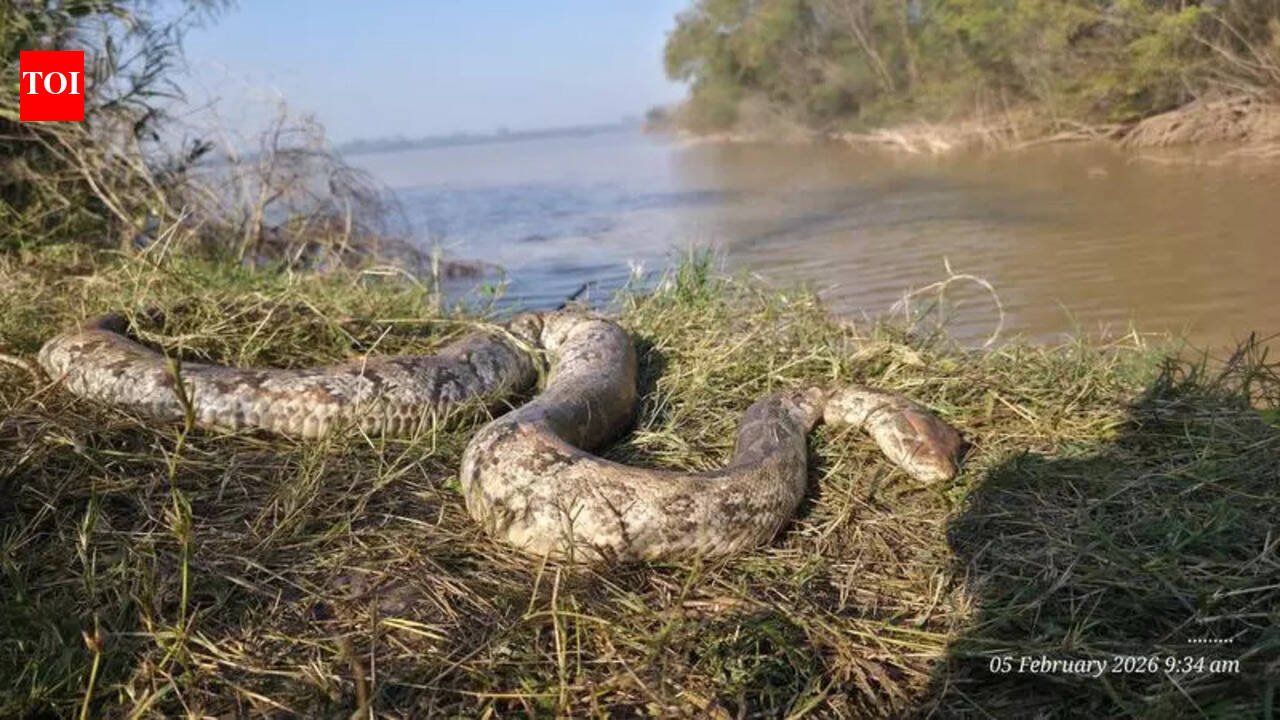
Chandigarh: Two allied reports on Sukhna Lake have confirmed a localised oil spillage along the southern shore ahead of the ‘suicide tower’ last month and low levels of dissolved oxygen in water as the main culprit leading to fish mortality.The reports, based on samples of water and seven dead specimens of bottom-dwelling fish of the Clarias and Tilapia genera collected from the lake on Jan 16, 2026, were submitted last week to the forests and wildlife dept by the Chandigarh Pollution Control Committee (CPCC) and the Fish & Fisheries Laboratory of the Panjab University’s zoology dept. A dead Rock python and a dozen fish found floating together at the regulator-end last Thursday is currently under examination by the forests and wildlife dept for mortality analysis.The CPCC report found that the oil & grease (O&G) in mg/L over a stretch of 200 m of surface water was 2.8 in contrast to 2.5 just before the suspect area. “Results clearly establish the presence of oil in collected sample, confirming the contamination of oil in surface water,” the CPCC report stated.The oil spill was pumped out by the engineering dept soon after its discovery on Jan 15, but that contamination does not explain the continuing fish deaths on both the southern and northern banks of the lake, prior to and after the spill. According to the report of the zoology dept authored by associate professor Ravneet Kaur, the seven fish samples showed “acute environmental stress (likely hypoxia)….consistently showed signs of respiratory distress, gill-related damage, tissue softening, haemorrhagic changes, and post-mortem autolysis.“Of the nine parameters analysed from water samples by the zoology dept, three were in variance with permissible limits and overshadowed the remaining six positive ones. The three were: dissolved oxygen (3.92 mg/L against permissible limits of more than 4-5), free carbon dioxide (13.6 mg/L against requirement of less than 10) and temperature (13.7 degrees C against 25-32). The fish deaths were attributed by the report to “oxygen depletion and carbon dioxide build up, common in urban lakes with organic pollution and stagnation”.The report delineated the following factors leading to fish mortality: “The water level has reduced and a lot of vegetation is visible. Shallow edge areas experience accumulation of organic matter (vegetation) decaying, which increases the biological oxygen demand (BOD)….Both the species of fishes found dead feed at the bottom of waterbodies. Anaerobic decomposition in sediments releases toxic gases, affecting bottom-dwelling or bottom-visiting fish.“To create a more sustainable environment for fish in the lake, the dept made the following recommendations to the UT administration stressing acutely on removal of dead and decaying vegetation: “(i) maintenance of water level: stable water levels support aquatic biodiversity, maintain dissolved oxygen, and reduce stress on fish and plankton communities (ii) removal of excessive vegetation: dead and decaying vegetation should be controlled through mechanical or manual removal thus preventing oxygen depletion during decomposition (iii) desilting and removal of accumulated organic matter: desilting should be carried out in a phased manner to remove nutrient-rich sediments and decaying organic matter. This improves water depth, reduces internal nutrient loading, and minimises risk of underwater eutrophication and fish mortality.”


