



If we’re being honest, most of us working in fashion probably didn’t get into it for the money. We pursued the types of jobs “a million girls would kill for” because of some deep-rooted passion, and perhaps a bit of delusion. And those things only get you so far.
It becomes more and more clear as we progress through our careers: Pay, resources, job security, workload, leadership, parity and office culture are all crucial to professional (and general) happiness. There’s no such thing as a job where all of those elements are a 10/10, but many fashion professionals say theirs fall short across the board — and they’re getting fed up.
Image: Fashionista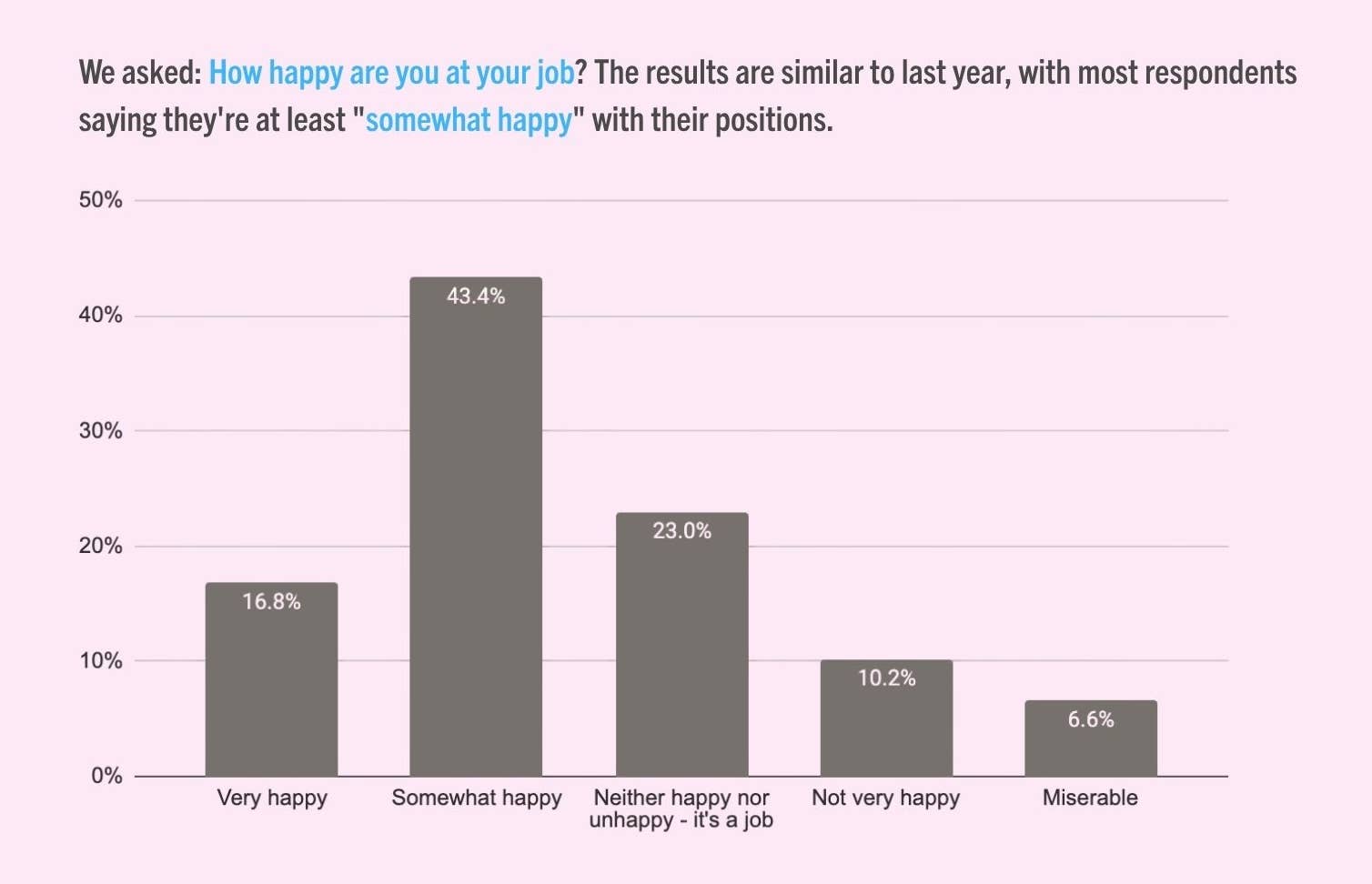

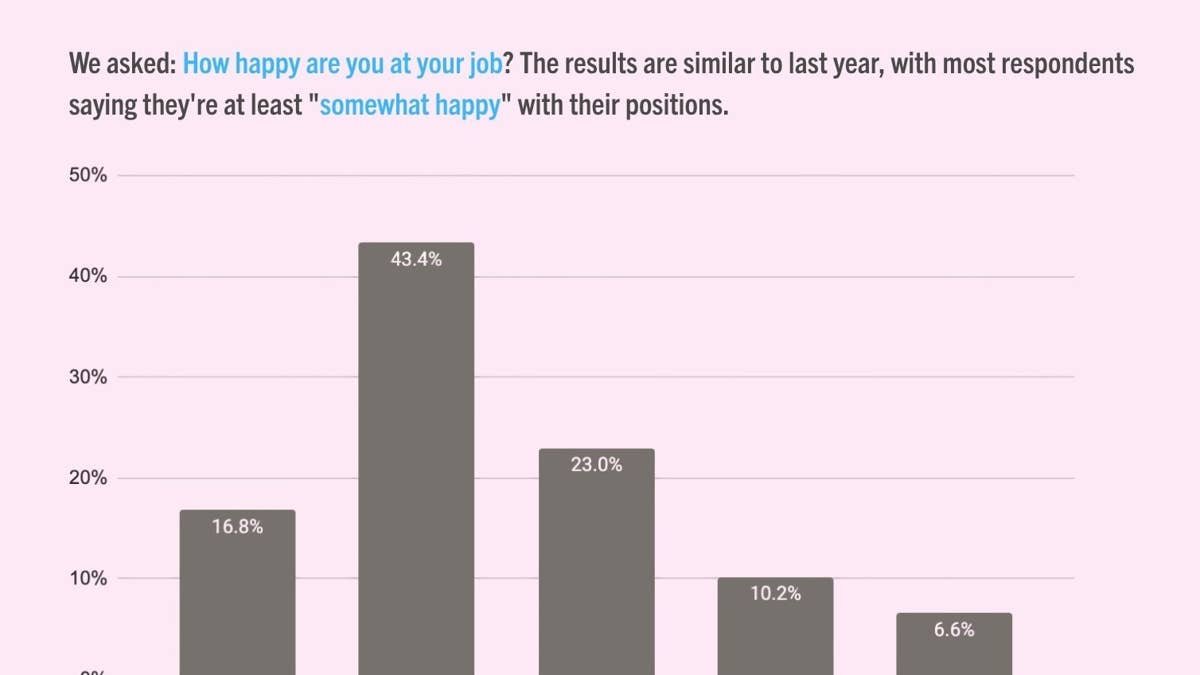
That’s not to say everyone working in fashion is miserable. In our 2026 Inside the Fashion Workplace survey, more than half of respondents said they’re at least “somewhat happy” (43%), if not “very happy” (17%), with their current positions. Of the others, 23% were neutral, and only 7% admitted to being, literally, miserable. At the same time, most respondents do feel underpaid. Most also work overtime and experience burnout. The fashion industry has been hit particularly hard by recent supply chain disruptions, declines in spending, AI and other macro factors that have forced companies to cut expenses where they can.
Related: Inside the Fashion Workplace: The 2026 Report Is Here
Survey participants were given the opportunity to anonymously share their main frustrations about their employers, and they didn’t hold back. Their responses reveal widespread dissatisfaction across all industry sectors, primarily driven by concerns regarding compensation, understaffing, unsustainable workloads, poor leadership and even discrimination. Here’s what they had to say.
‘Not Enough Pay’
Image: Fashionista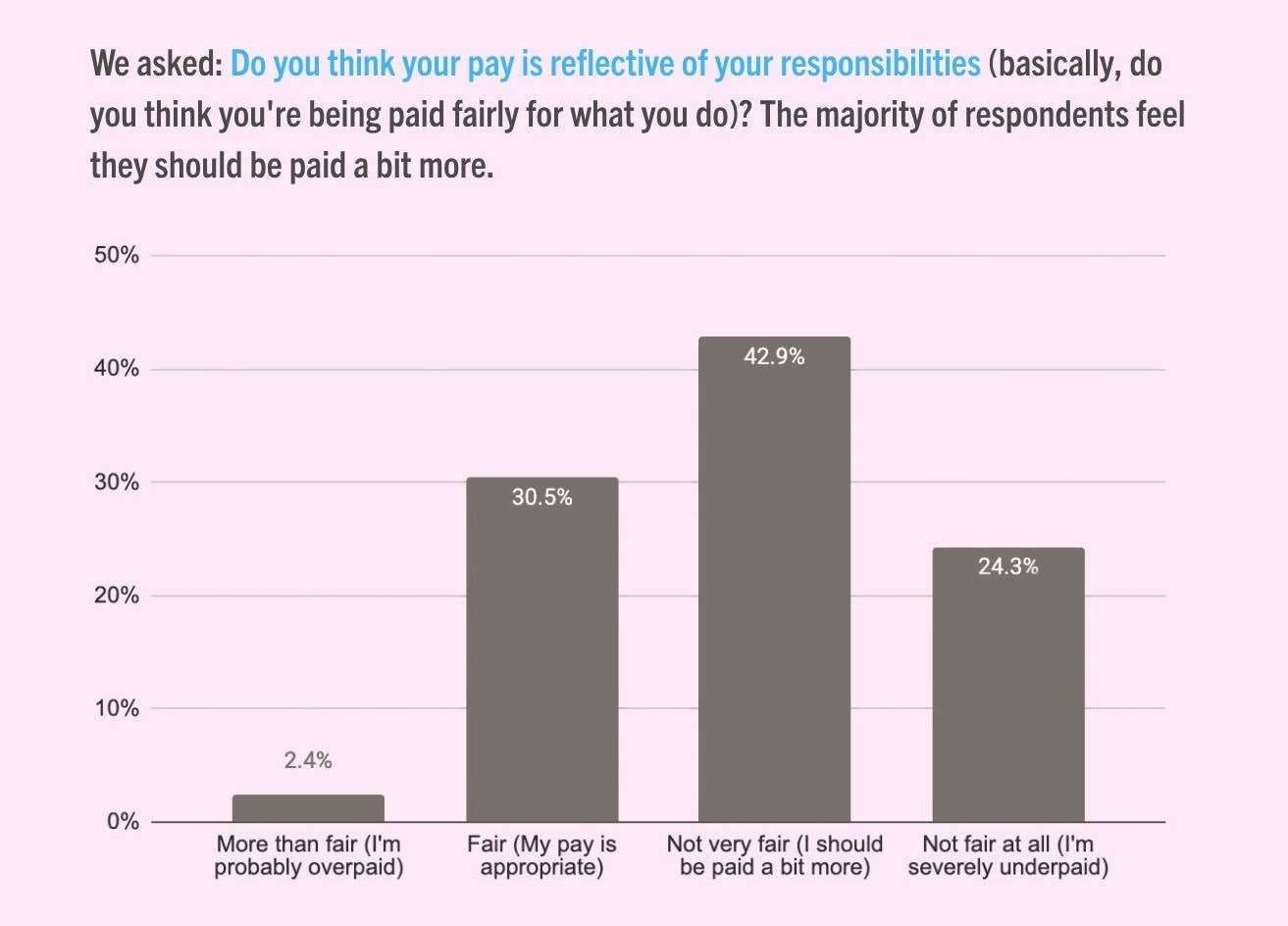

Stylists and marketers were the least satisfied with their salaries, with about 80% of each cohort describing their compensation as “unfair.” But members of every industry sector cited insufficient pay relative to the volume and level of work performed:
“PTO sucks, pay is low (at least for me, maybe I did not negotiate properly), the office environment is poor, benefits are non-existent, and it’s in-office five days, no option of hybrid ever.” – Product Development / Production employee
“Not fulfilling creatively or financially.” – Marketing employee
“Too much responsibility for not enough pay and recognition.” – Media employee
“Raises and promotions do not consistently align with performance, contribution or responsibility. Employees outside senior leadership frequently perform multiple roles without equitable pay.” – Design employee
“There is no parity between the input of work with the proportional reward: monetary or recognition.” – Product Development / Production employee
‘Don’t Feel Respected or Valued’
Employees also feel that their contributions, particularly when taking on higher-level responsibilities, go unrecognized and unrewarded, and they feel there is no clear path for professional development. Overall, there’s a recurring sentiment that leadership is inexperienced, indecisive or disorganized.
“Inexperienced leaders, business was mismanaged which led to desperation and toxicity throughout the organization.” – Marketing employee
“There’s no upward trajectory or clear path for growth. Taking advantage of those who generate most of the business value add for our clients — sales get commission but designer/editors/trend forecasters who present their work to clients don’t get commission for the upsell.” – Design employee
“Don’t feel respected or valued.” – Marketing employee
“They don’t pay vendors and they are constantly blaming everyone but the C suite.” – Product Development / Production employee
“The company presents itself as innovative, growth-oriented and intentionally ‘small,’ yet appears resistant to meaningful structural growth, transparent advancement pathways, or operational expansion.” – Design employee
Image: Fashionista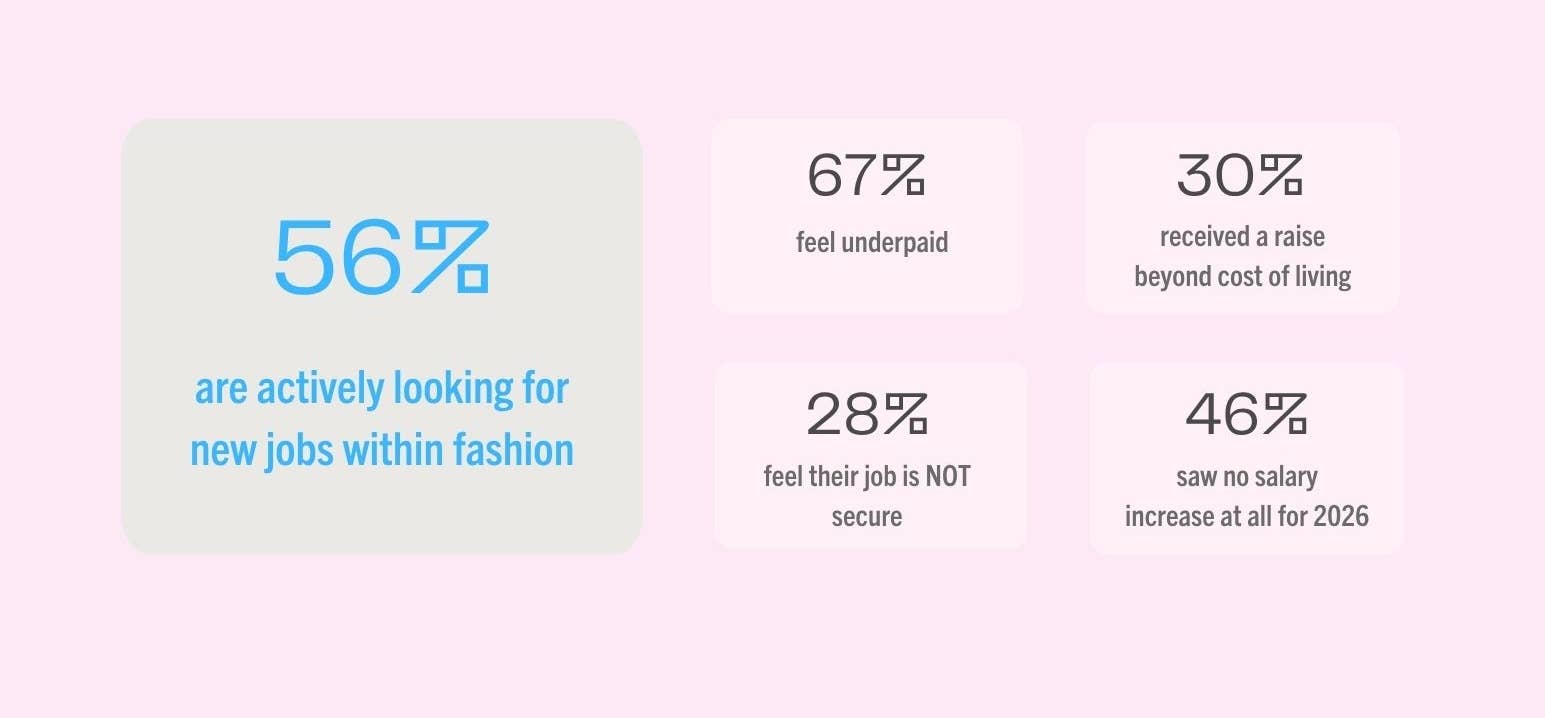

‘Grossly Overworked’
Teams are consistently understaffed and asked to “do more with less,” resulting in a constant state of racing to catch up, leading to burnout. Marketing and PR professionals reported the highest rates of burnout at 83%, while those in corporate roles reported the lowest at 33%.
“The reason I’m not satisfied is that, after 20+ years, I’m over fashion: I’m over creating cheap, disposable clothing. I’m over the stress and constant pressure that goes into creating the next best thing. I want to do something more meaningful for this planet, people, animals. But I feel stuck as it pays well and I have a family who I’m responsible for.” – Design employee
“My team (technical design) is grossly overworked, and overtime (late into the evening) and weekend work is cultural/expected.” – Product Development / Production employee
“My current title is Associate Designer, but I am doing the work of a Designer, and in some cases, Senior Designer. I work in private label, a section of the industry which also has a tendency to severely overwork their employees, my company included. Management is consistently asking all of their teams to do more with less and letting people go, and then acting surprised when people get fed up and quit, which exacerbates the problem.” – Design employee
“Lack of work-life balance, not paid enough for all the hours and work I put in.” – Marketing employee
“Not enough help to execute properly, feel like always behind schedule and racing to catch up. Product is too crucial to work under conditions like that.” – Design employee
‘No Minorities’
Some respondents highlighted a lack of diverse representation within their company, especially in corporate and influential roles, and even cited patterns of inequitable advancement and microaggressions. For context, of our actual survey respondents (who were allowed to make multiple selections), 61% identified as white, 15% as Black and around 30% selected other communities of color.
“In a city as diverse as New York, it is concerning that there is little to no Black representation in corporate roles. This isn’t a general diversity issue, it’s specifically a lack of Black employees in positions of visibility and influence.
When Black employees are present, they do not appear to receive promotions, raises or leadership opportunities at the same rate as their white peers. Even high-performing, well-liked Black employees remain in subordinate roles, while others with less experience or weaker performance advance more quickly.” – Design employee
“Not enough people of color.” – Marketing employee
“No creative insights, very stiff brand heritage and guidelines, no minorities, micro aggressions, low-level racism.” – Media employee
Download Fashionista’s Inside the Fashion Workplace report (for free!) below:
View the original article to see embedded media.


