






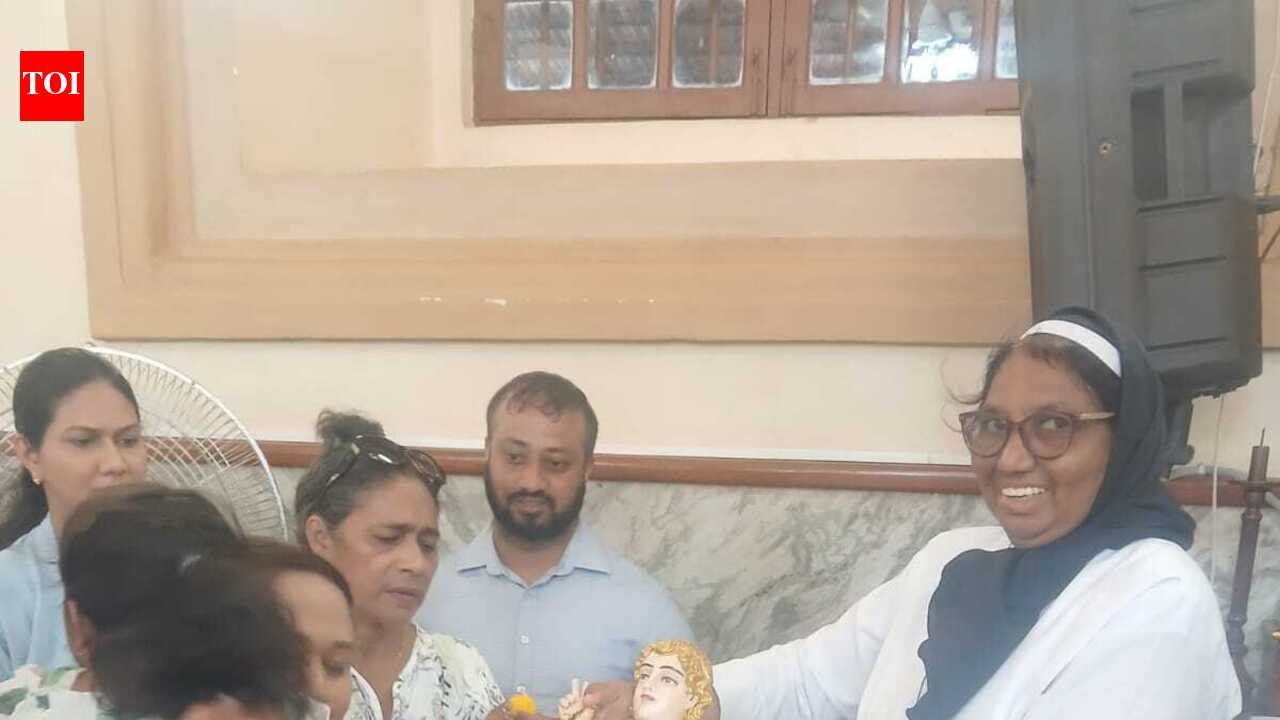
From the early hours of dawn, pilgrims from across Goa and neighbouring regions gathered at the historic church to seek the blessings of the Infant Jesus, a tradition deeply rooted in local religious and cultural life.The solemn proceedings began with a high Mass at 5.30am, celebrated by parish priest Fr Polly Fernandes. In keeping with long-standing custom, the cherished statuette of the Infant Jesus was reverently removed from its casket, placed upon the altar, and then carried in a grand procession around the church compound. The ceremony was followed by public veneration, with devotees lining up throughout the day and late into the night to offer prayers and kisses to the sacred image.Faith in the miraculous powers of the Infant Jesus, and even the ring adorning its finger, transcends religious boundaries. People from all walks of life and diverse faiths visit the shrine seeking divine intervention: couples praying for children, the ailing asking for healing, and families seeking peace and prosperity.Despite the heat, long queues of pilgrims, including young mothers with infants in their arms, waited patiently to receive blessings. Many parents bring their newborns to the Fama each year, believing that the Infant Jesus offers divine protection and grace to the little ones.According to local lore, earlier generations of Colva residents would prepare for the Fama days in advance, whitewashing their homes, stocking up on food, and readying themselves to welcome the influx of pilgrims who came to honour the Infant Jesus.A notable ritual of the day is the erection of the maadi (pole) that provides shade over the cradle of the Infant Jesus. Devotees also tie ‘bentim’ wrist cords symbolising faith, healing, and good fortune.In earlier times, the sacred statuette was displayed publicly only twice a year, on the day of the Fama and on the feast day, remaining behind closed doors the rest of the year. Today, a glass enclosure allows devotees to view and pray before the image year-round. However, on Fama day, the statuette is ceremoniously returned to its niche before midnight after being ritually washed with sacramental wine, marking the spiritual close of the event.


