



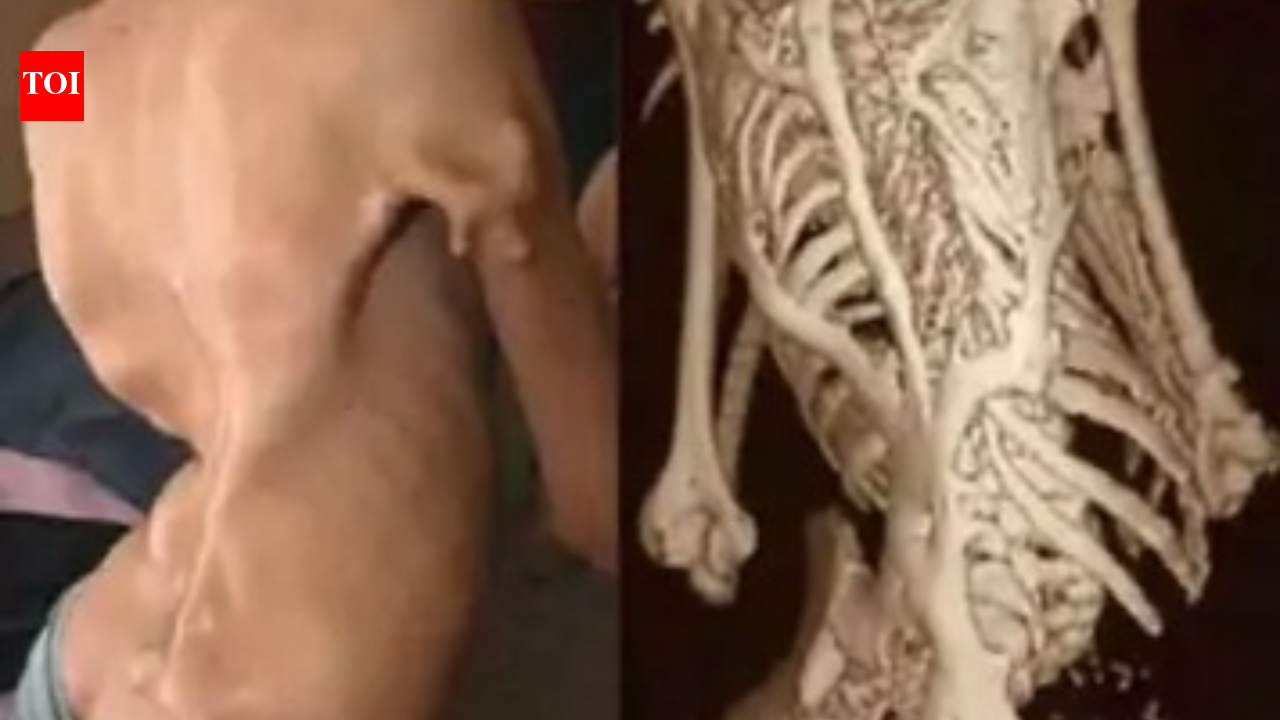
JAISALMER: For the first time in Rajasthan, an extremely rare medical condition has been identified that has surprised doctors. A case of FOP (Fibrodysplasia Ossificans Progressiva)—one of the rarest diseases in the world—has been detected in Jaisalmer. A 9-year-old child in Jaisalmer is gradually turning “stone-like” due to this condition.In the medical world, this disease is considered extraordinarily rare, with very few cases reported globally. The case identified in Jaisalmer has become a topic of discussion among doctors and health authorities.The disease, also known as “Stone Man Syndrome,” occurs in roughly one out of 1.5 to 2 million people. In this condition, the body gradually becomes stiff like stone as muscles, ligaments, and soft tissues slowly transform into bone. This is the first known case reported in Rajasthan.In this context, under the National Policy for Rare Diseases 2021 of the Union Ministry of Health and Family Welfare, a rare diseases awareness workshop was organized on Wednesday at the Government Medical College in Jaisalmer by the Centre of Excellence for Rare Diseases at AIIMS Jodhpur.The main objective of the workshop was to explain the background of the National Policy for Rare Diseases 2021 and the functioning of Centres of Excellence. Discussions focused on the availability of medicines, screening, accurate diagnosis, and advanced facilities such as fetal diagnosis.Meanwhile, senior pediatric specialist Dr. Dinesh Jangid from Jaisalmer explained that FOP is a genetic and extremely rare disorder in which the body’s muscles, ligaments, and tissues gradually turn into bone. As a result, the patient’s body becomes increasingly stiff over time and normal physical movement becomes restricted.According to Dr. Jangid, the disease is commonly referred to as “Stone Man Syndrome” because a second bone-like structure gradually forms inside the body. Muscles and soft tissues slowly harden and convert into bone, reducing the patient’s mobility.He explained that the disease usually begins to appear during childhood. In some children, early signs may be visible at birth, such as abnormal shape or bending of the big toe. Over time, swelling, pain, and small lumps may develop in different parts of the body, which later turn into bone.Doctors say the biggest challenge is that there is currently no permanent cure for this disease. Medical treatment mainly focuses on managing symptoms and helping patients live cautiously. Even minor injuries, surgeries, or repeated injections can accelerate the formation of new bone in the body. Therefore, patients must take special precautions.Experts state that FOP is among the rarest diseases in the world. It is estimated to affect only one person out of 1.5 to 2 million people, and globally only about 700–800 confirmed cases have been reported so far.In India as well, very few cases have been documented, mostly through medical research studies or hospital reports.Dr. Jangid added that diagnosing this disease is often challenging, as early symptoms may resemble ordinary swelling or lumps. In many cases, it takes a long time before the correct diagnosis is made. Therefore, if children experience repeated swelling, pain, or unusual lumps, it is important to consult a specialist doctor.He also warned that if doctors are unaware of the condition and mistakenly perform surgery or biopsy assuming it to be a normal lump, it can accelerate the bone-formation process.“Patients with FOP must avoid intramuscular injections and protect themselves from falls or injuries. Even a minor injury can trigger new bone formation,” Dr. Jangid emphasized.The case reported in Jaisalmer is considered significant because it is possibly the first identified case of this rare disease in the border district. Doctors believe that awareness about such cases can help ensure timely advice and better care for patients.Medical experts say that awareness, accurate diagnosis, and specialist consultation are the only ways to improve the quality of life for patients suffering from rare diseases.Notably, a patient suffering from Fibrodysplasia Ossificans Progressiva (FOP) has been identified in Jaisalmer, and efforts will be made to write to the ministry to include this disease in the official notification list.During the workshop held in Jaisalmer, 143 participants, including faculty members, pediatricians, gynecologists, medical officers, and nursing students, attended the program. Some patients suffering from rare diseases also participated and shared their challenges.Experts also noted suggestions regarding certain rare diseases that are not yet included in the national policy. It was felt during the discussions that many patients with rare diseases may exist in border regions like Jaisalmer, requiring deeper evaluation.At the end of the workshop, doctors suggested creating a communication network among medical professionals to improve coordination in dealing with rare diseases.


