



AJAY HALDAR
During Operation Sindoor in May 2026, India’s very own BrahMos missile played a defining role against Pakistan. But there is something India has, which is said to be even deadlier: LRAShM (Long Range Anti-Ship Missile).
The Long Range Anti-Ship Missile (LRAShM), advanced by India’s Defence Research and Development Organisation (DRDO). It is a next-generation weapon that is attracting growing attention from several countries in the Indo-Pacific region.
Will it Replace LRAShM BrahMos?
The missile, which has already undergone multiple developmental trials, is expected to complement rather than replace the BrahMos supersonic cruise missile by providing the Indian Armed Forces (IAF) with a significantly longer-range and more cost-effective anti-ship capability.
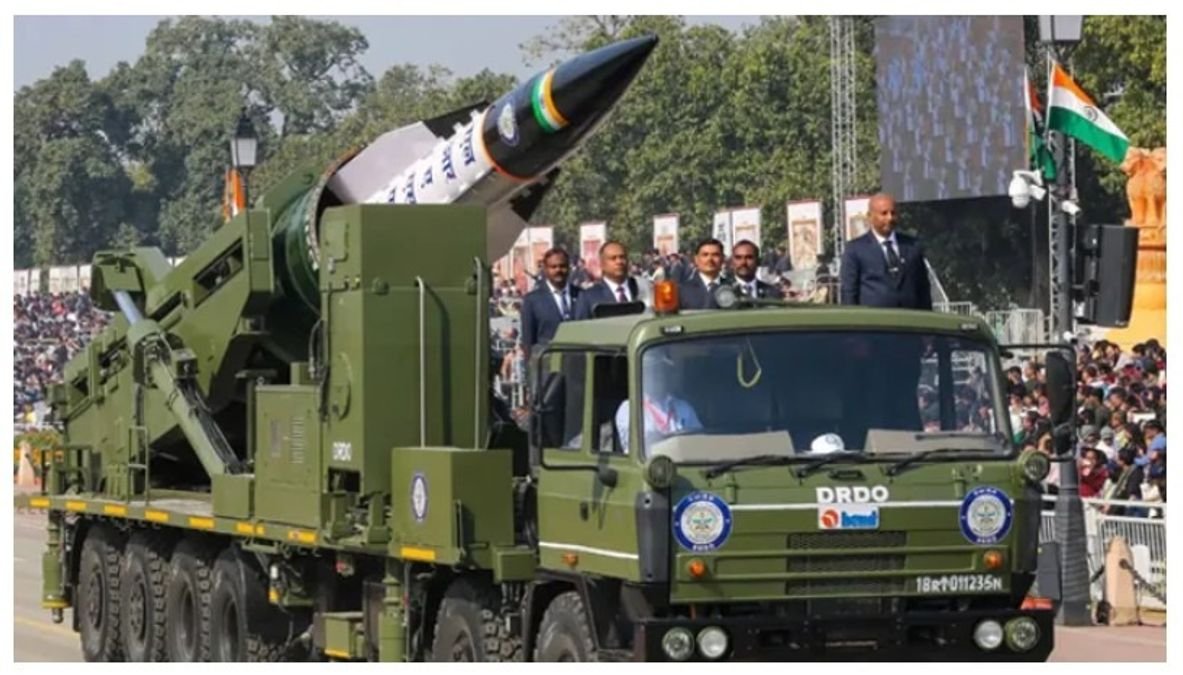
DRDO’s LRAShM could strengthen India’s maritime defence with longer range, lower costs, and enhanced coastal strike capabilities alongside BrahMos. (Image Source: Ministry of Defense)
The LRAShM is intended to reduce reliance on the more expensive BrahMos missile and extend India’s maritime strike capability much beyond the range currently being afforded by the existing anti-ship weapons.
While the BrahMos has traditionally been deployed from warships, submarines, aircraft, and mobile launchers, the LRAShM is expected to become the preferred weapon for India’s future coastal defence batteries.
In terms of range, the LRAShM outstrips the Brahmos with its ability to hit targets at a distance of around 1,500 kilometres, which would enable the Indian Navy to engage hostile surface combatants, amphibious task groups, and aircraft carrier strike groups well before they approach India’s coastline.
The DRDO has also adopted a cost-effective design philosophy with the LRAShM program by integrating technologies and subsystems derived from several existing indigenous missile programmes rather than developing an entirely new missile architecture from scratch.
This approach is expected to make the LRAShM more cost-effective than the BrahMos and reduce development costs while maintaining high operational capability.This will also allow larger inventories to be procured for coastal defence formations without imposing the same financial burden associated with high-end supersonic cruise missiles and become the Indian Navy’s primary land-based coastal defence weapon, providing persistent maritime denial across vast stretches of the Indian Ocean Region.
However, the BrahMos missile will nevertheless continue to serve as the Indian Navy’s principal offensive anti-ship weapon aboard frontline warships. Its combination of supersonic speed, high terminal energy, precision strike capability, and operational maturity ensures that it will remain indispensable for naval surface combatants and multi-domain strike missions.


