



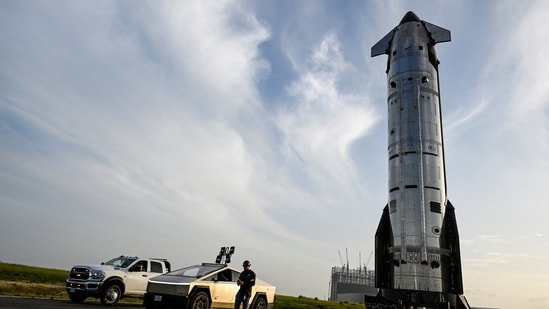
SpaceX is set to launch its Starship rocket for its 13th test flight on Thursday, July 16, as the company continues testing the massive spacecraft designed for future missions to the Moon and Mars.

The launch window for the flight opened at 6:45 pm EDT from SpaceX’s Starbase facility in Texas, according to WESH. The window is scheduled to remain open for 90 minutes.
The latest test comes after SpaceX‘s previous Starship flight ended with a failure during the booster landing attempt, prompting a review by the US Federal Aviation Administration (FAA).
What is SpaceX testing during Starship’s 13th flight?
The upcoming mission will focus on repeating several objectives from the previous flight while introducing new tests, SpaceX said.
The company said the Super Heavy booster will attempt a successful launch, ascent, stage separation, boostback burn and landing burn before targeting an offshore landing location in the Gulf of Mexico.
SpaceX has made hardware and software changes following problems observed during the previous test flight.
“The upcoming flight test will aim to complete similar objectives targeted on the previous flight test, which debuted the Starship and Super Heavy V3 vehicles, while also carrying next-generation Starlink V3 satellites for the first time,” SpaceX said.
The 124-metre-tall rocket will also carry a major payload milestone: the first deployment attempt of next-generation Starlink V3 satellites.
Starship to deploy new Starlink V3 satellites
According to The Independent, Starship’s second stage will carry 20 Starlink V3 satellites during the test flight. The satellites are designed to provide significantly higher capacity than earlier Starlink versions and are too large to be launched using SpaceX’s Falcon 9 rockets.
The satellites will extend their solar arrays and antennas after deployment and use high-capacity laser links to connect with the Starlink network.
The mission is considered a proof-of-concept test, with the satellites placed on a suborbital trajectory and expected to reenter Earth’s atmosphere about 20 minutes after deployment.
SpaceX is also using the mission to gather data on Starship’s heat shield. Six of the Starlink satellites have been modified with cameras that will capture images of the spacecraft’s heat shield during flight.
Also Read: Elon Musk could become the first trillionaire on the back of a SpaceX IPO
“Six of the satellites have been modified with a suite of cameras to scan Starship’s heat shield and transmit imagery down to operators to continue testing methods of analyzing Starship’s heat shield readiness for return to launch site on future missions,” the company said.
Starship’s return after previous flight failure
The 13th test flight marks Starship’s first launch since its previous mission on May 22. During that flight, the Super Heavy booster encountered problems during its splashdown attempt after only one of its 33 engines ignited during the landing procedure, The Independent reported.
The FAA temporarily required an investigation into the incident to ensure future launches met safety requirements. The rocket was later cleared to fly again.
SpaceX will livestream the launch on its official X account, with coverage expected to begin about 30 minutes before the launch window opens. The test comes as the company prepares for Starship’s eventual transition to future launch operations in Florida.


