






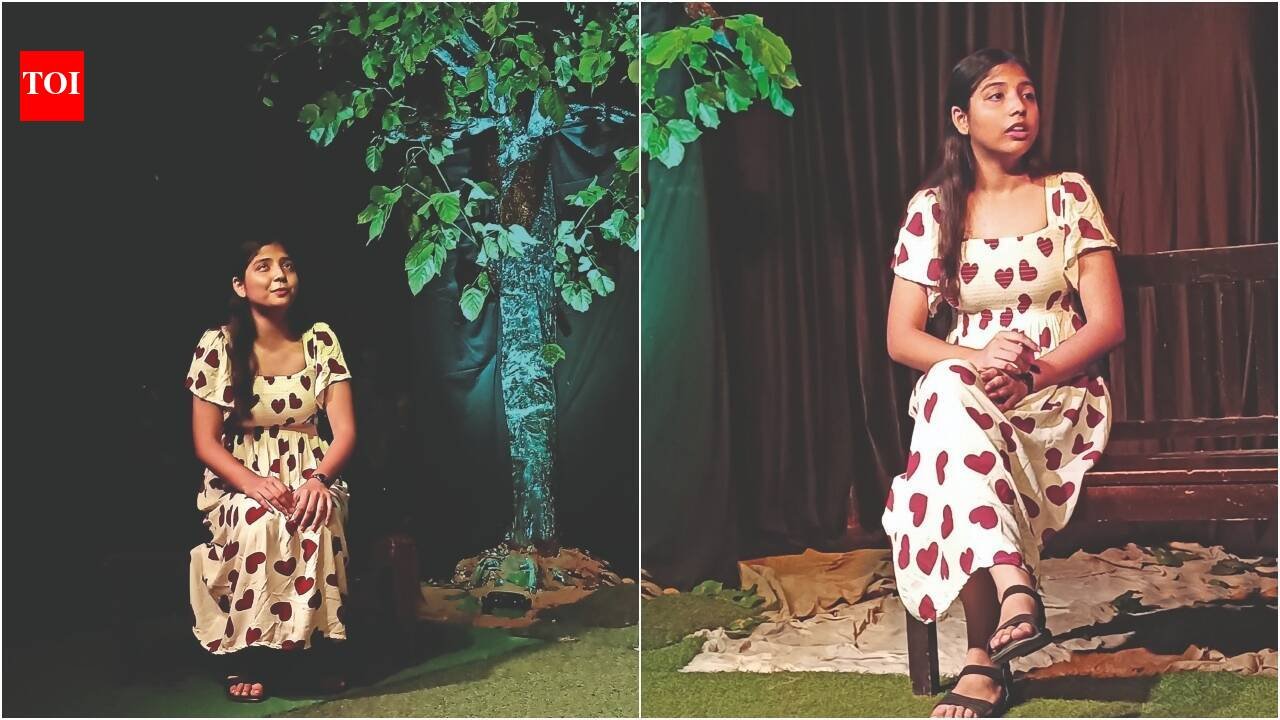
A woman walks onto the stage and sits down on a bench. Every day, she sits there, waiting for a sweet spot of sunlight to hit it. Today was no different. Except today, she had company. After making some small talk and observations, she turns to her invisible companion and begins recounting her past.Director Rajiv Kohli’s Dhoop Ka Ek Tukda, based on acclaimed Hindi writer Nirmal Verma’s short story of the same name, can feel heavy at times, but never exhausting.Through a Virginia Woolf-esque stream-of-consciousness narrative, we understand that the heroine has separated from her husband. And that separation has made her reflect on life and its impermanence with a bittersweet kind of wisdom.Despite the personal tragedy, the protagonist’s interior world is vast, colourful and curious. Sitting on the bench, she ponders over how places like benches and graveyards have no names, like certain buildings do, because it is the people who give character to these inanimate things. Graveyards and benches house no one except the haunting memories of people who have left.The protagonist, years later, still remembers vividly the moment she decided to leave her marriage. She describes it as a loud knock inside her heart that made her sit up in the dead of the night. A loneliness so scary it made her want to run to her parents’ room. But neither that room nor her parents were there.Alone, dejected and immeasurably sad, she sat at her husband’s side of the bed, tracing her fingers over his body. Again, and again, and again. Like she was trying to memorise him but at the same time, also make sense of the stranger who slept soundly as the life they had built together for eight years fell apart. And it is in these moments, the teen lead Sakshi Kumari shines the brightest.Displaying a maturity far beyond her age, the actor takes the audience on an aching, emotional journey of a woman who has loved, lost and is still learning to be open to life without letting her grief turn into bitterness. Such emotional precision is hard to nail in 45 minutes, but Sakshi’s elegance and vulnerability elevate an already fully realised drama. No mean task, that.Keeping the audience engaged while presenting these philosophical musings is a challenge that the trifecta of direction, set design and performance rises to wonderfully. Made up of a wooden bench and a huge tree cut-out with some nice lighting, the small set was tastefully done to contain the writing’s melancholy.At one point in the drama, the character asks the audience, “Why is it that when a building becomes dilapidated, everyone knows about it, that it is no longer fit to live in. But when something like that happens to a relationship, no one seems to care?” And that is the question Dhoop Ka Ek Tukda wants us to dwell on long after the lights are dimmed and the curtains are drawn.
Want us to review your play? Mail us at tims.delhitimes@timesofindia.com


