



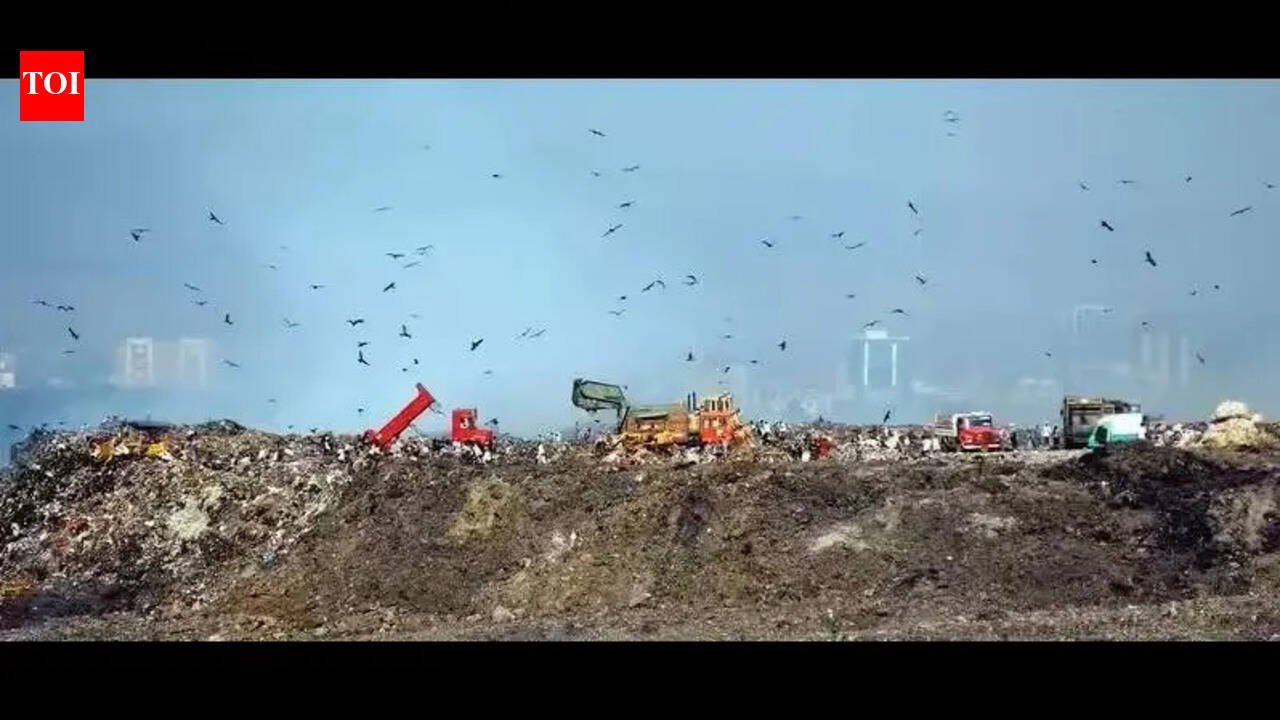
Mumbai: Nearly seven months after appointing a contractor for the ₹2,000-crore plus clean-up of the century-old Deonar landfill, the civic body has received a crucial nod from the Maharashtra Coastal Zone Management Authority (MCZMA), before work can begin on ground. With this what remains now is only a nod from the High Court and another Consent to Operate (CTO) from the Maharashtra Pollution Control board (MPCB) said officials. The MCZMA clearance, granted at the authority’s 195th meeting held on March 25, 2026, falls under the provisions of the CRZ Notification 2019 and comes with a comprehensive set of environmental safeguards.As per the approval, only the removal of legacy waste will be permitted within Coastal Regulation Zone (CRZ) areas, strictly for restoration purposes, while all project-related infrastructure and operations must be located outside CRZ limits. The authority has placed strong emphasis on protecting the coastal ecosystem, explicitly prohibiting mangrove cutting and directing the BMC to obtain prior approval from the Bombay High Court, since a portion of the site falls within a 50-metre mangrove buffer zone. The conditions also mandate that no solid or liquid waste be discharged into nearby creeklets or coastal stretches, and that leachate generated during the biomining process be treated through facilities set up beyond CRZ boundaries, with an aim of achieving zero liquid discharge. The contractor has also been instructed to ensure that natural streams, water bodies, and coastal geomorphology remain undisturbed, while also putting in place adequate measures to control dust emissions and odour during the remediation process. In addition, the BMC will have to establish a dedicated environmental monitoring mechanism involving experts in solid waste management, pollution control, and mangrove conservation, and implement the Environment Management Plan in line with the project’s impact assessment report. Permissions from the Mangrove Cell and other statutory authorities will also have to be secured before work is initiated. The Deonar dumping ground, spread over nearly 120 hectares, is one of the oldest and largest dumping grounds in India, receiving waste since 1927. Despite partial capping large portions of legacy waste continue to pose environmental and public health risks, including periodic fires, methane emissions and leachate seepage into nearby areas. Civic officials indicated that once all approvals, including those related to mangroves and court permissions, are in place, the project though could begin prior to monsoons but then it may not be possible to carry out any works during the rains. “During rains, the solid waste gathers moisture making it difficult to carry any kind of works. Although the bioremdidiation tender is inclusive of monsoons,” said a civic official. The contract period is set for three years, which includes the time for mobilisation and the monsoon period.


