



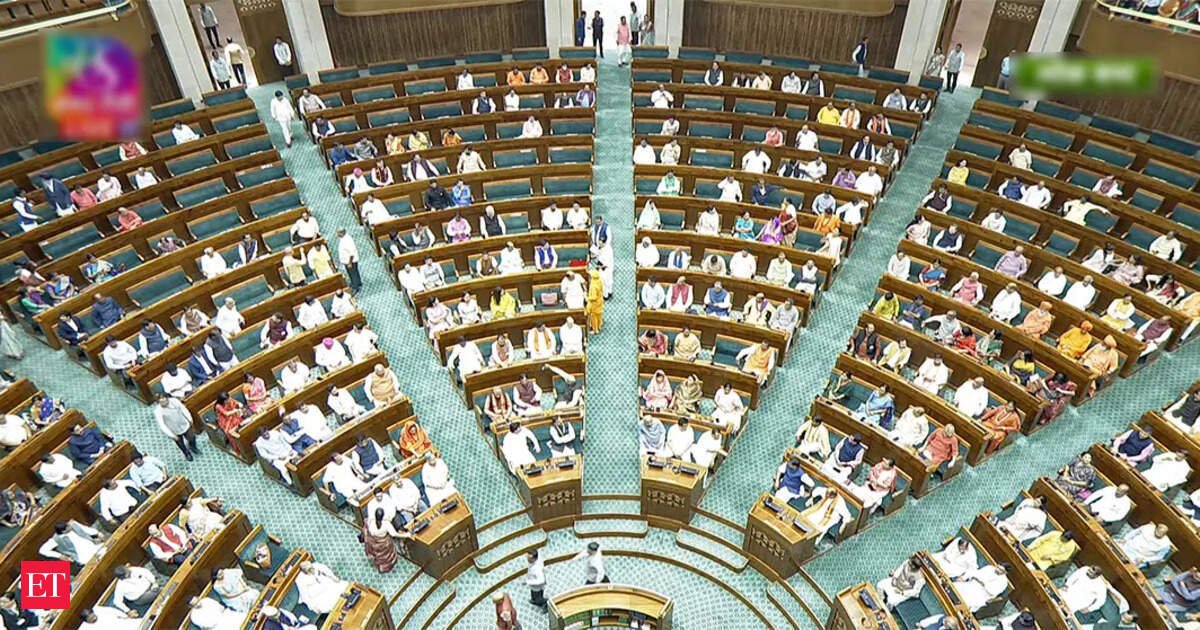
With the introduction of the two bills – one on delimitation and another an amendment bill for delinking implementation of women’s reservation from the ongoing census – the government is set to increase the number of Lok Sabha seats by 50% for each state for the first time since 1976. With this, it has addressed the concerns raised by southern states, including key NDA ally Telugu Desam Party (TDP), which have pointed out that linking delimitation with population density punishes them for better implementation of family planning measures. The exercise, however, is unlikely to address the biggest issue of vote parity or “one person, one vote and one value” pending since the 1970s.
The last redistribution of Lok Sabha and assembly constituencies was done in 1972. The 42nd constitutional amendment in 1976 froze the number of seats until after the 2001 Census. The 84th constitutional amendment in 2001 extended this freeze to 2026, thereby postponing the tricky question. However, with a blanket increase of 50% in seats across states, the issue of parity of vote remains intact, putting southern states at a clear advantage.
Also Read: Tamil Nadu 2026 Assembly Elections: AIADMK chief Edappadi K Palaniswami
Prof Sanjay Kumar of the Centre for the Study of Developing Societies said, “If the government increases seats by 50% across states, the disparity between states and the problem of ‘one vote, one value’ remains intact.”
The idea of delimitation is that an MP or MLA represents a population of roughly the same or similar size. This is based on the principle that every vote carries the same value in a democracy or “one person, one vote, one value”. For instance, according to the 2011 Census, the population of UP is 1,210,854,977 and it sends 80 MPs to Lok Sabha, which means one MP represents 15 m people. However, TN with a population of 72,147,030 sends 39 MPs, which means one MP represents about 1.85 million people. This means, the value of a vote in UP is not the same as in TN.With the government’s move to increase seats across states by 50%, the number for each state will grow in the same proportion, putting southern states at a clear advantage. TDP MP Lavu Srikrishna Devarayulu told ET, “Our concern was that southern states stand to lose with delimitation being linked to population. As long as there is a proportionate increase of seats, we are happy.”
Also Read: The cat is out of bag: Mamata Banerjee over BJP rubber stamp on EC letter row
The YSRCP has also broadly supported the move. “We are broadly in support of delimitation and immediate implementation of women’s reservation,” said its MP Midhun Reddy.
Bharat Rashtra Samithi working president KT Rama Rao told ET that the party will support the move if the current proportion in overall Lok Sabha seats remains the same. “At present, five states of South India constitute 24% of overall Lok Sabha seats. If the government does not maintain this proportion, it will face protests across South India…,” he said.


