






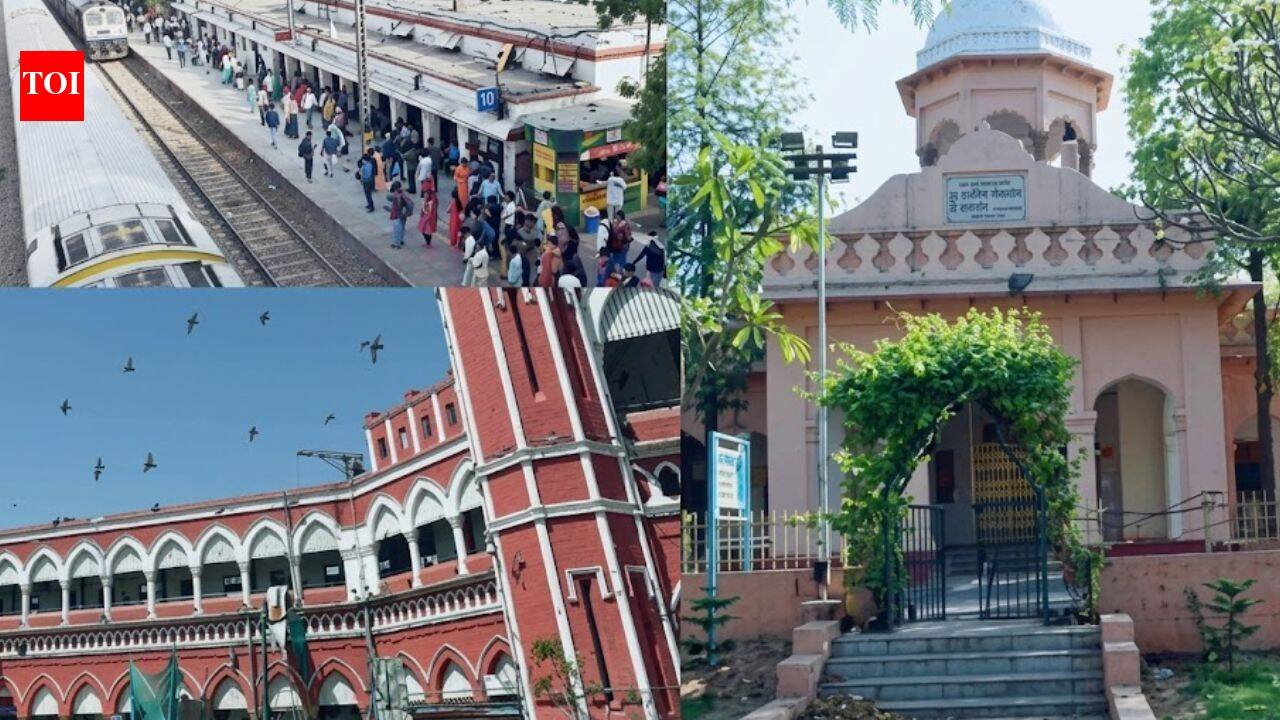
NEW DELHI: Municipal Corporation of Delhi (MCD) is tracing the history of the city’s railway stations, schools, colleges, hospitals and police stations that are more than 100 years old and continue to retain much of their original character.While 16 such buildings have been identified by the corporation’s heritage cell, work towards zeroing in on more is in progress.“The list has been prepared with details documenting the historical significance, interesting anecdotes and associations linked to these buildings,” said an MCD official.Some of the buildings have undergone renovations and modifications over the decades, but their original structures remain largely intact and continue to serve the purposes for which they were built.Old Delhi Railway Station, earlier known as Delhi Junction, is among them. It was opened in 1864 and the present building in 1903. The property was notified as a heritage building in the 2010 gazette notification issued by Delhi govt’s urban development department.“The station has historical associations with Mahatma Gandhi. In April 1915, when he returned to India after years in South Africa, he first deboarded in the capital at Delhi Junction,” said the official.Shahdara Railway Station is associated with Gandhi’s final rail journey. On Sept 9, 1947, amid intense communal violence and disruptions at Old Delhi Railway Station, his train terminated at Shahdara, where he safely disembarked.According to an MCD survey, this station was established as part of the Shahdara-Saharanpur Light Railway in 1907 and continues to operate as an active junction. “The details need verification from Northern Railway archival records,” said the civic body.Sarai Rohilla station, opened to the public in 1873, is another of the city’s oldest railway establishments and continues to operate till date. Then came Subzi Mandi railway station, built in 1880.Zakir Husain Delhi College traces its history to 1792. Known as Delhi College, it was earlier located on a campus in Ajmeri Gate, along with a school, on a site housing a madrassa founded in 1696. It shut in 1790 but reopened in 1792 and was later reorganised by East India Company in 1828. The institution was reconstituted as Anglo-Arabic Intermediate College in 1924 and affiliated with University of Delhi in 1925.“Though the college shifted to its present campus on JLN Marg in 1986, the historic building at Ajmeri Gate continues to house the Anglo-Arabic Senior Secondary School, a co-educational govt-aided institution,” said the official.Ayurvedic and Unani Tibbia College in Karol Bagh is another historic medical institution, founded by renowned physician and freedom fighter Hakim Ajmal Khan. Beginning as Madrassa-e-Tibia in 1883, it was later re-established on its present campus. “The main building was inaugurated in 1921. It is the only known institution in India that offers education and clinical training in both Ayurvedic (BAMS) and Unani (BUMS) medical systems under a single roof and is affiliated with DU,” the official added.


