



New Delhi: In a city where the air often feels heavier than it should, an experiment at University of Delhi is drawing attention to its simple idea of fighting pollution with nature itself.
On Wednesday, scientists, environmentalists and policy thinkers gathered on campus for a national conference to discuss what many are calling a practical, scalable response to India’s worsening air crisis, which is the “carbon garden”.
Titled Carbon Garden: An Urban Ecosystem Services Model to Combat Toxic Air Pollution, the conference was held at of, University of Delhi, and jointly organised by the Nature Care Initiative, New Delhi; the Delhi University Botanical Society; and the Indian Psychological Society, Delhi. Developed over three years by botanist Dinabandhu Sahoo, the model is being positioned as a blueprint for cities across the country.
The urgency is hard to ignore. According to World Health Organization estimates, air pollution claims over seven million lives globally each year, with India accounting for roughly 1.7 million of those deaths. Data from IQAir further underscores the scale of the crisis, as 13 of the world’s 20 most polluted cities are in India. In Delhi alone, pollution was linked to nearly 15% of all deaths in 2023, alongside massive economic losses.
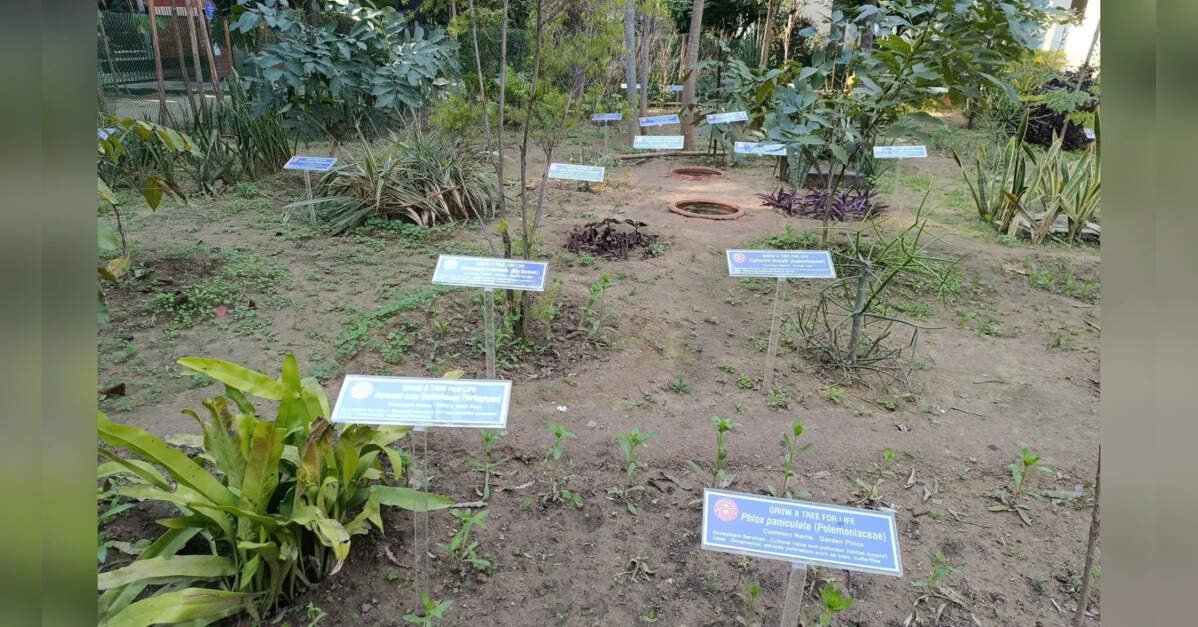
Against this backdrop, the idea of a compact, living ecosystem that actively absorbs pollutants is gaining traction. Spread across just 2,000 square feet, the DU carbon garden packs in an extraordinary diversity of life with over 50 plant species alongside algae, fungi, bacteria and other microorganisms. Designed as both an “urban ecosystem model” and a “mini biodiversity park”, it brings together hydrophytes, xerophytes and mesophytes in a carefully balanced system.
According to Sahoo, “microorganisms living on plant surfaces can help break down toxic gases such as methane and carbon monoxide, converting them into less harmful or even useful compounds. In effect, the garden functions as a natural filtration system, drawing pollutants down from the air while simultaneously enriching the soil”.
Sahoo, presently serving as head of department of botany as well as chairperson of research, innovation and entrepreneurship council at DU, added, “This is not just about planting trees. It is about creating a self-sustaining ecological unit where plants and microbes work together to clean the air.”
The model’s biggest advantage may be its practicality. In land-starved cities like Delhi, large-scale green spaces are difficult to create. By contrast, carbon gardens require relatively little space and can be adapted to schools, residential complexes, office campuses and public institutions. Experts at the conference agreed that widespread adoption, even at a small scale, could collectively make a measurable difference to air quality and public health.
The response so far suggests that the idea is resonating. More than 1,000 visitors from across India have already toured the site, many expressing interest in replicating the model. For researchers, that is the real goal, not just a single garden, but a network of them.


