



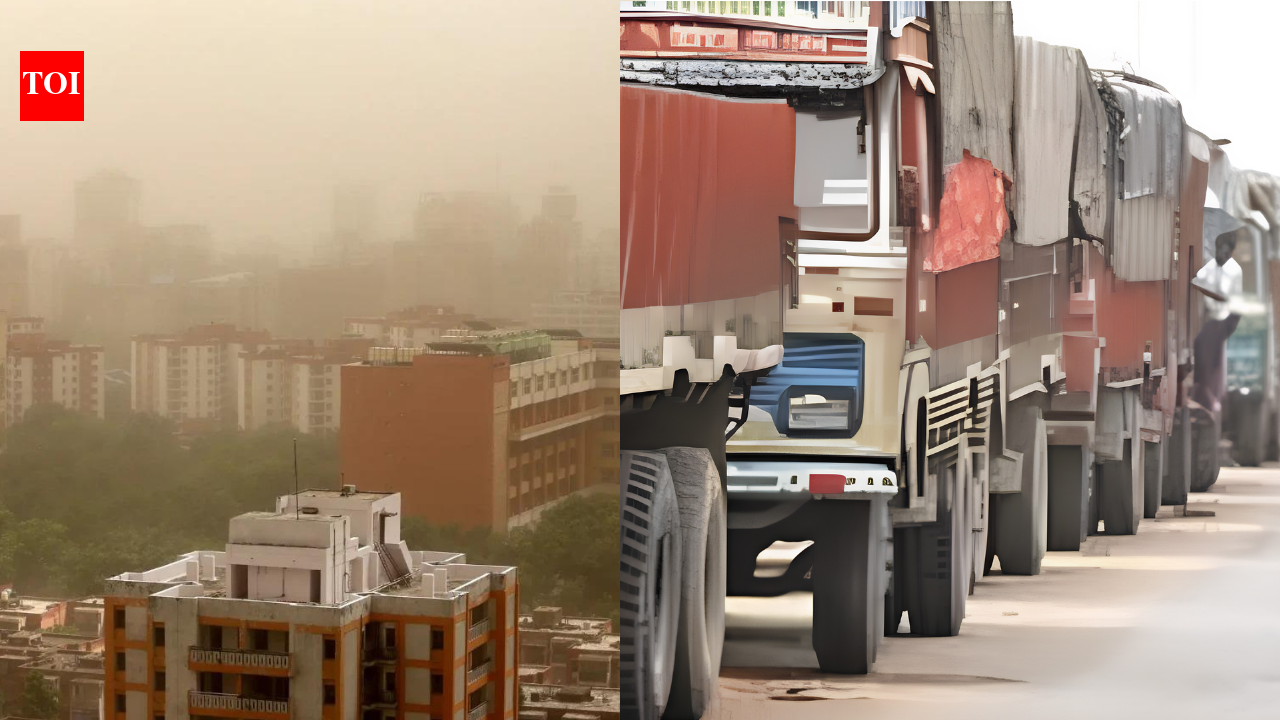
NEW DELHI: From identifying nearly 78,000 Delhi-registered old heavy vehicles for voluntary transition to cleaner BS-VI models to constituting district-level task forces and expanding construction waste collection sites, the Delhi government is gearing up for the pollution season.The government has also stepped up dust monitoring through its anti-pollution portal, launched in July, with AI-enabled cameras identifying around 2,000 sites where prescribed anti-pollution measures were not being followed, officials said.“DCs, DMs and other officials will be working at the district level to identify traffic hotspots and pollution hotspots and find local engineering solutions. We have asked the districts to submit their responses by the end of this month,” a senior government official told PTI.The district-level task forces, headed by deputy commissioners and district magistrates along with other officials, have been asked to identify pollution and traffic hotspots and prepare local solutions based on the conditions in individual areas, news agency PTI reported.The government is also undertaking the vehicle transition campaign as part of the Centre’s Rs 9,585 crore Parivartan scheme, which seeks to accelerate the transition to cleaner commercial vehicles in the National Capital Territory of Delhi and NCR districts in Haryana, Rajasthan and Uttar Pradesh.“We are working extensively on the ground. Our teams are reaching out to large truck owners and transporters and are also focusing on petrol pumps, parking areas and industrial clusters, because a significant number of these vehicles are linked to industrial activity,” the official said.“Nearly 78,000 BS-III and BS-IV heavy vehicles registered in Delhi have been identified for this transition. At this stage, the exercise is completely voluntary. We are focusing on educating and encouraging vehicle owners rather than forcing anyone,” the official added further.The administration has increased the number of construction and demolition waste collection sites in Delhi from 106 to 125, the official said.With Rs 5,041 crore in Central Government support, eligible beneficiaries purchasing new BS-VI-compliant diesel or CNG vehicles or electric vehicles can avail a package of financial incentives under the scheme.It also includes full concession on motor vehicle tax, complete waiver of registration fees, five per cent interest subvention on vehicle loans and discounts of up to 8% from participating original equipment manufacturers, or OEMs, PTI reported.Owners of BS-VI diesel and CNG vehicles will also receive monthly fuel vouchers ranging from Rs 1,200 to Rs 4,800, depending on the vehicle category, for five years.For electric commercial vehicles, the scheme provides a one-time incentive ranging from Rs 64,000 to Rs 2.56 lakh.People purchasing eligible used BS-VI vehicles will also receive financial support through tax concessions, interest subvention and fuel-related incentives.The scheme also allows eligible owners to scrap their old vehicles at a Registered Vehicle Scrapping Facility and avail the applicable incentives, sell eligible BS-IV vehicles outside the NCR in designated non-National Clean Air Programme cities or trade their Certificate of Deposit if they do not wish to purchase a replacement vehicle.As part of its green initiatives, the government has carried out around 60 lakh plantations as part of its goal to complete 70 lakh plantations.“Through the mega plantation drive, cumulative plantation has crossed 60 lakh so far,” the official said.The government has also identified around 3,000 environmental saviours, including associations, experts and citizens, to work with the administration on environmental issues and pollution-control measures, the official said.On the industrial pollution front, the government has made air-quality control devices compulsory for 80 categories of industries to enable continuous monitoring and control of emissions, the official said.The Online Emission Monitoring System (OEMS) has also been made mandatory for more than 90 industries.“More than 90 industries have been brought under compulsory OEMS requirements. This will help us monitor emissions continuously rather than relying only on periodic inspections,” the official said.“The government is also set to implement stricter pollution-control measures from November 1 under Section 5 of the Environment Protection Act, irrespective of the stage of the Graded Response Action Plan (GRAP),” the official said.The government said the various measures form part of an integrated pollution-control strategy involving cleaner vehicle adoption, dust and waste management, industrial emission monitoring, plantation drives and public participation.The district-level reports expected by the end of September will help the government assess pollution sources across different parts of Delhi and finalise local interventions, officials said.(With agency inputs)


